Chapter Ten
Verses 1-12, divorce
In the perfect world there would be no marital conflicts. Has your world ever been rocked by divorce—yours or someone else’s?
Jesus pointed back to creation and God’s intentions for marriage instead of dwelling on man’s inadequacies. If you have time look up the original meaning of helpmeet, it just might define a part of marriage that is vital to its happiness and missions.
Verses 13-16, the little children and Jesus
Children delight in receiving gifts and kingdom entry is a gift. Compare your kingdom-receiving to a child accepting a gift.
Verses 17-31, the rich young ruler
Do you think Jesus’ teaching about riches meant that only the poor qualified to be in God’s kingdom? Here, was he dealing with gold, silver, possessions, or the heart?
Verses 32-34, Jesus again predicts his death
Again, Jesus brings up the subject of his suffering, death, and resurrection. Astonishment and fear are both mentioned here. Within the context of these verses, think through these differences in attitude and write down your thoughts.
Verses 35-45, the requests of James and John
A wide gap exists between James and John wanting to be first in the coming kingdom and Jesus being a servant on earth. Thinking on a scale of 1 to 10, James and John at 1 and Jesus at 10. Where are you? Do you want recognition with James and John or a life of service with Jesus?
Verses 46-52, blind Bartimaeus receives his sight
From this story, my favorite words are “Cheer up! On your feet! He’s calling you.” Name at least three exact things Bartimaeus did to get to Jesus.
Summary Thought: Jesus literally called them together (verse 42). His actions reflect his core message that his disciples then and now are to be known for having the mind of Christ and for serving one another (Ephesians 4:32).
Prayer Endings: In Jesus’ name, who calls us (vs. 49); In the name of Jesus, worth more than silver and gold (vs. 21)
Tuesday, May 18, 2010


Sunday, May 16, 2010
Mark, Chapter NIne
Chapter Nine
Verses 1-13, the transfiguration
Jesus introduced three of his disciples to members of his heavenly family: Moses and Elijah. This was a premier private event that would help the disciples’ later understand the death, burial and resurrection of Jesus—a lot to ponder as they descended the mountain.
Verses 14-32, the healing of a boy with an evil spirit
Jesus said to the boy’s father, Everything is possible to him who believes. Has the father’s astute prayer ever been your prayer: I do believe; help me overcome my unbelief? What were your circumstances?
Verses 33-37, who is the greatest?
Jesus taught the Twelve how to welcome God by standing a child among them? Why was the lesson needed? What did he teach?
Verses 38-41, whoever is not against us is for us
Write in practical terms what these four verses say to you?
Verses 42-50, causing to sin
What extreme examples does Jesus use to illustrate the seriousness of sin’s infectious hold on a life?
Summary Thought: The necessary busyness of Jesus is prevalent in the book of Mark. Thousands follow for bread, and space around Jesus is a nightmare emergency clinic, demons are tossed out of hosts, Elijah and Moses re-visit Earth, and the disciples rehash childhood dreams of “Me first.” No wonder Jesus makes sure to get his disciples away from the crowds, alone to teach them. Have you learned the lesson of being refreshed with Jesus away from crowds (vs. 30)?
Prayer Endings: Blessed Jesus, in memory of your salt and peace, make me like you (vs. 50); In the name of Jesus who took children in his arms, may we teach our little ones to honor you (vs. 36).
Verses 1-13, the transfiguration
Jesus introduced three of his disciples to members of his heavenly family: Moses and Elijah. This was a premier private event that would help the disciples’ later understand the death, burial and resurrection of Jesus—a lot to ponder as they descended the mountain.
Verses 14-32, the healing of a boy with an evil spirit
Jesus said to the boy’s father, Everything is possible to him who believes. Has the father’s astute prayer ever been your prayer: I do believe; help me overcome my unbelief? What were your circumstances?
Verses 33-37, who is the greatest?
Jesus taught the Twelve how to welcome God by standing a child among them? Why was the lesson needed? What did he teach?
Verses 38-41, whoever is not against us is for us
Write in practical terms what these four verses say to you?
Verses 42-50, causing to sin
What extreme examples does Jesus use to illustrate the seriousness of sin’s infectious hold on a life?
Summary Thought: The necessary busyness of Jesus is prevalent in the book of Mark. Thousands follow for bread, and space around Jesus is a nightmare emergency clinic, demons are tossed out of hosts, Elijah and Moses re-visit Earth, and the disciples rehash childhood dreams of “Me first.” No wonder Jesus makes sure to get his disciples away from the crowds, alone to teach them. Have you learned the lesson of being refreshed with Jesus away from crowds (vs. 30)?
Prayer Endings: Blessed Jesus, in memory of your salt and peace, make me like you (vs. 50); In the name of Jesus who took children in his arms, may we teach our little ones to honor you (vs. 36).
Friday, May 14, 2010
Mark, Chapter Eight
Chapter Eight
Verses1-13, Jesus feeds the four thousand
Very crowded. Three days and nights. No decent sleeping arrangements for so many. Concentrate on Jesus’ words, “I have compassion for these people….” How does my charity compare in even less trying circumstances?
Verses 14-21, the yeast of the Pharisees and Herod
The disciples have forgotten to bring along bread again, so when Jesus begins a spiritual lesson, the temporal overrides his teaching. They have ears, but aren’t hearing, eyes but aren’t seeing; brains but not understanding, and these are Jesus’ chosen learners.
Verses 22-26, the healing of a blind man at Bethsaida
Everything about this scene is touching, you’ve heard of the blind leading the blind, but here, Jesus “took the blind man by the hand and led him outside the village.” Precious Jesus hold my hand!
Verses 27-30, Peter’s confession of Christ
Our confession of Christ as Lord and Son of God at our Christian baptism is just the beginning of lifetime-confessions. Today, sometime, confess to God your belief that Jesus is the Son of God.
Verses 31-37, Jesus predicts his death
When Jesus rebuked Peter, he also said, “You do not have in mind the things of God but the things of men.” How could this assessment also fit our lives today?
Summary Thought: Jesus introduces even deeper teachings after he announces his impending suffering and death: he talks about cross bearing and living a life for the gospel. He calls his disciples to live out his death, burial and resurrection each day.
Prayer Endings: Through Jesus who sighs deeply for me at the throne of God (vs. 12);
Open my eyes, Lord, through Jesus who led blind men and blind disciples (vs. 23, 37).
Verses1-13, Jesus feeds the four thousand
Very crowded. Three days and nights. No decent sleeping arrangements for so many. Concentrate on Jesus’ words, “I have compassion for these people….” How does my charity compare in even less trying circumstances?
Verses 14-21, the yeast of the Pharisees and Herod
The disciples have forgotten to bring along bread again, so when Jesus begins a spiritual lesson, the temporal overrides his teaching. They have ears, but aren’t hearing, eyes but aren’t seeing; brains but not understanding, and these are Jesus’ chosen learners.
Verses 22-26, the healing of a blind man at Bethsaida
Everything about this scene is touching, you’ve heard of the blind leading the blind, but here, Jesus “took the blind man by the hand and led him outside the village.” Precious Jesus hold my hand!
Verses 27-30, Peter’s confession of Christ
Our confession of Christ as Lord and Son of God at our Christian baptism is just the beginning of lifetime-confessions. Today, sometime, confess to God your belief that Jesus is the Son of God.
Verses 31-37, Jesus predicts his death
When Jesus rebuked Peter, he also said, “You do not have in mind the things of God but the things of men.” How could this assessment also fit our lives today?
Summary Thought: Jesus introduces even deeper teachings after he announces his impending suffering and death: he talks about cross bearing and living a life for the gospel. He calls his disciples to live out his death, burial and resurrection each day.
Prayer Endings: Through Jesus who sighs deeply for me at the throne of God (vs. 12);
Open my eyes, Lord, through Jesus who led blind men and blind disciples (vs. 23, 37).
Kings and Queens
Released in 2006, the movie “One Night with the King” portrays the story of Hadassah, later known as Queen Esther. Tiffany Dupont, Peter O’Toole, and Omar Sharif, star in key roles. Although romanticized, the history and setting are close to the biblical account. If you chose to rent or buy the movie, you’ll see the portrayal of the Citadel of Susa, surrounded by 60’ walls and a mote. You’ll also see Esther’s character and devotion to God depicted in scene after scene.
A few artistic intrusions occur, especially the appearance of the Star of David in a piece of jewelry. Historians tell us that the Star of David came into use in the Middle Ages, but overall, watching the movie can boost your faith in how God walks ahead of his people and arranges for their future needs.
I suggest reading the short book of Esther in the Bible (10 chapters), and then watching the movie. God’s name is not mentioned in Esther, but through reading the biblical account, you will see God-behind-the scenes, orchestrating the future for his chosen people.
The real Queen Esther of long ago could not be billed as a drama queen. When King Xerxes finally chose a young woman to wear the official title of queen, he chose Hadassah of Jewish heritage—discreet, obedient, and wise beyond her years. In today’s column, we’ll wind up our look at Esther.
Already, we considered Esther’s early beginnings and the obvious training she received from her guardian-cousin Mordecai. While living at the palace, she remained in touch with her cousin, who helped to guide her.
After Esther became queen, the rest of the story encompasses the universal theme of evil verses good. Mordecai overheard that a high official Haman had hatched a plan to destroy and kill all the Jews throughout Persia and Media (127 provinces). The influential Haman arranged a future day of slaughter, which was then signed into irrevocable law.
When Mordecai heard about the plan, he sent a message to Queen Esther, who chose to fast and she also asked Mordecai and the Jews in Susa to not eat or drink for three days. An additional hurdle also lay ahead—the palace law forbade anyone gaining an audience with the king unless the king summoned them into his presence. King Xerxes had the power to decapitate, drown in the moat, burn at the stake, or whatever brutal means he chose to dispose of any person who displeased him.
Esther needed to see the king, but she had not been called into his presence for 30 days. Her cousin Mordecai bolstered her courage through a longer message that also contained his classic statement, “Who knows but what you have come to royal position for such a time as this?” (4:14). Esther made plans to go see the king, and sealed her fate with these words, “If I perish, I perish” (4:16).
After the days of fasting, she moved beyond any desire to spare her own life and entered the throne room of the king. He held out his royal scepter signaling his welcome. Soon after, the king got news of Haman’s wickedness. The date for the attack could not be changed. Persian law was Persian law. But an edict went throughout the land issuing Jews the right to defend themselves on the day deemed for attack.
After winning defense tactics, the Jews celebrated with feasts and giving of gifts. Today, Jews celebrate the Feast of Purim by listening to the book of Esther. They hiss, stamp their feet (some write Haman’s name on their shoe soles), and use rattle makers to blot out his evil name. On February 28, 2010 at sundown, Jews celebrated the Feast of Purim worldwide. I understand the celebrating. When wickedness disperses, giddy praise takes over.
I’m sure that when the palace squad searched for young beautiful girls to become queen, that no one suspected the thievery of daughters would ever bring about good. However, God has a track record throughout the Bible of walking ahead of us, preparing in advance for what we will need in two days, 10 or 50 years.
Watch for God’s footprints ahead of yours, preparing the way for you to do his will as queen or king of the small domains under your care.
A few artistic intrusions occur, especially the appearance of the Star of David in a piece of jewelry. Historians tell us that the Star of David came into use in the Middle Ages, but overall, watching the movie can boost your faith in how God walks ahead of his people and arranges for their future needs.
I suggest reading the short book of Esther in the Bible (10 chapters), and then watching the movie. God’s name is not mentioned in Esther, but through reading the biblical account, you will see God-behind-the scenes, orchestrating the future for his chosen people.
The real Queen Esther of long ago could not be billed as a drama queen. When King Xerxes finally chose a young woman to wear the official title of queen, he chose Hadassah of Jewish heritage—discreet, obedient, and wise beyond her years. In today’s column, we’ll wind up our look at Esther.
Already, we considered Esther’s early beginnings and the obvious training she received from her guardian-cousin Mordecai. While living at the palace, she remained in touch with her cousin, who helped to guide her.
After Esther became queen, the rest of the story encompasses the universal theme of evil verses good. Mordecai overheard that a high official Haman had hatched a plan to destroy and kill all the Jews throughout Persia and Media (127 provinces). The influential Haman arranged a future day of slaughter, which was then signed into irrevocable law.
When Mordecai heard about the plan, he sent a message to Queen Esther, who chose to fast and she also asked Mordecai and the Jews in Susa to not eat or drink for three days. An additional hurdle also lay ahead—the palace law forbade anyone gaining an audience with the king unless the king summoned them into his presence. King Xerxes had the power to decapitate, drown in the moat, burn at the stake, or whatever brutal means he chose to dispose of any person who displeased him.
Esther needed to see the king, but she had not been called into his presence for 30 days. Her cousin Mordecai bolstered her courage through a longer message that also contained his classic statement, “Who knows but what you have come to royal position for such a time as this?” (4:14). Esther made plans to go see the king, and sealed her fate with these words, “If I perish, I perish” (4:16).
After the days of fasting, she moved beyond any desire to spare her own life and entered the throne room of the king. He held out his royal scepter signaling his welcome. Soon after, the king got news of Haman’s wickedness. The date for the attack could not be changed. Persian law was Persian law. But an edict went throughout the land issuing Jews the right to defend themselves on the day deemed for attack.
After winning defense tactics, the Jews celebrated with feasts and giving of gifts. Today, Jews celebrate the Feast of Purim by listening to the book of Esther. They hiss, stamp their feet (some write Haman’s name on their shoe soles), and use rattle makers to blot out his evil name. On February 28, 2010 at sundown, Jews celebrated the Feast of Purim worldwide. I understand the celebrating. When wickedness disperses, giddy praise takes over.
I’m sure that when the palace squad searched for young beautiful girls to become queen, that no one suspected the thievery of daughters would ever bring about good. However, God has a track record throughout the Bible of walking ahead of us, preparing in advance for what we will need in two days, 10 or 50 years.
Watch for God’s footprints ahead of yours, preparing the way for you to do his will as queen or king of the small domains under your care.
Wednesday, May 12, 2010
Mark, Chapter Seven
Chapter Seven
Verses 1-23, Clean and unclean
In prayer to God read aloud verses 20-23, and ask for him to reveal and heal any heart impurities. “Did you wash our hands?” How many times did we hear that from our moms? Jesus knew about germs on the outside, but he knew the deadliest of all lurk in hearts.
Verses 24-30, the faith of the Syrian Phoenician woman
Jesus looked at the woman’s heart and heritage. Give your thoughts about the dialog between Jesus and the woman.
Verses 31-37, the healing of a deaf and dumb man
Jesus returns to the Decapolis—region of ten cities—where the former demoniac has been a witness. In verse 14, what does Jesus’ sighing mean to you? Elwood Sanner calls Jesus’ sigh a “prayer without words.”
Summary Thought: For those who set themselves up as religious teachers, Jesus toughest criticisms landed on them, “You nullify (reverse, quash, cancel out, invalidate) the word of God by your tradition that you have handed down. And you do many things like that.”
Prayer Endings: In the name of Jesus, who verifies the word of God (vs. 18); In the name of Jesus who cleans the heart whiter than snow (vs. 14).
Verses 1-23, Clean and unclean
In prayer to God read aloud verses 20-23, and ask for him to reveal and heal any heart impurities. “Did you wash our hands?” How many times did we hear that from our moms? Jesus knew about germs on the outside, but he knew the deadliest of all lurk in hearts.
Verses 24-30, the faith of the Syrian Phoenician woman
Jesus looked at the woman’s heart and heritage. Give your thoughts about the dialog between Jesus and the woman.
Verses 31-37, the healing of a deaf and dumb man
Jesus returns to the Decapolis—region of ten cities—where the former demoniac has been a witness. In verse 14, what does Jesus’ sighing mean to you? Elwood Sanner calls Jesus’ sigh a “prayer without words.”
Summary Thought: For those who set themselves up as religious teachers, Jesus toughest criticisms landed on them, “You nullify (reverse, quash, cancel out, invalidate) the word of God by your tradition that you have handed down. And you do many things like that.”
Prayer Endings: In the name of Jesus, who verifies the word of God (vs. 18); In the name of Jesus who cleans the heart whiter than snow (vs. 14).
Monday, May 10, 2010
Mark, Chapter Six
Chapter Six
Verses 1-6, a prophet without honor
Why did the community of Nazareth—the place of Jesus’ boyhood and young adult life—reject his teaching and power?
Verses 7-13, Jesus sends out the twelve
Jesus told these short term missionary disciples not to furnish things for their journey. Read Deut. 1:26-31 and Exodus 19:4-6. What picture of God as provider do you see there? What similar things did the disciples most likely learn about God’s provisions?
Verses 14-29, John the Baptist beheaded
Salome danced before Herod and asked on her mother’s behalf for John’s head on a platter. History reveals that her demise came about when she fell through ice, nearly severing her head and causing her death.
Ten members of this tyrannical family are mentioned in the New Testament. All I could think of when I read the historical that God is not mocked. I suppose that Zechariah and Elizabeth were already dead by the time of John’s demise for they were very old when John the Baby came to them. I so hope they didn’t have to suffer this betrayal and loss of their son.
Verses 30-44, Jesus feeds the five thousand
Jesus and his disciples reel from the news of John’s death, and yet when the hungry need feeding, Jesus sets aside his grief and dons an apron. He had compassion on them because they were like “sheep without a shepherd.” Compare the self-interests of Herod, the Pharisees and teachers of the law to Shepherd Jesus.
Verses 45-56, Jesus walks on water
Jesus arranges to get his disciples a brief rest in a boat and himself some prayer time in the hills. Even after all the miracles witnessed, they didn’t understand the source of Jesus’
power. Read and then picture in your mind verses 54-56 about the storm and Jesus walking on the lake. I refuse to judge these disciples for I fear what my skeptic nature would have thought had I been there. Swamped by water! Swamped by miracles! What a sight it must have been.
Summary Thought: The tenderness of Jesus oozes from this chapter. Even a Roman citizen who later read this could not fail to compare Herod’s wretched beheading of John with the shepherd/healer Jesus. Destruction verses Life.
Prayer Endings: In the name of Jesus my compassionate guide (vs. 34), In the name of Jesus who is able to break through to my understanding and hardened heart (vs. 51-52).
Verses 1-6, a prophet without honor
Why did the community of Nazareth—the place of Jesus’ boyhood and young adult life—reject his teaching and power?
Verses 7-13, Jesus sends out the twelve
Jesus told these short term missionary disciples not to furnish things for their journey. Read Deut. 1:26-31 and Exodus 19:4-6. What picture of God as provider do you see there? What similar things did the disciples most likely learn about God’s provisions?
Verses 14-29, John the Baptist beheaded
Salome danced before Herod and asked on her mother’s behalf for John’s head on a platter. History reveals that her demise came about when she fell through ice, nearly severing her head and causing her death.
Ten members of this tyrannical family are mentioned in the New Testament. All I could think of when I read the historical that God is not mocked. I suppose that Zechariah and Elizabeth were already dead by the time of John’s demise for they were very old when John the Baby came to them. I so hope they didn’t have to suffer this betrayal and loss of their son.
Verses 30-44, Jesus feeds the five thousand
Jesus and his disciples reel from the news of John’s death, and yet when the hungry need feeding, Jesus sets aside his grief and dons an apron. He had compassion on them because they were like “sheep without a shepherd.” Compare the self-interests of Herod, the Pharisees and teachers of the law to Shepherd Jesus.
Verses 45-56, Jesus walks on water
Jesus arranges to get his disciples a brief rest in a boat and himself some prayer time in the hills. Even after all the miracles witnessed, they didn’t understand the source of Jesus’
power. Read and then picture in your mind verses 54-56 about the storm and Jesus walking on the lake. I refuse to judge these disciples for I fear what my skeptic nature would have thought had I been there. Swamped by water! Swamped by miracles! What a sight it must have been.
Summary Thought: The tenderness of Jesus oozes from this chapter. Even a Roman citizen who later read this could not fail to compare Herod’s wretched beheading of John with the shepherd/healer Jesus. Destruction verses Life.
Prayer Endings: In the name of Jesus my compassionate guide (vs. 34), In the name of Jesus who is able to break through to my understanding and hardened heart (vs. 51-52).
Saturday, May 08, 2010
Mark, Chapter Five
Chapter Five
Verses 1-20, the healing of a demon-possessed man
In the cemetery a demon-tortured man (2 in Matthew) lived, when healed he begged Jesus to take him along with him.
By contrast, the pig herders who lost their revenue monetarily urged Jesus to leave their region.
Whom did Jesus leave behind to give an accurate accounting of God’s miraculous powers and glory?
Verses 21-43, a dead girl and a sick woman
As soon as the boat landed, a needy crowd gathered. Among them was Jairus whose 12 year old daughter was near death. Jesus agreed to see the girl, and on the way to Jairus’ house, a woman who had hemorrhaged for 12 years touched Jesus and was healed. Minister Steve Yates titled a sermon “The story of two daughters, the story of two twelves.”
Read Lev. 15:25, how might this type of isolation have affected this woman’s life? In your opinion how much courage and faith did this desperate woman possess to make it through the crowd to touch the hem of Jesus’ garment?
When Jesus raised Jairus’ daughter from the dead, only her parents and Peter, James and John were present, and they were “completely astonished.” Recall a time the Lord completely astonished you in a time of need.
Summary Thought: The compassion of Christ is front and center in the graveyard, when the untouchable woman touched him, and beside the grieving parents.
Prayer Endings: In the name of Jesus who restores lives (vs. 15, 29, 42); In the name of Jesus, who brings healing to a graveyard (vs. 2)
Verses 1-20, the healing of a demon-possessed man
In the cemetery a demon-tortured man (2 in Matthew) lived, when healed he begged Jesus to take him along with him.
By contrast, the pig herders who lost their revenue monetarily urged Jesus to leave their region.
Whom did Jesus leave behind to give an accurate accounting of God’s miraculous powers and glory?
Verses 21-43, a dead girl and a sick woman
As soon as the boat landed, a needy crowd gathered. Among them was Jairus whose 12 year old daughter was near death. Jesus agreed to see the girl, and on the way to Jairus’ house, a woman who had hemorrhaged for 12 years touched Jesus and was healed. Minister Steve Yates titled a sermon “The story of two daughters, the story of two twelves.”
Read Lev. 15:25, how might this type of isolation have affected this woman’s life? In your opinion how much courage and faith did this desperate woman possess to make it through the crowd to touch the hem of Jesus’ garment?
When Jesus raised Jairus’ daughter from the dead, only her parents and Peter, James and John were present, and they were “completely astonished.” Recall a time the Lord completely astonished you in a time of need.
Summary Thought: The compassion of Christ is front and center in the graveyard, when the untouchable woman touched him, and beside the grieving parents.
Prayer Endings: In the name of Jesus who restores lives (vs. 15, 29, 42); In the name of Jesus, who brings healing to a graveyard (vs. 2)
Friday, May 07, 2010
The Motherless Hadassah
Two of my closest friends—in my teen years—didn’t have mothers. One had lost her mother in a car accident and only knew her from stories and pictures. My other friend’s mother died of cancer as her daughter entered her teen years. Last week, we considered the motherless Hadassah, biblical heroine Queen Esther.
Even though Hadassah grew up in the care of her male cousin, he instilled solid concepts that guided her entire life. Like many today, Hadassah didn’t grow up in a traditional home with her birth parents, but her godly training showed up in the way she later conducted herself.
Even under the additional trial of her and her countrymen’s captivity, Hadassah thrived. King Xerxes reigned over 127 provinces stretching from India to Ethiopia, plus many captives. When the king needed a replacement queen, his staff robbed the young beauties from every province so the king could have first dubs on gorgeous. The Persian version of the “The Bachelor” was about to begin. During the seizing, they accidentally picked the young Jewish girl Hadassah and deposited her into the care of Hegai, a eunuch in charge of the king’s harem. The harem was in the citadel of Susa surrounded by a moat.
“Every day,” her substitute parent, Mordecai “walked back and forth near the harem to find out how Esther was and what was happening to her” (2:11). Her cousin somehow got word for her to not reveal their heritage, and Esther complied. Esther’s story also reveals that during the confined year of required beauty treatments that Esther “continued to follow Mordecai’s instructions as she had done when he was bringing her up” (2:20). This says a moat load about her character. Even away from her guardian, her heart would not betray family instilled goodness.
Esther was already a captive of the Persia and Media Empires, so in the harem she became a double captive of the system. For her, she was most likely moved from bare-existence living into luxury. It would be like a teen of today moving from the streets to a shopping mall, where she could have her choice of clothing and a food court where nothing had a price tag.
Any girl in Esther’s position might go a little crazy if plunged from poverty to palace—but not Esther. She was so compliant that she immediately won the favor of Hegai and he gave her seven personal maids from the King’s palace. These weren’t mere scullery maids, and she and her servants were given the best harem accommodations.
The young Esther was obviously not bedazzled by her lavish treatment. When it came time for any of the virgins to go to the king, she could pick whatever garment, perfume or beauty treatment she desired. Can you just imagine the razzle-dazzle that some of the girls chose, or what about the costumes that some of today’s teens might chose. But when Esther’s time came, she asked for nothing other than what the attendant suggested.
It’s simply human nature to be impressed with better-than-what-you-have. David and I won a night at the Hyatt Regency downtown Houston, and we were housed in an oversized room near the top with our own terry bath robes and a lovely hospitality room on that floor.
After his shower that evening, my husband said as he was drying off on the thick-as-carpet towel, “I didn’t realize how nice it is to have fluffy towels without raveled strings on the sides to catch my toes.” (I replaced our towels soon after).
Whether living in prosperity or through difficulties, the young Esther remained true to her identity in God. She embodied integrity. I like to imagine little Hadassah’s mother hearing her child’s story one day and delighting in her character. As we honor our mothers this weekend, even if your mother has stepped beyond this world, be the person she longed for you to be.
Happy Mother’s Day.
Even though Hadassah grew up in the care of her male cousin, he instilled solid concepts that guided her entire life. Like many today, Hadassah didn’t grow up in a traditional home with her birth parents, but her godly training showed up in the way she later conducted herself.
Even under the additional trial of her and her countrymen’s captivity, Hadassah thrived. King Xerxes reigned over 127 provinces stretching from India to Ethiopia, plus many captives. When the king needed a replacement queen, his staff robbed the young beauties from every province so the king could have first dubs on gorgeous. The Persian version of the “The Bachelor” was about to begin. During the seizing, they accidentally picked the young Jewish girl Hadassah and deposited her into the care of Hegai, a eunuch in charge of the king’s harem. The harem was in the citadel of Susa surrounded by a moat.
“Every day,” her substitute parent, Mordecai “walked back and forth near the harem to find out how Esther was and what was happening to her” (2:11). Her cousin somehow got word for her to not reveal their heritage, and Esther complied. Esther’s story also reveals that during the confined year of required beauty treatments that Esther “continued to follow Mordecai’s instructions as she had done when he was bringing her up” (2:20). This says a moat load about her character. Even away from her guardian, her heart would not betray family instilled goodness.
Esther was already a captive of the Persia and Media Empires, so in the harem she became a double captive of the system. For her, she was most likely moved from bare-existence living into luxury. It would be like a teen of today moving from the streets to a shopping mall, where she could have her choice of clothing and a food court where nothing had a price tag.
Any girl in Esther’s position might go a little crazy if plunged from poverty to palace—but not Esther. She was so compliant that she immediately won the favor of Hegai and he gave her seven personal maids from the King’s palace. These weren’t mere scullery maids, and she and her servants were given the best harem accommodations.
The young Esther was obviously not bedazzled by her lavish treatment. When it came time for any of the virgins to go to the king, she could pick whatever garment, perfume or beauty treatment she desired. Can you just imagine the razzle-dazzle that some of the girls chose, or what about the costumes that some of today’s teens might chose. But when Esther’s time came, she asked for nothing other than what the attendant suggested.
It’s simply human nature to be impressed with better-than-what-you-have. David and I won a night at the Hyatt Regency downtown Houston, and we were housed in an oversized room near the top with our own terry bath robes and a lovely hospitality room on that floor.
After his shower that evening, my husband said as he was drying off on the thick-as-carpet towel, “I didn’t realize how nice it is to have fluffy towels without raveled strings on the sides to catch my toes.” (I replaced our towels soon after).
Whether living in prosperity or through difficulties, the young Esther remained true to her identity in God. She embodied integrity. I like to imagine little Hadassah’s mother hearing her child’s story one day and delighting in her character. As we honor our mothers this weekend, even if your mother has stepped beyond this world, be the person she longed for you to be.
Happy Mother’s Day.
Thursday, May 06, 2010
Mark, Chapter Four
Chapter Four
Verses 1-20, the parable of the sower
The parable of the sower includes descriptions of the different patches of earth where the farmer scattered seeds. How would you describe your patch of ground when you first heard God’s word? What does the patch of ground resemble now?
The word of God is always productive. What causes the word to get choked—for the spiritual breath of God to have no effect? Read 2 Cor. 12:7. There, Paul describes his thorn in the flesh as a messenger of Satan. Do you have any thorns crowding out good growth and resulting fruit?
Verses 21-25, a lamp on the stand
Mark pauses in the rapid telling of Jesus’ ministry to relay Jesus’ teachings:
1) A lamp’s purpose is to give light and the gospel was/is not a secret to be kept but should go out into the entire world
2) Listen carefully in regard to all things
3) Each person’s meted out condemnation or mercy determines how they will be judged
4) Be diligent in seeking God and more spiritual growth will come. Be a spiritual sloth and what small connection you have with God will dwindle.
Which one of these short teachings spoke to you?
Verses 26-29, the parable of the growing seed
The parable of a planted seed growing while the planter goes about his normal routine reflects a spiritual lesson. What is Jesus telling his “listening” followers, the ones with ears to hear?
Verses 30-34, Jesus calms the storm
Obviously, the tiny mustard seed—which can grow into a huge tree—represents the kingdom of God. Mark says Jesus told the crowds as many parables as they could understand and then explained the meanings when he was alone with his disciples.
Why do you think Jesus so often spoke in parables to the crowds?
Verses 35-41, Jesus calms the storm
Jesus sets a good precedent here when his disciples’ fears mounted because of the storm: he first helps alleviate stress and then builds up their faith. When you encounter people who have physical burdens—finances, health, relationships—how do approach and help them?
Summary Thought: Jesus spoke to the crowd in parables, stories about common things. However, the stories had a hidden message, and the crowds recognized that element giving them time to ponder instead of immediately dismissing Jesus’ teachings.
Prayer Endings: In the name of parable-teller Jesus (vs. 2); In the name of Jesus who stills and quiets my rocking boat (vs. 36)
Verses 1-20, the parable of the sower
The parable of the sower includes descriptions of the different patches of earth where the farmer scattered seeds. How would you describe your patch of ground when you first heard God’s word? What does the patch of ground resemble now?
The word of God is always productive. What causes the word to get choked—for the spiritual breath of God to have no effect? Read 2 Cor. 12:7. There, Paul describes his thorn in the flesh as a messenger of Satan. Do you have any thorns crowding out good growth and resulting fruit?
Verses 21-25, a lamp on the stand
Mark pauses in the rapid telling of Jesus’ ministry to relay Jesus’ teachings:
1) A lamp’s purpose is to give light and the gospel was/is not a secret to be kept but should go out into the entire world
2) Listen carefully in regard to all things
3) Each person’s meted out condemnation or mercy determines how they will be judged
4) Be diligent in seeking God and more spiritual growth will come. Be a spiritual sloth and what small connection you have with God will dwindle.
Which one of these short teachings spoke to you?
Verses 26-29, the parable of the growing seed
The parable of a planted seed growing while the planter goes about his normal routine reflects a spiritual lesson. What is Jesus telling his “listening” followers, the ones with ears to hear?
Verses 30-34, Jesus calms the storm
Obviously, the tiny mustard seed—which can grow into a huge tree—represents the kingdom of God. Mark says Jesus told the crowds as many parables as they could understand and then explained the meanings when he was alone with his disciples.
Why do you think Jesus so often spoke in parables to the crowds?
Verses 35-41, Jesus calms the storm
Jesus sets a good precedent here when his disciples’ fears mounted because of the storm: he first helps alleviate stress and then builds up their faith. When you encounter people who have physical burdens—finances, health, relationships—how do approach and help them?
Summary Thought: Jesus spoke to the crowd in parables, stories about common things. However, the stories had a hidden message, and the crowds recognized that element giving them time to ponder instead of immediately dismissing Jesus’ teachings.
Prayer Endings: In the name of parable-teller Jesus (vs. 2); In the name of Jesus who stills and quiets my rocking boat (vs. 36)
Monday, May 03, 2010
Mark, Chapter Three
Chapter Three
Verses 1-6, Lord of Sabbath, continued
Deep distress overcame Jesus because of legalists who watched to find fault instead of looking for ways to help the broken. Consider your last 24 hours. Which camp are you in: The Camp of the Legalist or the Camp of Healing the Broken?
Verses 7-12, crowds follow Jesus
Consider the frequency of these phrases in these five verses: “large crowd,” “many people,” “crowd,” “crowding him,” “pushing forward to touch him.” Think through this scene: the curious and the ill had followed Jesus.
Do you ever feel that your day is crowded with the needy, too? Do you consider those meetings a blessing?
Verses13-19, the appointing of the twelve apostles
Jesus chose 12 apostles “that they might be with him.” Consider how their association with Jesus affected their lives.
Just for fun: Jesus called James and John by another name sometimes: Sons of Thunder. If Jesus renamed you according to your personality, what might your new moniker be?
Verses 20-30, Jesus and Beelzebub
Jesus had opposition from family and from the teachers of the law who said his wonders were performed because of Jesus’ allegiance with the devil. In reply, Jesus talks about divided kingdoms and about blaspheming against the Holy Spirit. How does putting out the Spirit’s fire equate with spiritual death? Read 1 Thess. 5:19
Verses 31-35, Jesus mother and brothers
Here, Jesus asked a question and then answers it. I like that! When told that his mother and brothers awaited him, he looked at a crowd seated around him and asked, “Who are my mother and my brothers?” He then declared the crowd, the followers, the learners and listeners were his mother and brothers. He said it with enthusiasm (an exclamation point follows his declaration). Explain about his spiritual family.
Summary Thought: A lot of irony and mystery permeate this chapter: While ridiculing Jesus of healing a shriveled hand on the Sabbath, the Pharisees began their plot to kill Jesus on the Sabbath, a day set aside to “recognize” God through worship. Evil spirits recognized Jesus as the “Son of God,” while the witnesses of miracles claimed his power emanated from Beelzebub, the prince of demons. May we read about, recognize, and receive Jesus with clarity.
Prayer Endings: In the name of Jesus, champion of an undivided kingdom (vs. 24), In the name of my brother Jesus (vs. 34).
Verses 1-6, Lord of Sabbath, continued
Deep distress overcame Jesus because of legalists who watched to find fault instead of looking for ways to help the broken. Consider your last 24 hours. Which camp are you in: The Camp of the Legalist or the Camp of Healing the Broken?
Verses 7-12, crowds follow Jesus
Consider the frequency of these phrases in these five verses: “large crowd,” “many people,” “crowd,” “crowding him,” “pushing forward to touch him.” Think through this scene: the curious and the ill had followed Jesus.
Do you ever feel that your day is crowded with the needy, too? Do you consider those meetings a blessing?
Verses13-19, the appointing of the twelve apostles
Jesus chose 12 apostles “that they might be with him.” Consider how their association with Jesus affected their lives.
Just for fun: Jesus called James and John by another name sometimes: Sons of Thunder. If Jesus renamed you according to your personality, what might your new moniker be?
Verses 20-30, Jesus and Beelzebub
Jesus had opposition from family and from the teachers of the law who said his wonders were performed because of Jesus’ allegiance with the devil. In reply, Jesus talks about divided kingdoms and about blaspheming against the Holy Spirit. How does putting out the Spirit’s fire equate with spiritual death? Read 1 Thess. 5:19
Verses 31-35, Jesus mother and brothers
Here, Jesus asked a question and then answers it. I like that! When told that his mother and brothers awaited him, he looked at a crowd seated around him and asked, “Who are my mother and my brothers?” He then declared the crowd, the followers, the learners and listeners were his mother and brothers. He said it with enthusiasm (an exclamation point follows his declaration). Explain about his spiritual family.
Summary Thought: A lot of irony and mystery permeate this chapter: While ridiculing Jesus of healing a shriveled hand on the Sabbath, the Pharisees began their plot to kill Jesus on the Sabbath, a day set aside to “recognize” God through worship. Evil spirits recognized Jesus as the “Son of God,” while the witnesses of miracles claimed his power emanated from Beelzebub, the prince of demons. May we read about, recognize, and receive Jesus with clarity.
Prayer Endings: In the name of Jesus, champion of an undivided kingdom (vs. 24), In the name of my brother Jesus (vs. 34).
Saturday, May 01, 2010
Mark Chapter Two
Chapter Two
Verses 1-12, Jesus heals a paralytic
This is the occasion when friends brought a paralytic to be healed by Jesus. The crowded home offered no entrance, so they created one through a roof and lowered their friend near Jesus’ healing hands. In verse 12, the onlookers were amazed when they saw the miracles performed that day.
How can we help our friends move from “amazed” to becoming saved by God’s hand?
Verses 13-17, the calling of Levi
As [Jesus] walked along he saw Levi, Son of Alphaeus, sitting in the tax collector’s booth. In a Bible class, teacher Bill Owens mentioned that when Jesus passed by Levi (also know as Matthew) that he saw Levi. Others saw him and labeled him a tax collector. Honestly, do we sometimes label people or do we see the person before us, the individual?
Verses 18-22, Jesus questioned about fasting
Animal skins were pliable storage and expanded when new wine fermented. Jesus concluded his conversation about fasting with the old cloth/new cloth and new wineskins/old wineskins statement. What spiritual lesson is he teaching when he says about a winemaker: “He pours new wine into new wineskins”?
Verses 23-27, Lord of the Sabbath
Explain in a sentence or two what Jesus meant when he said, “The Sabbath was made for man, not man for the Sabbath. So the Son of Man is Lord even of the Sabbath.”
Summary Thought: I love the statement in verse 15: “While Jesus was having dinner at Levi’s house, many tax collectors and ‘sinners’ were eating with him.” The text goes on to say many followed him. Ask yourself: Where do I rub shoulders with the world so I can bring them to the banquet of Christ?
Prayer Endings: In the name of Jesus who knows the thoughts of my heart (vs. 8). In the name of the physical and spiritual healer Jesus (vs. 17). In the name of Sabbath-Jesus, who interpreted God through scripture (vs. 25-26). In the name of Jesus who re-directs wrong thinking (vs. 27-28).
Verses 1-12, Jesus heals a paralytic
This is the occasion when friends brought a paralytic to be healed by Jesus. The crowded home offered no entrance, so they created one through a roof and lowered their friend near Jesus’ healing hands. In verse 12, the onlookers were amazed when they saw the miracles performed that day.
How can we help our friends move from “amazed” to becoming saved by God’s hand?
Verses 13-17, the calling of Levi
As [Jesus] walked along he saw Levi, Son of Alphaeus, sitting in the tax collector’s booth. In a Bible class, teacher Bill Owens mentioned that when Jesus passed by Levi (also know as Matthew) that he saw Levi. Others saw him and labeled him a tax collector. Honestly, do we sometimes label people or do we see the person before us, the individual?
Verses 18-22, Jesus questioned about fasting
Animal skins were pliable storage and expanded when new wine fermented. Jesus concluded his conversation about fasting with the old cloth/new cloth and new wineskins/old wineskins statement. What spiritual lesson is he teaching when he says about a winemaker: “He pours new wine into new wineskins”?
Verses 23-27, Lord of the Sabbath
Explain in a sentence or two what Jesus meant when he said, “The Sabbath was made for man, not man for the Sabbath. So the Son of Man is Lord even of the Sabbath.”
Summary Thought: I love the statement in verse 15: “While Jesus was having dinner at Levi’s house, many tax collectors and ‘sinners’ were eating with him.” The text goes on to say many followed him. Ask yourself: Where do I rub shoulders with the world so I can bring them to the banquet of Christ?
Prayer Endings: In the name of Jesus who knows the thoughts of my heart (vs. 8). In the name of the physical and spiritual healer Jesus (vs. 17). In the name of Sabbath-Jesus, who interpreted God through scripture (vs. 25-26). In the name of Jesus who re-directs wrong thinking (vs. 27-28).
Friday, April 30, 2010
Mordecai, the Parent
Check out the study of Mark in May at my blog this month. A new entry every two or so days. http://stainedglasspickup.blogspot.com/
Mordecai, the Parent
If you heard her story for the first time, it would bend your heart in her favor. At a young age, she lost both parents and was taken into the loving care of a responsible cousin. But even that situation wasn’t ideal, because the cousin—like his fellow countrymen were captives. No one knew if they would ever be allowed to return to their native homeland.
Later, another twist is added when a war king banishes his queen and robs the community of many beautiful young virgins so they might enter his harem, training to be the next queen. That short introduction leads us to the story of Esther in the Bible, also known from birth as Hadassah, meaning myrtle.
With Mother’s Day and Father’s Day coming up on our calendars, let’s consider this child and her later adult life for a few weeks. Let’s look at the characteristics of this young girl Hadassah and how her faith developed. Despite all her disadvantages—she grew into a woman of character, and eventually through God’s providence became the Queen of Persia.
Like many children today, she had a substitute parent instead of her birth parents. It’s a fact of life. Things happen. Even Jesus had a stepfather. Ester’s story could be one of the most encouraging biblical stories of all time to single parents, grandparents, or foster parents rearing children. Let’s discover how this “disadvantaged” child turned out.
Hadassah had some stellar qualities for one so young. Obviously, her male cousin Mordecai trained her to behold God with wonder instead of resentment. Holy text says that Hadassah was “lovely in form and feature,” and that her cousin had “taken her as his own daughter when her father and mother died” (Esther 2:7).
For the young Hadassah, every circumstance exists for bitterness to take root and breed resentment. However, Mordecai and her community of faith must have taught her to look for everyday blessings instead of focusing on the have-nots of life. Mordecai viewed rearing Hadassah as a privilege and this lived-out-generosity influenced her capacity to esteem life.
The world’s history is replete with stories of people providing for fellow human beings even though not kin. The Egyptians—Potiphar, a jailer, and a pharaoh—all saw to Joseph’s needs when he had been sold-out by his brothers. Moses was educated and sustained by an Egyptian princess in the shadow of another pharaoh. At 40, when Moses fled for his life, the Bedouin Jethro—a priest of Midian—took him in. And he gave him a job, a wife, a place to work and make sense of life.
A first step to integrity is to believe and live out that each person is created in the image of God—that life has intrinsic value because God is the originator. Little Hadassah learned this from Mordecai as he cared for her as his own.
As many of the cultures, Israel became a story telling nation, and Israel embraced the tradition of passing on the stories of God around dinner tables, during chores, at bedtime, and when they walked about. In today’s world, some children hear about God and some don’t.
Little Hadassah, no doubt heard the stories of God’s rescue again and again—instilling a hope to trust someone mightier than her cousin Mordecai or herself. Israel’s history included Noah and the ark of safety, the nomad Abraham and his escapes, and near-death-Job, having his life, family, and fortune replenished.
Over the next few weeks, Esther’s story can give hope to parents, those who parent their own children and those who parent others’ children.
Take the first step with your family and lay a foundation of trust in God. Second teach that every person has value and that life deserves respect. And, third, no matter the circumstances instill hope not bitterness.
Model this for the children around you, and then allow God to construct the child’s life. Like little Hadassah, who grew up to save her people, God can empower the children within your care to have wholesome futures and they might even be lifted up to represent God in high places.
Mordecai, the Parent
If you heard her story for the first time, it would bend your heart in her favor. At a young age, she lost both parents and was taken into the loving care of a responsible cousin. But even that situation wasn’t ideal, because the cousin—like his fellow countrymen were captives. No one knew if they would ever be allowed to return to their native homeland.
Later, another twist is added when a war king banishes his queen and robs the community of many beautiful young virgins so they might enter his harem, training to be the next queen. That short introduction leads us to the story of Esther in the Bible, also known from birth as Hadassah, meaning myrtle.
With Mother’s Day and Father’s Day coming up on our calendars, let’s consider this child and her later adult life for a few weeks. Let’s look at the characteristics of this young girl Hadassah and how her faith developed. Despite all her disadvantages—she grew into a woman of character, and eventually through God’s providence became the Queen of Persia.
Like many children today, she had a substitute parent instead of her birth parents. It’s a fact of life. Things happen. Even Jesus had a stepfather. Ester’s story could be one of the most encouraging biblical stories of all time to single parents, grandparents, or foster parents rearing children. Let’s discover how this “disadvantaged” child turned out.
Hadassah had some stellar qualities for one so young. Obviously, her male cousin Mordecai trained her to behold God with wonder instead of resentment. Holy text says that Hadassah was “lovely in form and feature,” and that her cousin had “taken her as his own daughter when her father and mother died” (Esther 2:7).
For the young Hadassah, every circumstance exists for bitterness to take root and breed resentment. However, Mordecai and her community of faith must have taught her to look for everyday blessings instead of focusing on the have-nots of life. Mordecai viewed rearing Hadassah as a privilege and this lived-out-generosity influenced her capacity to esteem life.
The world’s history is replete with stories of people providing for fellow human beings even though not kin. The Egyptians—Potiphar, a jailer, and a pharaoh—all saw to Joseph’s needs when he had been sold-out by his brothers. Moses was educated and sustained by an Egyptian princess in the shadow of another pharaoh. At 40, when Moses fled for his life, the Bedouin Jethro—a priest of Midian—took him in. And he gave him a job, a wife, a place to work and make sense of life.
A first step to integrity is to believe and live out that each person is created in the image of God—that life has intrinsic value because God is the originator. Little Hadassah learned this from Mordecai as he cared for her as his own.
As many of the cultures, Israel became a story telling nation, and Israel embraced the tradition of passing on the stories of God around dinner tables, during chores, at bedtime, and when they walked about. In today’s world, some children hear about God and some don’t.
Little Hadassah, no doubt heard the stories of God’s rescue again and again—instilling a hope to trust someone mightier than her cousin Mordecai or herself. Israel’s history included Noah and the ark of safety, the nomad Abraham and his escapes, and near-death-Job, having his life, family, and fortune replenished.
Over the next few weeks, Esther’s story can give hope to parents, those who parent their own children and those who parent others’ children.
Take the first step with your family and lay a foundation of trust in God. Second teach that every person has value and that life deserves respect. And, third, no matter the circumstances instill hope not bitterness.
Model this for the children around you, and then allow God to construct the child’s life. Like little Hadassah, who grew up to save her people, God can empower the children within your care to have wholesome futures and they might even be lifted up to represent God in high places.
Sunday, April 25, 2010
Mark in May
At my home congreation, we have a book of the month club and congregants study a guide written by one of our members--none scholars, just everyday Christians, who are out to please the Lord.
I've written the guideline for the book of Mark. Every few days, I'll post one section of the guideline and some comments along. Join me in this quest to delve a little deeper into the gospel of Mark.
The Gospel of Mark Reading and Study Guide by Cathy Messecar, May 2010
Introduction:
Get ready for a treat. As you read through the book of Mark in May, you will meet anew—Jesus the Wonderful, the breathtaking Savior sent to redeem the entire world.
You will also see a timeframe of Jesus’ day-to-day ministry, when he went from one good work to another and didn’t grow weary. The book of Mark uses the terms immediately, at once, without delay, as soon as, just as over 40 times. Those time references allow us to see that Jesus’ day was crowded with needy people. His example—even when pressed—can help us pattern our responses after his servant heart. Mark helps us see the immediacy of the needs that surrounded Jesus.
Authorship: Most scholars agree that Mark wrote this gospel. However, Mark may have witnessed only parts of Jesus’ ministry, making some think that Peter guided and advised Mark’s writing of the gospel while they were in Babylon together (1 Peter 5:13).
John Mark: son of Mary (Acts 12:12), cousin or nephew to Barnabas (depending upon commentary opinions, Colossians 4:10).
Purpose: The purpose of Mark’s gospel—written primarily to Gentile readers—proves by Jesus’ works that he was sent from God, empowered over nature, demons, and illnesses. Mark shows that Jesus deserves allegiance above all others. Mark emphasizes the authority and miracles of Jesus rather than the teachings of Christ, and his inspired writing technique—of relating mostly miracles—reminded me of God arming Moses with miracles to prove to the Egyptians that God ruled supreme.
Theme: The word servant is only used seven times in the text of Mark, but the prevalent theme is captured in chapter 10:45 when Mark writes about Jesus that he came not to be served, but to serve, and to give his life as ransom for many.
Date: 65-70 A.D (most scholars), while some give it a much earlier unreliable date.
Key Words: The Inductive Study Bible suggests key words or phrases to highlight in Mark: immediately, at once, without delay, just as. Also consider these: authority, kingdom of God, references to Satan or demons and covenant.
Throughout this study, my passion is to interest you in thinking about how Jesus interacts and life-supports you each day. I encourage you to daily offer a prayer of thanksgiving for Jesus’ intervention, healing, or comfort. Instead of ending a prayer “in Jesus’ name”—which has a tendency to become trite or meaningless—try the sample prayer-ending phrases at the end of each chapter or come up with your own as you study Mark. Think of actual ways Jesus helped you throughout the day and end your prayers in that way.
The printed chapter-study (available at foyer Conroe Church of Christ, Conroe, Texas) includes a general question or two on each chapter, a summary thought and prayer endings; the online version at the church website is more substantive. I’ll post the online version at my blog every few days and welcome your comments: http://stainedglasspickup.blogspot.com/
Chapter One
Verses 1-8, John the Baptist prepares the way
The long-awaited baby of Luke-one-fame, John (later known as the baptizer), became a nomadic prophet, who ushered in the Light to shine on those living in darkness and in the shadow of death (Luke 1:79).
If you had seen this bedraggled prophet dressed in camel’s hair and feeding on locusts would you have listened to his message or discounted him as weird?
(By the way, my husband David thinks John occasionally filled in his menu with a roasted desert critter)
Verses 9-13, the baptism and temptation of Jesus
God cannot be tempted by evil (James 1:13), however, Jesus—God with us, in the flesh—could. Jesus employed several means to resist temptation. Name those. Have you also used these successfully? How? When?
Verses 14-20, the calling of the first disciples
In September of 1984, C. D. Davis, one of our ministers said, “If we are really following Jesus, he will make us fishers of men” (bold italics mine). Consider C D’s challenge and these words of Jesus, “Come follow me and I will make you fishers of men.” What fisher-of-men gifts do you have?
Verses 21-28, Jesus drives out an evil spirit
Mankind has free will and we can obey God or not. What beings do not have a choice when God issues an imperative command? Sit quietly and imagine verses 23-28 playing out in front of you. Are you, too, amazed?
Verses 29-34, Jesus heals many
Notice how illnesses and diseases are mentioned separately from casting out demons? Why did Mark do that? Read James 6:10-13. Who are your unseen enemies? With God on your side, how will you defeat them?
Verses 35-39, Jesus prays in a solitary place
Jesus’ solitary time with God maintained his heart, soul, servant spirit, work, and character. How do you maintain your ministries?
Verses 40-45, a man with leprosy
Consider the description of Jesus that he was filled with compassion when he saw the leprous man, and he reached out to touch and heal. Since Jesus is the only one worthy of comparing our actions to, how “filled” are we with compassion toward the suffering—the ill or those suffering the consequences of their sins?
Summary Thought: Jesus is able to overcome all outside forces and our inner weaknesses and to come along side to make us fishers of men.
Prayer Endings: In the name of Jesus, who was tempted but did not sin (vs. 12).
In the name of Jesus, who prayed in solitary places (vs. 35).
I've written the guideline for the book of Mark. Every few days, I'll post one section of the guideline and some comments along. Join me in this quest to delve a little deeper into the gospel of Mark.
The Gospel of Mark Reading and Study Guide by Cathy Messecar, May 2010
Introduction:
Get ready for a treat. As you read through the book of Mark in May, you will meet anew—Jesus the Wonderful, the breathtaking Savior sent to redeem the entire world.
You will also see a timeframe of Jesus’ day-to-day ministry, when he went from one good work to another and didn’t grow weary. The book of Mark uses the terms immediately, at once, without delay, as soon as, just as over 40 times. Those time references allow us to see that Jesus’ day was crowded with needy people. His example—even when pressed—can help us pattern our responses after his servant heart. Mark helps us see the immediacy of the needs that surrounded Jesus.
Authorship: Most scholars agree that Mark wrote this gospel. However, Mark may have witnessed only parts of Jesus’ ministry, making some think that Peter guided and advised Mark’s writing of the gospel while they were in Babylon together (1 Peter 5:13).
John Mark: son of Mary (Acts 12:12), cousin or nephew to Barnabas (depending upon commentary opinions, Colossians 4:10).
Purpose: The purpose of Mark’s gospel—written primarily to Gentile readers—proves by Jesus’ works that he was sent from God, empowered over nature, demons, and illnesses. Mark shows that Jesus deserves allegiance above all others. Mark emphasizes the authority and miracles of Jesus rather than the teachings of Christ, and his inspired writing technique—of relating mostly miracles—reminded me of God arming Moses with miracles to prove to the Egyptians that God ruled supreme.
Theme: The word servant is only used seven times in the text of Mark, but the prevalent theme is captured in chapter 10:45 when Mark writes about Jesus that he came not to be served, but to serve, and to give his life as ransom for many.
Date: 65-70 A.D (most scholars), while some give it a much earlier unreliable date.
Key Words: The Inductive Study Bible suggests key words or phrases to highlight in Mark: immediately, at once, without delay, just as. Also consider these: authority, kingdom of God, references to Satan or demons and covenant.
Throughout this study, my passion is to interest you in thinking about how Jesus interacts and life-supports you each day. I encourage you to daily offer a prayer of thanksgiving for Jesus’ intervention, healing, or comfort. Instead of ending a prayer “in Jesus’ name”—which has a tendency to become trite or meaningless—try the sample prayer-ending phrases at the end of each chapter or come up with your own as you study Mark. Think of actual ways Jesus helped you throughout the day and end your prayers in that way.
The printed chapter-study (available at foyer Conroe Church of Christ, Conroe, Texas) includes a general question or two on each chapter, a summary thought and prayer endings; the online version at the church website is more substantive. I’ll post the online version at my blog every few days and welcome your comments: http://stainedglasspickup.blogspot.com/
Chapter One
Verses 1-8, John the Baptist prepares the way
The long-awaited baby of Luke-one-fame, John (later known as the baptizer), became a nomadic prophet, who ushered in the Light to shine on those living in darkness and in the shadow of death (Luke 1:79).
If you had seen this bedraggled prophet dressed in camel’s hair and feeding on locusts would you have listened to his message or discounted him as weird?
(By the way, my husband David thinks John occasionally filled in his menu with a roasted desert critter)
Verses 9-13, the baptism and temptation of Jesus
God cannot be tempted by evil (James 1:13), however, Jesus—God with us, in the flesh—could. Jesus employed several means to resist temptation. Name those. Have you also used these successfully? How? When?
Verses 14-20, the calling of the first disciples
In September of 1984, C. D. Davis, one of our ministers said, “If we are really following Jesus, he will make us fishers of men” (bold italics mine). Consider C D’s challenge and these words of Jesus, “Come follow me and I will make you fishers of men.” What fisher-of-men gifts do you have?
Verses 21-28, Jesus drives out an evil spirit
Mankind has free will and we can obey God or not. What beings do not have a choice when God issues an imperative command? Sit quietly and imagine verses 23-28 playing out in front of you. Are you, too, amazed?
Verses 29-34, Jesus heals many
Notice how illnesses and diseases are mentioned separately from casting out demons? Why did Mark do that? Read James 6:10-13. Who are your unseen enemies? With God on your side, how will you defeat them?
Verses 35-39, Jesus prays in a solitary place
Jesus’ solitary time with God maintained his heart, soul, servant spirit, work, and character. How do you maintain your ministries?
Verses 40-45, a man with leprosy
Consider the description of Jesus that he was filled with compassion when he saw the leprous man, and he reached out to touch and heal. Since Jesus is the only one worthy of comparing our actions to, how “filled” are we with compassion toward the suffering—the ill or those suffering the consequences of their sins?
Summary Thought: Jesus is able to overcome all outside forces and our inner weaknesses and to come along side to make us fishers of men.
Prayer Endings: In the name of Jesus, who was tempted but did not sin (vs. 12).
In the name of Jesus, who prayed in solitary places (vs. 35).
Friday, April 23, 2010
Test God, Can You Out-Give Him?
"Tonight we had rice and milk for supper. We fed the family for about fifty cents and put the two dollars saved into a fund for the hungry. We do this almost every Sunday night." Ruth Gibson wrote about their family’s effort to help feed the poor in her book Chipped Dishes, Zippers and Prayers.
They saved about 100 dollars in a year’s time and donated the money to a charity that feeds the hungry. But with each bite of plain rice, an immeasurable lesson of sacrifice reached their hearts and their children’s. The Gibsons found a way to teach their family about personal giving even while living in our cappuccino, movie-going, air-conditioned, blessed society.
 Ruth Gibson also wrote a prayer to God about their rice and milk meal. Within that prayer, she admitted her frustration at the immensity of the world’s hunger compared to her family’s meager gift. However, she laid her frustrations in the hands of the Maker of grain, the Inventor of Manna, the Supplier of All Good Things, our loving Father.
If we eat two meals per week away from my kitchen (and we usually do), then about five dollars is saved. Multiply that times 52 weeks in a year, and that’s $260 for a charity. To me, giving up my cola is not as noble as a meal of plain rice, but it’s one way to increase my giving to others.
When we do without a luxury to help others—whether we skip a meal or forego a new change of clothes—God honors that charity. God benefits generous givers with more, enabling them to further donate.
In my life experience, God has proved to me that I can’t out give him. Has God already brought someone’s true need to mind as you read? Here’s a challenge—find someway to help, whether measured in volunteer hours or dollars or milk money.
Test God. But get ready. You will need to build bigger rooms—to hold all the blessings funneled your way.
They saved about 100 dollars in a year’s time and donated the money to a charity that feeds the hungry. But with each bite of plain rice, an immeasurable lesson of sacrifice reached their hearts and their children’s. The Gibsons found a way to teach their family about personal giving even while living in our cappuccino, movie-going, air-conditioned, blessed society.
 Ruth Gibson also wrote a prayer to God about their rice and milk meal. Within that prayer, she admitted her frustration at the immensity of the world’s hunger compared to her family’s meager gift. However, she laid her frustrations in the hands of the Maker of grain, the Inventor of Manna, the Supplier of All Good Things, our loving Father.
Every day God calls his followers to sacrifice in some way so they can better serve others. My sacrifices vary. Some days I give time, some days I give up sleep, some days I give cash. But what if a need comes along and I have little left to give? What if we’re already scraping the bottom of the peanut butter jar to make our kids’ school lunches? God says give anyway. Trust his provision-promises. He watches and supplies those who look beyond their own needs to the needs of others.
When God confronted Israel about their lack of tithes because they spent what they had only on themselves, he said, “‘Test me in this,’ says the LORD Almighty, ‘and see if I will not throw open the floodgates of heaven and pour out so much blessing that you will not have room enough for it’” (Malachi 3:10). I’m convinced that if all who could work would work and if we helped our disabled neighbors as God intended then governments would almost be out of the welfare business.
Some persons give to individuals and charities out of their abundance while others give out of their little. For either giver, a few spending adjustments will allow them to give even more. Families grow used to chicken dinners when a night of rice and beans could easily fill bellies. Sodas and expensive drinks are guzzled when tap water could be the beverage of choice. Sometimes the deciding factor is selfishness, an unwillingness to sacrifice personal wants.
I started a habit over five years ago that has become ingrained. When Dave and I exercise the privilege of eating in a restaurant, I order water instead of cola or iced tea. Then—periodically—that saved money is given to a charity. Dave remembers to tip the as if we’d ordered more expensive drinks because it’s just as much work for wait staff to bring water to the table.
If we eat two meals per week away from my kitchen (and we usually do), then about five dollars is saved. Multiply that times 52 weeks in a year, and that’s $260 for a charity. To me, giving up my cola is not as noble as a meal of plain rice, but it’s one way to increase my giving to others.
When compared to some sacrifices of now-a-days Christ-followers—imprisonment or dying for their faith—an iced tea forfeit remains a pittance. But God “opens the floodgates of heaven” toward the giver of a cup of water in his name to a $10,000 donation to drill a well in a remote village.
When we do without a luxury to help others—whether we skip a meal or forego a new change of clothes—God honors that charity. God benefits generous givers with more, enabling them to further donate.
Call for contentment stories
 To all my friends (and writer author friends, too): I have a work in progress, contracted to be released spring 2011. I plan to include 12 personal stories (men and women) of how you learned contentment. I especially want to know of specific times and how you found your way to trust and contentment.
 Your stories can be small situations that only took moments to play out or major, life-altering events. Humorous events are welcomed, too. Briefly describe the event/moment when you lacked contentment and how you got to a better place of peace and trusting God to take you through.
Please write these in first person. Avoid pat answers and vague generalities. I reserve the right for my editor and/or me to revise your submission. To kick start your memories here’s the definition I wrote in the manuscript about God’s instilled peace, “Contentment learned from our trustworthy God brings satisfaction of mind and heart in feast or famine”
Email me at writecat at consolidated dot net
Friday, April 16, 2010
Genuine Smiles
At four years old, he sat in my lap, twisted his head to the side and asked, “Grandma Cathy, are you in misery?” I suppose my face must have hinted at my melancholy. My husband had just phoned and said he’d hit two cows in his Peterbilt, so I’d sat down to plan my phone calls to begin straightening out the mess and his fenders. That’s when miniature psychologist Jack had climbed into my lap and summed up the moment.
Our face topography often maps our moods. Sometimes face etchings only reveal the mood of the moment, but often the lines detail the history of smile-visits or frown-visits.
I didn’t do the counting, but here are some smile statistics. The average woman smiles about 62 times a day, while men smile and add to their crows feet on the average of 8 times a day.
Women, don’t get smug, yet. When it comes to outright laughing, males and females lag behind the youngsters. Each of us laugh only 15 times in 24 hours while a child will giggle, snigger, and chuckle his way through a day to the merry number of 400.
Want to know about smile power? Look back at your high school yearbook pictures. A study has shown that if you smiled in the photo, then you are more likely to have a successful career and marriage.
I’ve found that smiles are more difficult to produce when I’m on a tight schedule. We are a society in the passing lane. We pass co-workers in corridors. We pass family going in and out of our homes. We pass fellow Christians in the church building aisles. And we pass a myriad of unknown people while shopping or driving. If you are up for an experiment, take time to notice people’s faces. Don’t stare, but glance up and smile at those who pass by. Watch for responses.
I’ve been face watching lately. Here are my results. Most are too busy with their current mission to even acknowledge another’s presence. They simply pass by and get on their way. Others will nod or in some way let people know they are aware of them. And then there are those people who take the time to smile, increasing the array of crinkles around their eyes. Simply beautiful.
Karen McLendon-Laumann captured the essence of how grins are caught: “Smiling is infectious, you catch it like the flu. When someone smiled at me today, I started smiling too."
Dale Carnege says, “The expression one wears on one’s face is far more important than the clothes one wears on one’s back.” The smile is powerful and universal. A smile isn’t border-bound. A smile speaks any language.
Smiles also offer a cordial greeting to the uncomfortable. Paula’s husband died suddenly last August. Yet, as friends and family gathered to say goodbye to Lee Roy, Paula’s gracious smile warmed our hearts. Even in the throes of mourning, she chose to help friends and family. She chose to offer us encouragement through her genuine smile.
A smile indicates an embrace of life. Even though a day’s activities may not be ideal, a shared smile indicates an enthusiasm for a better day. And that may be all fallen-countenance-folk need is for someone to offer hope through their smile.
This week, bestow smiles and reflect God’s grace to your contacts. And if you’ve memorized the following age-old-blessing, further God’s favor by praying silently over the people you pass: “The Lord bless you and keep you; the Lord make his face shine upon you and be gracious to you, the Lord turn his face toward you and give you peace” (Numbers 6:24-26).
Our face topography often maps our moods. Sometimes face etchings only reveal the mood of the moment, but often the lines detail the history of smile-visits or frown-visits.
I didn’t do the counting, but here are some smile statistics. The average woman smiles about 62 times a day, while men smile and add to their crows feet on the average of 8 times a day.
Women, don’t get smug, yet. When it comes to outright laughing, males and females lag behind the youngsters. Each of us laugh only 15 times in 24 hours while a child will giggle, snigger, and chuckle his way through a day to the merry number of 400.
Want to know about smile power? Look back at your high school yearbook pictures. A study has shown that if you smiled in the photo, then you are more likely to have a successful career and marriage.
I’ve found that smiles are more difficult to produce when I’m on a tight schedule. We are a society in the passing lane. We pass co-workers in corridors. We pass family going in and out of our homes. We pass fellow Christians in the church building aisles. And we pass a myriad of unknown people while shopping or driving. If you are up for an experiment, take time to notice people’s faces. Don’t stare, but glance up and smile at those who pass by. Watch for responses.
I’ve been face watching lately. Here are my results. Most are too busy with their current mission to even acknowledge another’s presence. They simply pass by and get on their way. Others will nod or in some way let people know they are aware of them. And then there are those people who take the time to smile, increasing the array of crinkles around their eyes. Simply beautiful.
Karen McLendon-Laumann captured the essence of how grins are caught: “Smiling is infectious, you catch it like the flu. When someone smiled at me today, I started smiling too."
Dale Carnege says, “The expression one wears on one’s face is far more important than the clothes one wears on one’s back.” The smile is powerful and universal. A smile isn’t border-bound. A smile speaks any language.
Smiles also offer a cordial greeting to the uncomfortable. Paula’s husband died suddenly last August. Yet, as friends and family gathered to say goodbye to Lee Roy, Paula’s gracious smile warmed our hearts. Even in the throes of mourning, she chose to help friends and family. She chose to offer us encouragement through her genuine smile.
A smile indicates an embrace of life. Even though a day’s activities may not be ideal, a shared smile indicates an enthusiasm for a better day. And that may be all fallen-countenance-folk need is for someone to offer hope through their smile.
This week, bestow smiles and reflect God’s grace to your contacts. And if you’ve memorized the following age-old-blessing, further God’s favor by praying silently over the people you pass: “The Lord bless you and keep you; the Lord make his face shine upon you and be gracious to you, the Lord turn his face toward you and give you peace” (Numbers 6:24-26).
Friday, April 09, 2010
Ouch-Steel Toed Scriptures-April 9
Ouch. Ouch. Ouch.
Do you ever read a scripture that has on steel-toed boots? One that steps on both feet?
For several months, one such scripture traipsed around after me. Remember Jesus’ instructions about doing good deeds? Some wanted to make sure they were seen when doing their good deeds. Jesus caricatured them as hypocrites with trumpeters—marshaling and announcing—so that all could see their “Alms Giving Annual Parade.” People actually did this. How often I don’t know, but these horn-tooters had the only reward they would get—the praise of men. Now-a-days if I honked my horn all the way to the church, other travelers would just think I was crazy.
Jesus gave an alternate path to follow when doing any good deeds. “[W]hen you give to the needy, don’t’ let your left hand know what your right hand is doing so that your giving may be in secret.” The bonus, “But then your Father, who sees what is done in secret, will reward you” (Matthew 6:1-5).
“To be honored by men…to be honored by men…to be honored by men.” Jesus’ words washed and washed and cleansed and cleansed, speaking to me: keep quiet about good deeds. The more his words soaked in, the more I noticed the ways that I manage to get good deeds noticed. In order to best explain this I’ll tell you about a piddling money donation.
I walked into a store during the holiday season and the red-kettle bell-ringer stood at the entrance. I practice donating a dollar each time I enter stores over the season. Believe me, I don’t shop that often so the amount is measly by the time the New Year begins. The bell ringers usually smile and give a hearty thank you. I like that. Makes me feel good. Sainted and Santa-ish.
On one such giving spree, I had the folded bill in my hand and when I poked the money in the rectangular slot, someone leaving the store had just dropped in money from the other side and the bell ringer didn’t see my donation. And when she turned warm eyes toward me, I felt compelled to point to the red pot and say, “I just gave.”
Couldn’t let her think a miser had just passed by, now could I? And then I felt sick at my stomach as I walked through the store. I was embarrassed that Jesus saw that. Why couldn’t I have just smiled and wished her a good day? Let God see the gift, no matter how small the amount.
Since that time, the Lord has revealed to me other times that I mention my good deeds in casual conversation with others. When rattling off schedules and busyness, it’s easy to tell about a pot of soup, a card written, a visit made, a dollar dropped into a kettle.
I’m nearly through reading the compelling biography Rees Howells, Intercessor by Norman Grubb, originally published in the 1950s. The revised book encourages readers even today because of Mr. Howell’s strong prayers and his counting on the Lord to provide everything he needed from missionary funds to affirmations of his ministry.
I know life is a lesson-in-progress and as my friend Jan Tickner is fond of saying, “The Lord’s taking me on one more lap around Mount Sinai.” Amen, Jan. I’m right behind you panting and making my laps.
There’s no need to hand wave, shout or even subtly draw attention to my good deeds. Rather I should tell about Jesus who laid down his life saying, “But I, when I am lifted up from the earth, will draw all men to myself” (John 12:32).
I’m learning that when I step back, Jesus steps forward.
Do you ever read a scripture that has on steel-toed boots? One that steps on both feet?
For several months, one such scripture traipsed around after me. Remember Jesus’ instructions about doing good deeds? Some wanted to make sure they were seen when doing their good deeds. Jesus caricatured them as hypocrites with trumpeters—marshaling and announcing—so that all could see their “Alms Giving Annual Parade.” People actually did this. How often I don’t know, but these horn-tooters had the only reward they would get—the praise of men. Now-a-days if I honked my horn all the way to the church, other travelers would just think I was crazy.
Jesus gave an alternate path to follow when doing any good deeds. “[W]hen you give to the needy, don’t’ let your left hand know what your right hand is doing so that your giving may be in secret.” The bonus, “But then your Father, who sees what is done in secret, will reward you” (Matthew 6:1-5).
“To be honored by men…to be honored by men…to be honored by men.” Jesus’ words washed and washed and cleansed and cleansed, speaking to me: keep quiet about good deeds. The more his words soaked in, the more I noticed the ways that I manage to get good deeds noticed. In order to best explain this I’ll tell you about a piddling money donation.
I walked into a store during the holiday season and the red-kettle bell-ringer stood at the entrance. I practice donating a dollar each time I enter stores over the season. Believe me, I don’t shop that often so the amount is measly by the time the New Year begins. The bell ringers usually smile and give a hearty thank you. I like that. Makes me feel good. Sainted and Santa-ish.
On one such giving spree, I had the folded bill in my hand and when I poked the money in the rectangular slot, someone leaving the store had just dropped in money from the other side and the bell ringer didn’t see my donation. And when she turned warm eyes toward me, I felt compelled to point to the red pot and say, “I just gave.”
Couldn’t let her think a miser had just passed by, now could I? And then I felt sick at my stomach as I walked through the store. I was embarrassed that Jesus saw that. Why couldn’t I have just smiled and wished her a good day? Let God see the gift, no matter how small the amount.
Since that time, the Lord has revealed to me other times that I mention my good deeds in casual conversation with others. When rattling off schedules and busyness, it’s easy to tell about a pot of soup, a card written, a visit made, a dollar dropped into a kettle.
I’m nearly through reading the compelling biography Rees Howells, Intercessor by Norman Grubb, originally published in the 1950s. The revised book encourages readers even today because of Mr. Howell’s strong prayers and his counting on the Lord to provide everything he needed from missionary funds to affirmations of his ministry.
I know life is a lesson-in-progress and as my friend Jan Tickner is fond of saying, “The Lord’s taking me on one more lap around Mount Sinai.” Amen, Jan. I’m right behind you panting and making my laps.
There’s no need to hand wave, shout or even subtly draw attention to my good deeds. Rather I should tell about Jesus who laid down his life saying, “But I, when I am lifted up from the earth, will draw all men to myself” (John 12:32).
I’m learning that when I step back, Jesus steps forward.
Sunday, April 04, 2010
Easter—it’s all about living fully here and now and beyond the grave. Allow me a few memories of cemeteries to help explain.
On a get-away weekend to see bluebonnets, we walked through the La Grange, Texas “Old City Cemetery.” We’d driven by many times, and each time, we’d say, “One day we’ll stop and look around.” On that trip we did.
Most compelling to passers by is an angel statuette, human-sized, standing guard over a headstone. Great sorrow exudes from the angel. Head bowed. Full-length wings droop. Established in the 1840s, the cemetery contains mass graves of victims of the yellow fever epidemic of 1867.
In the 1870s, the first cemetery association in the state of Texas formed to care for this site. Other Italian marble statuaries—genuine art—also grace this old burial ground. Many forgotten human stories marked by stones.
On a trip through Dublin, Texas, my eyes were drawn to a low-walled cemetery. As we neared, I saw a young adult male kneeling on a grassy grave near the front. In obvious grief, he rocked himself back and forth. On that day, my husband and I glimpsed a human story marked not by stone, but by the person left behind.
On another journey, I played a favorite CD titled “Resurrection,” when I drove up behind a slow moving line of cars. Ahead, I saw in a curve of the road that a hearse led the procession. I slowed to a courteous distance and watched as respectful oncoming drivers pulled onto the shoulder of the road. At that moment, I trailed the final earth-chapter of a human story.
Slowly I proceeded while resurrection-song lyrics played. I especially remember the lyrics from “Arise, My Love.” The words describe: A risen Savior. The trembling earth. A shaken tomb. The return of life. The grave stone removed.
Jesus was familiar with cemeteries, too and had dear friends pass over. His devoted friend Lazarus died, but Jesus didn’t arrive at his tomb until four days later. His sisters Mary and Martha were in the throes of mourning when Jesus said to Martha, “Your brother will rise again.” She misunderstood Jesus to mean that her brother’s spirit would return on judgment day.
But Jesus visited the cemetery and commanded life to return to Lazarus immediately and that day his sisters clasped his warm hands. The Creator and Sustainer of life demanded death’s claiming fingers lift from Lazarus.
Lazarus’ resurrection—like a movie trailer—gave a glimpse of the ultimate resurrection, release date to be announced by trumpets. On the Sunday after Jesus’ crucifixion, women brought spices to his burial place. Upon arrival, they saw the tomb’s large closure-stone rolled to the side, where angels declared to them, “He has risen!” (Mark 16:6).
Later, Peter wrote, “But God raised him from the dead, freeing him from the agony of death, because it was impossible for death to keep its hold on him” (Acts 2:24).
Christmas celebrates the beginning of an eternal salvation story. Easter celebrates the culmination of Jesus’ work as deity on earth—his righteous living, his sacrifice for all, his defeat of death.
Most of us have seen too many cemeteries. But Christ-followers await the best and final chapter of life when Jesus will return and death will no longer be part of life.
When the time is right, God will once again step into all our human stories with a command to arise. Come, Lord Jesus—topple the stones. Roll them away.
On a get-away weekend to see bluebonnets, we walked through the La Grange, Texas “Old City Cemetery.” We’d driven by many times, and each time, we’d say, “One day we’ll stop and look around.” On that trip we did.
Most compelling to passers by is an angel statuette, human-sized, standing guard over a headstone. Great sorrow exudes from the angel. Head bowed. Full-length wings droop. Established in the 1840s, the cemetery contains mass graves of victims of the yellow fever epidemic of 1867.
In the 1870s, the first cemetery association in the state of Texas formed to care for this site. Other Italian marble statuaries—genuine art—also grace this old burial ground. Many forgotten human stories marked by stones.
On a trip through Dublin, Texas, my eyes were drawn to a low-walled cemetery. As we neared, I saw a young adult male kneeling on a grassy grave near the front. In obvious grief, he rocked himself back and forth. On that day, my husband and I glimpsed a human story marked not by stone, but by the person left behind.
On another journey, I played a favorite CD titled “Resurrection,” when I drove up behind a slow moving line of cars. Ahead, I saw in a curve of the road that a hearse led the procession. I slowed to a courteous distance and watched as respectful oncoming drivers pulled onto the shoulder of the road. At that moment, I trailed the final earth-chapter of a human story.
Slowly I proceeded while resurrection-song lyrics played. I especially remember the lyrics from “Arise, My Love.” The words describe: A risen Savior. The trembling earth. A shaken tomb. The return of life. The grave stone removed.
Jesus was familiar with cemeteries, too and had dear friends pass over. His devoted friend Lazarus died, but Jesus didn’t arrive at his tomb until four days later. His sisters Mary and Martha were in the throes of mourning when Jesus said to Martha, “Your brother will rise again.” She misunderstood Jesus to mean that her brother’s spirit would return on judgment day.
But Jesus visited the cemetery and commanded life to return to Lazarus immediately and that day his sisters clasped his warm hands. The Creator and Sustainer of life demanded death’s claiming fingers lift from Lazarus.
Lazarus’ resurrection—like a movie trailer—gave a glimpse of the ultimate resurrection, release date to be announced by trumpets. On the Sunday after Jesus’ crucifixion, women brought spices to his burial place. Upon arrival, they saw the tomb’s large closure-stone rolled to the side, where angels declared to them, “He has risen!” (Mark 16:6).
Later, Peter wrote, “But God raised him from the dead, freeing him from the agony of death, because it was impossible for death to keep its hold on him” (Acts 2:24).
Christmas celebrates the beginning of an eternal salvation story. Easter celebrates the culmination of Jesus’ work as deity on earth—his righteous living, his sacrifice for all, his defeat of death.
Most of us have seen too many cemeteries. But Christ-followers await the best and final chapter of life when Jesus will return and death will no longer be part of life.
When the time is right, God will once again step into all our human stories with a command to arise. Come, Lord Jesus—topple the stones. Roll them away.
Friday, April 02, 2010
Christ--the Mercy Seat
When David took over the throne in Jerusalem, something was missing—had been missing for 30 years—the Ark of the Covenant. Contrary to make-believe-movies, the wooden box was not magical. God ordained the construction and measurements of the ark as a visual reminder of his constant presence with the house of Israel. God wanted non-superstitious followers who would recognize him as central to their everyday routines as well as their worship times together. The ark symbolized God’s mercy and loving kindness—always among the people.
Before David’s kingship, the Philistines had stolen the ark in a battle and carried it away, but they got rid of it when they suffered serious illnesses brought about by God. The ark then spent years at the home compound of an old priest, Abinadab, and then King David arranged to bring it home. After one tragic start to return the ark to Jerusalem, David waited three months before attempting the trip again.
David invited the entire nation to join in the celebration, and told his Levite brothers to appoint men to sing “joyful songs,” accompanied by lyres, tambourines, and harps. In front of the ark, cymbals and horns announced the great event. Exuberant King David expressed great joy as the ark came into Jerusalem and he “danced before the Lord with all his might” (2 Samuel 6: 14.).
Compare this joy-filled event—when the stolen mercy seat returned to Israel—with the days leading up to the crucifixion and the resurrection of Jesus. Before the foundation of the world was laid, God knew that evil would enter and steal our right to eternal life, and God chose to revitalize mankind here and in the hereafter through Immanuel, Jesus, God with us. Eventually the servant Jesus would willingly take up the burdens associated with the cross because humanity needed a mercy-seat savior.
Recently I finished the book “Thin Places” by Mary DeMuth, award winning current Christian author. In her memoir, she relates glimpses into her traumatized childhood which included many rapes at the age of five and a very dysfunctional family. Today, she is a joy-filled Christ follower with a Christian husband and children. While her experiences no doubt left serious scars, she affirms that her rescue from her tragic past came in the person of Jesus Christ. He revitalized her life and changed her nature from fear to joy.
As an adult, Mary realizes that her innocence had to bear the sins of adults around her. She describes her childhood as wearing the “sin of another unwillingly like a scratchy coat in summer’s heat.” We’ve probably all had to bear the brunt of another’s sins, such as when a drunk driver kills a child. The parents bear the ill of that sin for the rest of their lives. Mary DeMuth’s wording helped me better understand that Jesus took up our sins willingly.
Jesus willingly laid down his perfect life as a sacrifice so that all sins could be forgiven and a new mercy seat be placed among us. And in the miracle of his resurrection, he also triumphed over the wages of sin—death. The writer of Hebrews encourages us to “[F]ix our eyes on Jesus, the author and perfecter of our faith, who for the joy set before him endured the cross, scorning its shame, and sat down at the right hand of God” (12:2).
In Jesus’ ministry, he sometime sighed toward heaven and then performed a miracle to restore health and wholeness. Scholar Elwood Sanner calls Jesus’ sighs “wordless prayers.” As we remember the long ago events that atoned for our sins, some us will sigh on this day called Good Friday (possibly derived from an English term God’s Friday). Through our series about King David we saw his many sorrows and triumphs and we wrap up by envisioning his celebration as he returned the Ark of the Covenant to Jerusalem.
This Sunday, as we remember Jesus’ triumph over death through his resurrection, let us celebrate with abandon that a mercy seat in the person of Christ our Lord has entered the human story.
Happy Easter.
Before David’s kingship, the Philistines had stolen the ark in a battle and carried it away, but they got rid of it when they suffered serious illnesses brought about by God. The ark then spent years at the home compound of an old priest, Abinadab, and then King David arranged to bring it home. After one tragic start to return the ark to Jerusalem, David waited three months before attempting the trip again.
David invited the entire nation to join in the celebration, and told his Levite brothers to appoint men to sing “joyful songs,” accompanied by lyres, tambourines, and harps. In front of the ark, cymbals and horns announced the great event. Exuberant King David expressed great joy as the ark came into Jerusalem and he “danced before the Lord with all his might” (2 Samuel 6: 14.).
Compare this joy-filled event—when the stolen mercy seat returned to Israel—with the days leading up to the crucifixion and the resurrection of Jesus. Before the foundation of the world was laid, God knew that evil would enter and steal our right to eternal life, and God chose to revitalize mankind here and in the hereafter through Immanuel, Jesus, God with us. Eventually the servant Jesus would willingly take up the burdens associated with the cross because humanity needed a mercy-seat savior.
Recently I finished the book “Thin Places” by Mary DeMuth, award winning current Christian author. In her memoir, she relates glimpses into her traumatized childhood which included many rapes at the age of five and a very dysfunctional family. Today, she is a joy-filled Christ follower with a Christian husband and children. While her experiences no doubt left serious scars, she affirms that her rescue from her tragic past came in the person of Jesus Christ. He revitalized her life and changed her nature from fear to joy.
As an adult, Mary realizes that her innocence had to bear the sins of adults around her. She describes her childhood as wearing the “sin of another unwillingly like a scratchy coat in summer’s heat.” We’ve probably all had to bear the brunt of another’s sins, such as when a drunk driver kills a child. The parents bear the ill of that sin for the rest of their lives. Mary DeMuth’s wording helped me better understand that Jesus took up our sins willingly.
Jesus willingly laid down his perfect life as a sacrifice so that all sins could be forgiven and a new mercy seat be placed among us. And in the miracle of his resurrection, he also triumphed over the wages of sin—death. The writer of Hebrews encourages us to “[F]ix our eyes on Jesus, the author and perfecter of our faith, who for the joy set before him endured the cross, scorning its shame, and sat down at the right hand of God” (12:2).
In Jesus’ ministry, he sometime sighed toward heaven and then performed a miracle to restore health and wholeness. Scholar Elwood Sanner calls Jesus’ sighs “wordless prayers.” As we remember the long ago events that atoned for our sins, some us will sigh on this day called Good Friday (possibly derived from an English term God’s Friday). Through our series about King David we saw his many sorrows and triumphs and we wrap up by envisioning his celebration as he returned the Ark of the Covenant to Jerusalem.
This Sunday, as we remember Jesus’ triumph over death through his resurrection, let us celebrate with abandon that a mercy seat in the person of Christ our Lord has entered the human story.
Happy Easter.
Friday, March 26, 2010
"Entertaining" God

Teaching a kindergarten Bible class, I held up Bible with gold lettering on the front: “The New International Version.” To my surprise a five year old sounded out the words. He only missed one of them, as he slowly pronounced, “The...New...Entertaining...Version.”
He was right. Entertaining. Inspirational. Informative. That’s the Bible.
After their coronation, God asked that kings of Israel copy God’s laws onto a personal scroll. A private copy in a king’s penmanship was to be kept near him so it could be read often. That copying process and later reading were teaching tools, designed to shape God-honoring, kingly hearts.
King David must have spent time copying scripture, too. In many of his personal psalms, he mentions adoration and understanding of the law of God, surely an extra benefit of copying the texts.
What other benefits might he have gained? Foremost, he learned about God and the laws set in place to govern men. Imagine copying your favorite book in the Bible—word for word. What sort of impact would that have on your heart, soul, mind, and spirit by the time you were through with the exercise?
A king could more precisely follow God’s laws and issue more godly rulings after inking his way across scrolls. God’s civil laws—perfect in justice—could thoroughly guide kings when they were meted into hearts one word at a time.
Additional outcomes from the copying and reading exercise, was for the king to not “consider himself better than his brothers and turn from the law to the left or to the right” (Deuteronomy 17:20). On the contrary, history’s index is full of infamous heads of states who opposed God and legislated evil, which oppressed their fellow man.
Also, writing the words of God created a bond that could soothe a king’s personal woes. When I think of David’s life, I remember his laments. David had plenty of ills befall him—some foisted upon him, but he suffered other miseries because of his own poor decisions and sins.
Some of David’s suffering: Assassins hounded David. He suffered the deaths of multiple sons. He committed adultery. He placed Uriah, Bathsheba’s husband, in a precarious warfront, knowing death would likely claim him. Since David had slept with Bathsheba, David hoped the smoke of the battle field would cover his sins, but only the God’s washing could make him “whiter than snow” (Psalm 51:7).
David had a posse of wives and even more children, and some of those neglected children turned out foul. At least one wife hated him. He counted his fighting men, and thereby showed at least momentary distrust of God.
But again and again in David’s writings we see a man who kept bringing his life before God for examination and forgiveness. Author Cecil Murphey uses a phrase that aptly describes David—“committed but flawed.” David laid both his laments and his flaws at his Commander’s feet. And from God’s vantage point—inside David’s spirit—God recognized him as, “a man after my own heart” (Acts 13:22).
“Entertain” means to receive thoughts or ideas hospitably. Even when David sinned, he was hospitable to the nudges of God to confess and be forgiven. This weekend many will celebrate Palm Sunday, the day the city of Jerusalem “entertained” Jesus, welcomed him hospitably, but in only a few short days the fickle crowd turned and cried, “Crucify him!” How much like David are we? How much like the crowd are we? I recognize myself in both David and the crowd. But what I long to do is welcome God the Father and his son more, and shout them down less.
When the little boy called the Bible an “entertainment,” a hospitable version, he correctly summed up God’s words. David copied the old commands, as God simultaneously etched his ways into the king’s heart. Make plans to praise and adore the King of kings this Sunday. He’s still look for folk who will welcome him. He longs for another generation who can be called a people after “his own heart.”
Tuesday, March 23, 2010
What's in The Bible

Read my review of the new What's in the Bible DVD, by creator Phil Vischer of VeggieTale fame. Watch the http://www.youtube.com/watch?v=G-Mnq_sqMus
and then leave a comment to win one of two give-away certificate to take to your local Christian bookstore and redeem for your own copy. I'll draw a name on March 31.
The Bible’s Resurrection
My grandchildren—two to twelve in age—listened as I told them I had a new DVD called What’s in the Bible.
“Do you want to see it?” I asked.
I heard a chorused “Yes,” and my heart soared.
My spirit lifted higher as I watched along with them and gauged their reactions to this on-their-level, upbeat, dynamic story of how we got the Bible compilation. As we learned the content of Genesis and Exodus a succinct theme is prevalent—“The Bible is a story about God and what he’s done for us.”
VeggieTales creator Phil Vischer presents the Bible saga accompanied by a mix of puppets, animation, catchy tunes and lyrics, and real children. The series includes how we got the Bible and then a journey through each book.
The theme song keeps making rounds in my head, and I’ll not forget the way the words "verifiable," "reliable” and “Bi-a-ble” can rhyme with just a bit of effort.
Fun, facts, and fictional characters tell “what’s in the Bible,” but here’s the clincher of the series for me: as a grandmother I found myself tearing up at times. Why? God and faithful Jesus are revealed to a younger audience—delivered in engaging ways. I observed the power of God’s word on my grandchildren as they watched the story unfold through Phil's delightful characters.
Parents and grandparents, please don’t plop your little ones in front of this DVD by themselves. Watch it with them. Enjoy the show and take joy in watching the Bible come alive for your younger generations. As I watched it with my grandchildren, they thrilled when they already knew a point being made—a subtle affirmation of their budding faith. They asked me questions, beyond the DVD content—opening conversations for me to share my walk with God. And we laughed together, too.
Some of my tears were brought on by seeing the “big picture” of salvation—once again—through the dreams and work of Phil Vischer. Thank you, Phil, for yielding to God’s original calling for you to help launch children’s faith—faith that can live longer than the human condition.
I see this DVD series and future curriculum as a generational-blessing outlasting my years. I couldn’t find the answer to how many DVDs will compose the collection, but I plan to invest in them. The most sold book in the world and the most unread book in the world has found new life—a resurrection in What’s in the Bible.
Tyndale Publishing House provided a review copy.
Friday, March 19, 2010
Sweet Singer Stirs Souls-March 19
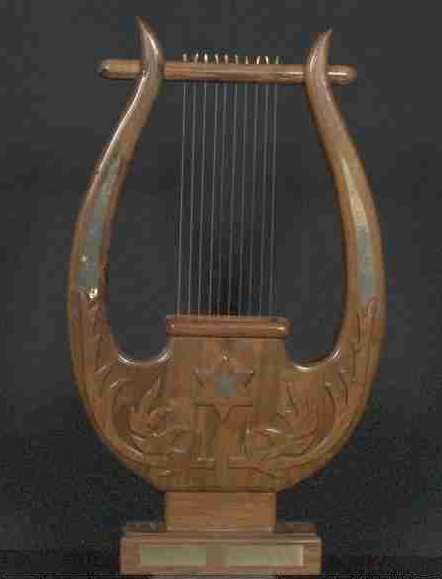
I wish I could hear the above lyrics accompanied by their original music, and I would really like to know what circumstances inspired David to write about the rugged God-courage he received simply because he asked. Among all the other “hats” David wore—king, warrior, mourner, husband, dancer, father—David wrote songs, too.
What events stirred his soul to write vulnerable words that even today many re-express to God in prayer and praise? His words written thousands of years ago are readily grafted onto our circumstances today—still befitting the human saga because God is the same yesterday, today and tomorrow.
In this week’s column, let’s explore David’s songwriting talents, and next week a time of lamenting in his life, and then we’ll wrap up this series about David on Easter weekend. Some psalms explain what caused him to write the psalm, while others hint at behind-the-scenes, and still others leave us guessing as to what was going on in his life.
The emotions of his words vary. Sometimes they are strong and defensive. At other times they are written from weariness, longing, or surrender. I particularly like the ones filled with adoration for God. In one of my bibles when a psalm mentions “rejoice” or “praise,” I annotate the words by drawing tiny stick figures, hands lifted high, and a broad smile on the stick character’s face. David’s lyrics reach into our traumas, victories, and our human condition, helping us during defeat, deep-seated pain, or great joy.
Several of my talented friends and relatives play piano or guitar without any scored music in front of them. They ably entertain a room of people for an hour—from hymns, to boogie-woogie, to classical tunes. Their musical abilities cause reflection for their audiences.
Music played an important role throughout David’s life, too—I can see teenager David listening to Sunny Shepherd Station 103.4. Known as a “skillful musician,” later he was titled “Israel’s singer of songs” (1 Samuel 16:18; 2 Samuel 23:1). Through music, he expressed deep emotions to God that resonated with mankind.
Out of the many stories and characters in the Old Testament, I discovered that David didn’t witness apparent miracles from God. His relationship and knowledge of God arose from miracle changes that took place in his heart, and his psalms reflect the departure of self-worth and the surge of God’s ways. Out of 150 psalms in the biblical collection, about 78 of them are attributed to David.
Sometimes familiarity of a psalm may cause it to be trivialized such as the “23 Psalm for Students,” which states “The Lord is my Shepherd, I shall not flunk.” Still others have found solace in a psalm when balm could be found nowhere else. Not peace in just the words, but because of who the words are about—“The Lord is my shepherd, I have no other wants.”
While Psalm 118, may or may not have been written by David, portions of it are the most quoted in the New Testament—proof of how ancient words speak to us through the ages. Matthew, Mark, Luke, and John all quote from this psalm. And Jesus also quotes the prophecy about himself as a cornerstone. These writers mentioned the psalms to give commentary on the truths they shared. Adopt your own petition and praise phrases from David’s psalms and memorize them, so that anytime, anywhere, the sweet singer of Israel can lift your spirit.
“[B]e strong and take heart and wait for the Lord” (Psalm27:14).
Friday, March 12, 2010
Running into the Foolish
Writer David Brown calls the battle with sin the “war between our ears.” He successfully identified the start of sin—it begins in our minds and hearts.
Last week, biblical David received an “Honorable Mention” award in this column for his good behavior. This week, the gut-honest text in 1 Samuel 25 explores his inward battle. Still residing in the wilderness, David and his band of men kept busy by guarding people’s property. This is the same region where the later Good Samaritan story took place, a place of danger. Thick with wild things—lawbreakers and fierce prowling animals—hard working people and flocks needed protection.
During sheep shearing time, David and his band of men watched over flocks and shearers near Mount Carmel. Afterwards, farmers traditionally held a feast for their hired hands. One recipient was ultra-rich Nabal, who suffered no losses because of David’s grand gesture of protection.
During the festivities, David sent 10 messengers to Nabal to ask for provisions. David’s men must have been in pretty dire need. They didn’t ask for a lot, just whatever the rich man could spare. But sheep-owner Nabal—known for his surly and nasty temperament—refused to help. In fact he hurled insults at the men. One of Nabal’s own servants described him as “such a wicked man that no one can talk with him.”
Matthew Henry says some of the earlier writers describe Nabal as a “dogged man, of a currish disposition, surly and snappish, always snarling.” Confronted by Nabal’s instability, David’s mental battle began. How would he respond? He had revenge in mind as he journeyed toward Nabal’s homestead. He took four hundred men with him, perhaps getting more hot-headed as they journeyed. By the time, they neared Nabal’s ranch, David didn’t want to “leave alive one male of all who belong to him!”
Nabal’s wife Abigail—an intelligent and beautiful woman—heard that David approached and secretly gathered two hundred loaves of bread, two skins of wine, five dressed sheep, five bushels of roasted grain and three hundred sweets—cakes of raisin and pressed figs. She went out to meet David, with the fair gift of charity. Upon reaching him, she got off her donkey and bowed with her face to the ground and entreated David to spare her household.
David relented and said, “May you be blessed for your good judgment and from keeping me from bloodshed this day.” David went on to confess that he nearly avenged with his own hand, instead of standing back and allowing God to move in correction of Nabal if he chose to do so.
What happened to David is common among us today. Eugene Peterson said, “Nabal’s vulgarity provoked a like vulgarity in David.” When David lost his temper and marched toward Nabal’s home, he was pulled by grudge-gravity. Ever feel that tug to pay back someone after they’ve offended you? Do we want to get in at least a verbal dig to folk who insult us or tread on our sense of self-worth?
Nabal acted the fool. David responded foolishly. But Abigail reminded David of a higher calling: God had anointed David to be king and his life was “bound securely in the bundle of the living” by the Lord God.
Before we leave this earth, we’ll probably run into a whole pack of fools—unfortunately we meet most of them one at a time. Watch out for those who lack understanding and are thoughtless. A Jewish proverb advises, “Never approach a goat from the front, a horse from the back or a fool from any side.”
When we get wrapped up in ourselves, we sometimes forget how God wants us to respond to wicked behavior. Boom! The war between the ears starts. May God always send a messenger to steer us back to his way. Sometimes they show up as “Abigails.”
Last week, biblical David received an “Honorable Mention” award in this column for his good behavior. This week, the gut-honest text in 1 Samuel 25 explores his inward battle. Still residing in the wilderness, David and his band of men kept busy by guarding people’s property. This is the same region where the later Good Samaritan story took place, a place of danger. Thick with wild things—lawbreakers and fierce prowling animals—hard working people and flocks needed protection.
During sheep shearing time, David and his band of men watched over flocks and shearers near Mount Carmel. Afterwards, farmers traditionally held a feast for their hired hands. One recipient was ultra-rich Nabal, who suffered no losses because of David’s grand gesture of protection.
During the festivities, David sent 10 messengers to Nabal to ask for provisions. David’s men must have been in pretty dire need. They didn’t ask for a lot, just whatever the rich man could spare. But sheep-owner Nabal—known for his surly and nasty temperament—refused to help. In fact he hurled insults at the men. One of Nabal’s own servants described him as “such a wicked man that no one can talk with him.”
Matthew Henry says some of the earlier writers describe Nabal as a “dogged man, of a currish disposition, surly and snappish, always snarling.” Confronted by Nabal’s instability, David’s mental battle began. How would he respond? He had revenge in mind as he journeyed toward Nabal’s homestead. He took four hundred men with him, perhaps getting more hot-headed as they journeyed. By the time, they neared Nabal’s ranch, David didn’t want to “leave alive one male of all who belong to him!”
Nabal’s wife Abigail—an intelligent and beautiful woman—heard that David approached and secretly gathered two hundred loaves of bread, two skins of wine, five dressed sheep, five bushels of roasted grain and three hundred sweets—cakes of raisin and pressed figs. She went out to meet David, with the fair gift of charity. Upon reaching him, she got off her donkey and bowed with her face to the ground and entreated David to spare her household.
David relented and said, “May you be blessed for your good judgment and from keeping me from bloodshed this day.” David went on to confess that he nearly avenged with his own hand, instead of standing back and allowing God to move in correction of Nabal if he chose to do so.
What happened to David is common among us today. Eugene Peterson said, “Nabal’s vulgarity provoked a like vulgarity in David.” When David lost his temper and marched toward Nabal’s home, he was pulled by grudge-gravity. Ever feel that tug to pay back someone after they’ve offended you? Do we want to get in at least a verbal dig to folk who insult us or tread on our sense of self-worth?
Nabal acted the fool. David responded foolishly. But Abigail reminded David of a higher calling: God had anointed David to be king and his life was “bound securely in the bundle of the living” by the Lord God.
Before we leave this earth, we’ll probably run into a whole pack of fools—unfortunately we meet most of them one at a time. Watch out for those who lack understanding and are thoughtless. A Jewish proverb advises, “Never approach a goat from the front, a horse from the back or a fool from any side.”
When we get wrapped up in ourselves, we sometimes forget how God wants us to respond to wicked behavior. Boom! The war between the ears starts. May God always send a messenger to steer us back to his way. Sometimes they show up as “Abigails.”
Friday, March 05, 2010
Honorable Mention
Book Giveaway--see previous blog posts or newsletter-readers go to http://stainedglasspickup.blogspot.com/
**********************************************************************************************
In contests, reward ribbons are blue, red, and white designating first, second, and third places. Sometimes an additional category is designated as “Honorable Mention.” That prize means the entry was on the right track. It needed a bit more spit and polish, but the work merited enough to garner an “honorable mention.”
That’s where we find our biblical hero David this week. He wins “honorable mention” award for his actions and reactions during his wilderness wanderings. The wilderness tests his character. He will have occasion to work underhanded, but he will instead chose a righteous path.
The last chapters of 1 Samuel tell how David runs from harm. King Saul, accompanied by 3,000 men pursued David to kill him, but David ran to a wilderness region, “Crags of the Wild Goats.”
Our wildernesses can be locations or circumstances. David’s was both. He had fled to less-traveled, rough terrain to evade his enemies. His wilderness location could compare to the hills of Afghanistan where even today men evade their pursuers.
David had an entourage of society misfits, who recognized his leadership and pledged their allegiance. They defended and helped protect David. A place of solitude can offer quiet refuge that a city cannot. Without hurried city life, street noise, and crowded markets, David gained clarity. He had time to contemplate his response to the murderous chase initiated by Israel’s first king.
The king, through skewed vision, saw David as an outlaw and a traitor. At least two times, David was within a gnat’s breath of King Saul and had occasion to kill his enemy. But he chose a nobler path.
The first time, David and his men had gone into the recesses of a cave to rest. The cool, darkness proved to be a good choice. David could see the entrance but not be seen. King Saul entered the same cave to relieve himself. In hushed tones, David’s followers suggested he kill the king. He refused and “crept up unnoticed and cut off a corner of Saul’s robe” (24:4).
“Afterward, David was conscience-stricken,” and berated himself saying, “The Lord forbid that I should do such a thing to my master, the Lord’s anointed…for he is the anointed of the Lord” (5-6). When Saul exited, David called out to him, even using the term “my father,” and bowed prostrated to the ground. He said he wished the king no harm, and then showed him the corner of his robe, proving David’s proximity.
Upon David’s entreaty, the king relented from his hostility and even acknowledged that David would reign instead of himself one day. Saul returned home. However, David remained at a stronghold with his men. Later, a second close encounter with King Saul yields similar results. David—near enough to rid the kingdom of Saul—again said no to the temptation because he knew that the Lord decides about kingdoms and whether they stand or fall. He refused to intrude upon God’s calendar.
This story finds both Saul and David in wildernesses. Saul gave in to the darkness while David chose to turn to God. He will later write, “You are my Lord; apart from you I have no good thing” (Psalm 16:2).
Lord, may each of us rely on you in the wilderness. Train our consciences in your ways and strike them with your thoughts. O King, we long to please you. Guide us so that our hearts and actions receive honorable mentions in your courts. Amen.
**********************************************************************************************
In contests, reward ribbons are blue, red, and white designating first, second, and third places. Sometimes an additional category is designated as “Honorable Mention.” That prize means the entry was on the right track. It needed a bit more spit and polish, but the work merited enough to garner an “honorable mention.”
That’s where we find our biblical hero David this week. He wins “honorable mention” award for his actions and reactions during his wilderness wanderings. The wilderness tests his character. He will have occasion to work underhanded, but he will instead chose a righteous path.
The last chapters of 1 Samuel tell how David runs from harm. King Saul, accompanied by 3,000 men pursued David to kill him, but David ran to a wilderness region, “Crags of the Wild Goats.”
Our wildernesses can be locations or circumstances. David’s was both. He had fled to less-traveled, rough terrain to evade his enemies. His wilderness location could compare to the hills of Afghanistan where even today men evade their pursuers.
David had an entourage of society misfits, who recognized his leadership and pledged their allegiance. They defended and helped protect David. A place of solitude can offer quiet refuge that a city cannot. Without hurried city life, street noise, and crowded markets, David gained clarity. He had time to contemplate his response to the murderous chase initiated by Israel’s first king.
The king, through skewed vision, saw David as an outlaw and a traitor. At least two times, David was within a gnat’s breath of King Saul and had occasion to kill his enemy. But he chose a nobler path.
The first time, David and his men had gone into the recesses of a cave to rest. The cool, darkness proved to be a good choice. David could see the entrance but not be seen. King Saul entered the same cave to relieve himself. In hushed tones, David’s followers suggested he kill the king. He refused and “crept up unnoticed and cut off a corner of Saul’s robe” (24:4).
“Afterward, David was conscience-stricken,” and berated himself saying, “The Lord forbid that I should do such a thing to my master, the Lord’s anointed…for he is the anointed of the Lord” (5-6). When Saul exited, David called out to him, even using the term “my father,” and bowed prostrated to the ground. He said he wished the king no harm, and then showed him the corner of his robe, proving David’s proximity.
Upon David’s entreaty, the king relented from his hostility and even acknowledged that David would reign instead of himself one day. Saul returned home. However, David remained at a stronghold with his men. Later, a second close encounter with King Saul yields similar results. David—near enough to rid the kingdom of Saul—again said no to the temptation because he knew that the Lord decides about kingdoms and whether they stand or fall. He refused to intrude upon God’s calendar.
This story finds both Saul and David in wildernesses. Saul gave in to the darkness while David chose to turn to God. He will later write, “You are my Lord; apart from you I have no good thing” (Psalm 16:2).
Lord, may each of us rely on you in the wilderness. Train our consciences in your ways and strike them with your thoughts. O King, we long to please you. Guide us so that our hearts and actions receive honorable mentions in your courts. Amen.
Wednesday, March 03, 2010
Book Give Away--God's Truth Revealed

Gentle Teaching
I absolutely love the tone of Kathy Howard’s new book God’s Truth Revealed. She is a gentle and humble teacher, reminding me of the Son of God, who is described in the same way. The content of the book is an excellent source. She takes readers on a journey, helping them discover through Bible verses who they are, why they are here, and where they are going—questions every person asks themselves sometime/somewhere in life.
The content is excellent and inviting. Kathy has developed this book from material she has taught to seekers and new believers. Besides pointing her readers to Bible answers in each chapter, Kathy also engages readers in the “Personal Story” sections. There, she connects with readers by sharing the testimonies of people she shared the material with earlier. Some stories of conversions are dramatic such as a nudist becoming a believer. I found other stories heart warming, especially the ones of seekers who had ordinary, day-to-day struggles. Their joy evident, I found myself rejoicing too in their new-found faith.
These sections are further encouragement, and as a veteran Christian, I found many applications for my life: Churchy Words Dictionary; Scripture Memory Tips; Scripture Memory Plans (the basics); General Helps for Leading a Study for New Believers and Seekers; and the Leader’s Guide.
I will put one of these books in my library because I can see myself recommending it for years to come. I have ordered extra copies for friends who are both new Christians and seekers. Where I worship we have many new believers, and I will recommend the use of this book as a classroom and personal guide that handily and successfully reveals the biblical foundations for the Christian faith.
Short Description of book:This twelve-week Bible study presents the basic beliefs of Christianity in a way that is engaging and personal. With the understanding that faith is not illogical, the study provides biblical, historical, and scientific evidence to support creation; the reliability of the Bible; and the life, death, and resurrection of Jesus. Kathy takes participants on a straightforward journey through the Bible to understand the importance of knowing God, not just knowing about Him. Each chapter also includes the real-life story of an individual who became a Christian as an adult.
Want to find out more, visit the God's Truth Revealed Web site. or purchase at Amazon, Christian Book.com, or New Hope Publishers.
Here’s the good news. I plan to give away the copy that New Hope Publishers sent for my review. Want to win God’s Truth Revealed? Just leave a comment and I’ll put your name in a drawing to be held on March 20, a Saturday.
Advance notice of an upcoming drawing. Tyndale is releasing a new DVD by VeggieTales creator Phil Vischer called What’s in the Bible that takes children on a fun and informative jaunt through the whole Bible. I’m in the process of viewing it—so far my grandchildren and I find it amazing—I’ll have my review posted early the week of March 21, and I have two complimentary certificates entitling the winners to pick up DVDs at your local bookstores. We’ve even made arrangements for out of country winners.
Monday, March 01, 2010
Tyndale Release Tomorrow: Son of Hamas
Check out this exclusive information before tomorrow's release of Tyndale's Son of Hamas, look for posted times of interviews on CNN, Fox News, The Today Show.
http://flashtrafficblog.wordpress.com/2010/03/01/exclusive-how-did-the-son-of-hamas-come-to-christ-part-one/
http://flashtrafficblog.wordpress.com/2010/03/01/exclusive-how-did-the-son-of-hamas-come-to-christ-part-one/
Friday, February 26, 2010
Who Keeps You From Fizzling?
An author told how someone said derogatory words about her early writing. Even though the writer has many books on store shelves, she said the harsh words and the accompanying unfriendly tone hang over her head like a curse. Even today, the long ago misspoken words sometimes surface to produce a fresh “word curse,” causing this godly author to doubt her calling.
It’s nearly always non-friends who utter “word curses.” Those words wound. They hurt. They last. Even though we try to slay them in our minds, they often resurrect to gouge a new gash.
Conversely, friends who champion and campaign for our good, their words can bless like no others’. We know the hearts from which they originated. We know the mettle of those true friends.
David had more than a few run-ins with non-friends, who wished him dead, all before he ever became king. Edomite Doeg plotted against him. Later, Doeg proved that evil lined his soul when he killed 85 priests, their women, children and cattle. An evil spirit had captured King Saul’s soul as well and he made at least six attempts to kill David. He hurled javelins; at night the king sent men to murder David as he slept. The king sent the shepherd boy into other hot skirmishes with the Philistines, hoping that they would do his dirty work and kill off the lad. David desperately needed a friend who would stick closer than a brother and he found him.
The one unlikely person to befriend David was King Saul’s son Jonathan. In traditional monarchies, Jonathan would stand next in line for the throne of his father. Perhaps that is why the king urged, “Jonathan and all the attendants to kill David.” Yet, Jonathan “was very fond of David and warned him” time after time of his father’s evil plots. (1 Samuel 19:1).
Even while his father pursued the anointed king David, Jonathan secretly sought out his friend with warnings and humble assurances, “You will be king over Israel, and I will be your second in command” (23:17). David and Jonathan made a covenant between their houses, vowing that they would esteem each other and their children to come after them. Eugene Peterson says that “Jonathan’s friendship entered David’s soul in a way that Saul’s hatred never did.”
This time of David’s life must have been difficult. He did good deeds and was attacked in spite of goodness. He had slain the Philistine giant, ridding Israel of the tyrant, and when King Saul had a tortured spirit, David, played soothing music. If we are confronted or attacked for doing bad, we expect that, but assaults are more painful when we are on our best behavior. At those times, we especially need a friend to come alongside us.
I haven’t had any javelins thrown at me of late but I have had a few “word curses” thrown my way over the years. That’s when I go to my longtime friend and confide in her. I rarely tell her the names of the non-friend, word-hurlers. There’s no need. I’m not looking for finger-wagging at them. I’m looking for someone to help me defuse my whining and feeling sorry for myself. She stomps out the fire of revenge. She points me to my gifts. She points me to God.
That’s what Jonathan did for David. David had a great beginning to his God-calling—anointed to be next king, slaying the over nine-foot giant (oops last week, I tagged him a mere seven foot). David’s road toward kingship started off with a bang. But then the opposition started. David could have given up, but he didn’t.
Jesus said that good-deed-doers will be persecuted. It’s the way of the world. Satan wants to make us whiners instead of winners. As this story progresses, we will see King Saul—bent on evil—in a decline. We will see David—still under attack—with a friend by his side and he will succeed.
Value friendships—word-bless and support each other—because friends keep us from fizzling out.
It’s nearly always non-friends who utter “word curses.” Those words wound. They hurt. They last. Even though we try to slay them in our minds, they often resurrect to gouge a new gash.
Conversely, friends who champion and campaign for our good, their words can bless like no others’. We know the hearts from which they originated. We know the mettle of those true friends.
David had more than a few run-ins with non-friends, who wished him dead, all before he ever became king. Edomite Doeg plotted against him. Later, Doeg proved that evil lined his soul when he killed 85 priests, their women, children and cattle. An evil spirit had captured King Saul’s soul as well and he made at least six attempts to kill David. He hurled javelins; at night the king sent men to murder David as he slept. The king sent the shepherd boy into other hot skirmishes with the Philistines, hoping that they would do his dirty work and kill off the lad. David desperately needed a friend who would stick closer than a brother and he found him.
The one unlikely person to befriend David was King Saul’s son Jonathan. In traditional monarchies, Jonathan would stand next in line for the throne of his father. Perhaps that is why the king urged, “Jonathan and all the attendants to kill David.” Yet, Jonathan “was very fond of David and warned him” time after time of his father’s evil plots. (1 Samuel 19:1).
Even while his father pursued the anointed king David, Jonathan secretly sought out his friend with warnings and humble assurances, “You will be king over Israel, and I will be your second in command” (23:17). David and Jonathan made a covenant between their houses, vowing that they would esteem each other and their children to come after them. Eugene Peterson says that “Jonathan’s friendship entered David’s soul in a way that Saul’s hatred never did.”
This time of David’s life must have been difficult. He did good deeds and was attacked in spite of goodness. He had slain the Philistine giant, ridding Israel of the tyrant, and when King Saul had a tortured spirit, David, played soothing music. If we are confronted or attacked for doing bad, we expect that, but assaults are more painful when we are on our best behavior. At those times, we especially need a friend to come alongside us.
I haven’t had any javelins thrown at me of late but I have had a few “word curses” thrown my way over the years. That’s when I go to my longtime friend and confide in her. I rarely tell her the names of the non-friend, word-hurlers. There’s no need. I’m not looking for finger-wagging at them. I’m looking for someone to help me defuse my whining and feeling sorry for myself. She stomps out the fire of revenge. She points me to my gifts. She points me to God.
That’s what Jonathan did for David. David had a great beginning to his God-calling—anointed to be next king, slaying the over nine-foot giant (oops last week, I tagged him a mere seven foot). David’s road toward kingship started off with a bang. But then the opposition started. David could have given up, but he didn’t.
Jesus said that good-deed-doers will be persecuted. It’s the way of the world. Satan wants to make us whiners instead of winners. As this story progresses, we will see King Saul—bent on evil—in a decline. We will see David—still under attack—with a friend by his side and he will succeed.
Value friendships—word-bless and support each other—because friends keep us from fizzling out.
Sunday, February 21, 2010
Who/What Dominates Your Heart?
At first, I crawled around on my hands and knees like a toddler—all I could manage to do. Are you asking what circumstances caused this? The cause—my fear of heights.
I help my husband Dave un-tarp our alfalfa when he brings it in every two weeks. The load is 8 foot wide, 48 foot long, and over 14 foot high. Years ago, when I first started helping him, I could only crawl like a baby on top of the load—very slow help at best. No courage whatsoever, and to worsen matters, the load of hay also rocks a bit when we move around.
Also, the black tarp that protects the alfalfa hides spaces between the hay bales. If a misplaced foot sinks down in those crevices, a tumble could happen. After years of trusting my husband to grab my hand or steady me if I totter when near the edge, I can walk around at those heights. And I’ve even learned to look for blessings up there—one is rubbing shoulders with the early morning songbirds.
Trust is the first step toward acquiring courage. One time in David’s saga, he faced a surprise battle where trust and courage triumphed. During a cheese-and-bread run to a battlefield to deliver homemade vittles to his three older brothers, the kid who was too young for the army heard a giant enemy bellow a taunt.
David arrived just in time to hear Goliath, the Philistine’s champion soldier, defy Israel’s army and God. He wanted a one-to-one, man-to-man fight by his rules. If the giant champion won, nothing would change—the Philistines would remain the victors. But, if an Israelite man won, then the oppressors would become the servants. The Philistines had subjugated Israel for many years and rid the territory of all blacksmiths, fearing the making of weapons. The only two swords or spears in all of Israel belonged to King Saul and his son Jonathan. I suppose Israel’s ragtag army equipped themselves with farm tools—not much of an armory. I imagine that the glint of enemies’ weapons in the early morning sun added to Israel’s fear.
News reached King Saul that a young lad had volunteered to meet the champion Goliath in the Valley of Elah (between the two encampments). Saul armed the slight youth with a bronze helmet and his own armor, but after the dress rehearsal David shed the unfamiliar clunky armor. He told the king, “The Lord who delivered me from the paw of the lion and the paw of the bear will deliver me from the hand of this Philistine” (1 Samuel 17: 37).
The well shod Goliath had dominated and terrified Israel for days upon days. Fear fueled and ruled the camp of Israel. Tension had multiplied. No one wanted hand-to-hand combat with this massive soldier. David left the king’s presence with his shepherd’s staff and a slingshot in hand. He stopped at a brook and chose five smooth stones. David didn’t quaver. He didn’t cower. He stood. Then he walked on to meet a nearly seven foot giant bully.
Eugene Peterson says David’s had a “God dominated imagination.” His trust in God increased his courage. King Saul to the lowest servant had been demoralized by Goliath’s colossal threats against them and their God. But David’s notions were dominated by his enormous God. He had witnessed his faithfulness in peace and combat with the wild.
The vast giant saw the young boy and his shepherd’s staff and scoffed and cursed David by his pagan gods. He saw the simple staff and asked, “Am I a dog that you come at me with sticks?” (vs.43). David’s’ heart may have pounded, but his whole body counted on help from God and we’re told that this youth “ran quickly toward the battle line to meet [Goliath]” (vs. 43).
You know the conclusion of the story. David one. Goliath none.
What giants do you face? Are there heights you fear scaling? Are you toddler- crawling when you could be walking and accomplishing your calling?
Trust the Chief Shepherd to give you a God dominated imagination. He has an ample supply of courage to pass out to receptive hearts.
I help my husband Dave un-tarp our alfalfa when he brings it in every two weeks. The load is 8 foot wide, 48 foot long, and over 14 foot high. Years ago, when I first started helping him, I could only crawl like a baby on top of the load—very slow help at best. No courage whatsoever, and to worsen matters, the load of hay also rocks a bit when we move around.
Also, the black tarp that protects the alfalfa hides spaces between the hay bales. If a misplaced foot sinks down in those crevices, a tumble could happen. After years of trusting my husband to grab my hand or steady me if I totter when near the edge, I can walk around at those heights. And I’ve even learned to look for blessings up there—one is rubbing shoulders with the early morning songbirds.
Trust is the first step toward acquiring courage. One time in David’s saga, he faced a surprise battle where trust and courage triumphed. During a cheese-and-bread run to a battlefield to deliver homemade vittles to his three older brothers, the kid who was too young for the army heard a giant enemy bellow a taunt.
David arrived just in time to hear Goliath, the Philistine’s champion soldier, defy Israel’s army and God. He wanted a one-to-one, man-to-man fight by his rules. If the giant champion won, nothing would change—the Philistines would remain the victors. But, if an Israelite man won, then the oppressors would become the servants. The Philistines had subjugated Israel for many years and rid the territory of all blacksmiths, fearing the making of weapons. The only two swords or spears in all of Israel belonged to King Saul and his son Jonathan. I suppose Israel’s ragtag army equipped themselves with farm tools—not much of an armory. I imagine that the glint of enemies’ weapons in the early morning sun added to Israel’s fear.
News reached King Saul that a young lad had volunteered to meet the champion Goliath in the Valley of Elah (between the two encampments). Saul armed the slight youth with a bronze helmet and his own armor, but after the dress rehearsal David shed the unfamiliar clunky armor. He told the king, “The Lord who delivered me from the paw of the lion and the paw of the bear will deliver me from the hand of this Philistine” (1 Samuel 17: 37).
The well shod Goliath had dominated and terrified Israel for days upon days. Fear fueled and ruled the camp of Israel. Tension had multiplied. No one wanted hand-to-hand combat with this massive soldier. David left the king’s presence with his shepherd’s staff and a slingshot in hand. He stopped at a brook and chose five smooth stones. David didn’t quaver. He didn’t cower. He stood. Then he walked on to meet a nearly seven foot giant bully.
Eugene Peterson says David’s had a “God dominated imagination.” His trust in God increased his courage. King Saul to the lowest servant had been demoralized by Goliath’s colossal threats against them and their God. But David’s notions were dominated by his enormous God. He had witnessed his faithfulness in peace and combat with the wild.
The vast giant saw the young boy and his shepherd’s staff and scoffed and cursed David by his pagan gods. He saw the simple staff and asked, “Am I a dog that you come at me with sticks?” (vs.43). David’s’ heart may have pounded, but his whole body counted on help from God and we’re told that this youth “ran quickly toward the battle line to meet [Goliath]” (vs. 43).
You know the conclusion of the story. David one. Goliath none.
What giants do you face? Are there heights you fear scaling? Are you toddler- crawling when you could be walking and accomplishing your calling?
Trust the Chief Shepherd to give you a God dominated imagination. He has an ample supply of courage to pass out to receptive hearts.
Saturday, February 13, 2010
Interim Times
“The story of David starts in the middle of another story. All stories do. We never get a clean start in this business of life,” says Eugene Peterson, author of “Leap Over a Wall ~ Reflections on the Life of David.”
Isn’t it true? When we arrive on earth, we enter the story of our parents’ lives, no matter how settled or chaotic those might be. We first encounter David’s name after he is anointed as the next king of Israel. Israel’s current king is Saul, so David’s anointing must have been an obscure event or discounted by any witnesses.
Even though the anointing takes place, at least a decade will pass before David officially becomes king, allowing the young David to develop a leader’s heart. I’ve especially thought about the word “anointing” this week—a word almost obscure except in religious connotations. According to Encarta World English Dictionary, “anoint” means to “bless someone with oil” or to “ordain somebody: to install somebody officially or ceremonially in a position or office.”
Some people don’t know what they want to be when they grow up. Early on, David knew his destiny. Even before the bloom left his youth, David’s résumé included shepherding, lyre-playing (a stringed instrument), and slingshot expert, all used in the years leading up to his kingship.
Lyres were hand-held musical instruments, strummed with a plectrum, similar to a guitar pick, rather than the strings being plucked. David, skilled at a young age, was summoned when King Saul grew ill-tempered to play a soothing song for the king. This required courage. Lopping off heads, throwing javelins at guests—some restless kings were not that hospitable.
Before David’s coronation there was a time lapse of 10 years. His experiences through that time can give us clues about how to live through our waiting rooms. First, David didn’t dwell on his future kingship, but went back to his day-job of shepherding. Whether we are called to grand destinies or fifteen minutes of fame, the grunge work of life is still there.
For families, churches, and businesses to function well during the in-between times, someone needs to attend to the everyday activities of living. The lower echelon jobs keep us humble. Even a CEO can benefit. Grunge work puts dirt under our fingernails—it takes the swagger out of celebrity.
A second observation about David: his interim years allowed him one-on-one time with God. God’s handmade world and his Holy Spirit inspired David to write psalms about God that still breathe life into our days, “[G]reat is you love, higher than the heavens; your faithfulness reaches to the skies . . . let your joy be over all the earth” (108:4-5). During those pastoral times, he gained strength and led helpless ewes and lambs. When sheep and shepherd were physically threatened, David used weapons and hand-to-hand combat to slay predators—a lion and a bear.
Third, while waiting to become king, his trust in God grew. David faced a giant, cruel opposition from citizens and King Saul, but he did not forsake his integrity and seek power early or by force.
What happens when you are in life’s waiting room? When you imagine bigger and better things for your life? How do you cope when your grand expectations are a no-show? Some may fret and halt most efforts to move forward. Others keep hoping and keep preparing.
From David’s waiting room, I see the message to spend time wisely. Just as God ordained David’s anointing, he has anointed our stories. He knew the beginning, he knows our current story, God will write The End when we have finished our work. Wherever you are in your life, follow David’s lead—put to good use the interim times.
Isn’t it true? When we arrive on earth, we enter the story of our parents’ lives, no matter how settled or chaotic those might be. We first encounter David’s name after he is anointed as the next king of Israel. Israel’s current king is Saul, so David’s anointing must have been an obscure event or discounted by any witnesses.
Even though the anointing takes place, at least a decade will pass before David officially becomes king, allowing the young David to develop a leader’s heart. I’ve especially thought about the word “anointing” this week—a word almost obscure except in religious connotations. According to Encarta World English Dictionary, “anoint” means to “bless someone with oil” or to “ordain somebody: to install somebody officially or ceremonially in a position or office.”
Some people don’t know what they want to be when they grow up. Early on, David knew his destiny. Even before the bloom left his youth, David’s résumé included shepherding, lyre-playing (a stringed instrument), and slingshot expert, all used in the years leading up to his kingship.
Lyres were hand-held musical instruments, strummed with a plectrum, similar to a guitar pick, rather than the strings being plucked. David, skilled at a young age, was summoned when King Saul grew ill-tempered to play a soothing song for the king. This required courage. Lopping off heads, throwing javelins at guests—some restless kings were not that hospitable.
Before David’s coronation there was a time lapse of 10 years. His experiences through that time can give us clues about how to live through our waiting rooms. First, David didn’t dwell on his future kingship, but went back to his day-job of shepherding. Whether we are called to grand destinies or fifteen minutes of fame, the grunge work of life is still there.
For families, churches, and businesses to function well during the in-between times, someone needs to attend to the everyday activities of living. The lower echelon jobs keep us humble. Even a CEO can benefit. Grunge work puts dirt under our fingernails—it takes the swagger out of celebrity.
A second observation about David: his interim years allowed him one-on-one time with God. God’s handmade world and his Holy Spirit inspired David to write psalms about God that still breathe life into our days, “[G]reat is you love, higher than the heavens; your faithfulness reaches to the skies . . . let your joy be over all the earth” (108:4-5). During those pastoral times, he gained strength and led helpless ewes and lambs. When sheep and shepherd were physically threatened, David used weapons and hand-to-hand combat to slay predators—a lion and a bear.
Third, while waiting to become king, his trust in God grew. David faced a giant, cruel opposition from citizens and King Saul, but he did not forsake his integrity and seek power early or by force.
What happens when you are in life’s waiting room? When you imagine bigger and better things for your life? How do you cope when your grand expectations are a no-show? Some may fret and halt most efforts to move forward. Others keep hoping and keep preparing.
From David’s waiting room, I see the message to spend time wisely. Just as God ordained David’s anointing, he has anointed our stories. He knew the beginning, he knows our current story, God will write The End when we have finished our work. Wherever you are in your life, follow David’s lead—put to good use the interim times.
Friday, February 05, 2010
My grandchildren like to hear stories about when their parents were children, and their favorites involve a snake in the chicken pen and an opossum in the garage. They also love Bible stories, especially when they hear a bit more detail than before. Of course, they are entertained through storytelling, but more than that, they connect with family and God. These stories are requested again and again.
David is a character in the Bible who is worthy of revisiting. Each time I read his story, I leave with a better connection to his humanity, his frailties, and his passion for God. For the next few weeks, we’ll consider some of the David-stories that the Holy Spirit handed down to our generation. First, a bit of general background about David, Israel’s second king.
David’s story is not sugar-coated. His sins and his love for God are revealed. The tough life of a warrior king resounds through his psalms — his cries of feeling forsaken echo through his talks with God. But once vented, God nudges his heart and he is reminded of God’s eternal, loving-kindness and attention. A study of David will also help us better understand the humanity of Jesus, who was often referred to as the Son of David.
David’s name first appears in scripture in the book of Ruth. Actually his name is the last word in that book, in a genealogy listing ancestor Perez down to “Jesse the father of David” (4:21). The first appearance of David is in the book of 1 Samuel.
The nation of Israel rejected God as their supreme leader and demanded a king like the pagan countries surrounding them. God is called the “the King eternal, immortal, invisible, the only God” (1 Timothy 1:17), but rejecting God as the king of lives and souls was common then and now.
The prophet Samuel traveled to Bethlehem, commissioned by God to anoint a replacement for Saul, the first king of Israel. He requested the elders of the city to consecrate themselves and the family of Jesse, who had eight sons. Seven of the sons prepared for the meeting with Samuel. When Eliab, the oldest, passed before Samuel he thought, “Surely the Lord’s anointed stands here before the Lord” (1 Samuel 16:6), but God cautioned the prophet to not consider these sons and their regal bearing, height, or good looks. Firstborn Eliab did not fit God’s qualification for next king of Israel, nor did the six other sons of Jesse.
Samuel asked, “Are these all the sons you have?” (vs. 11). That’s when Samuel heard about the youngest, the son in the field, the unconsecrated boy, who rubbed shoulders with the sheep and sunshine. Looked over in the brother-roll-call, Jesse said, “There is still the youngest, but he is tending sheep.”
Jesse didn’t even call his son’s name to Samuel. Eugene H. Peterson says the Hebrew word used here for “youngest” is “huqqaton” which carries “undertones of insignificance,” and “certainly not a prime candidate for prestigious work.” David the least and last in his family was summoned from his shepherding and brought before Samuel.
That’s when Samuel finally got affirmation from the Lord, “Rise and anoint him. He’s the one.” God didn’t call him by name either, but why did God pick David? Not for his name, or physical characteristics, or his family rank. God knew that David’s heart -- even after committing deadly sins -- would always turn back to the King of kings. Earlier, Samuel had foretold about David to the outcast King Saul that “the Lord has sought a man after his own heart.”
Bernard of Clairvaux (1153) said, “Lord, let me never, never outlive my love to Thee.” That’s the crux of God choosing David. God knew that long after the tender shepherd years, long after his kingship, and long after his glory days, even at the end of his life, David’s heart would still be chasing after God’s heart. What a foundation for a kingship. What a superb ending to a life story.
It’s a worthy goal and legacy for our life-stories: Don’t outlive your love for God. And long after our names are forgotten, the heart of God will still survive in the lives of generations who come after us.
David is a character in the Bible who is worthy of revisiting. Each time I read his story, I leave with a better connection to his humanity, his frailties, and his passion for God. For the next few weeks, we’ll consider some of the David-stories that the Holy Spirit handed down to our generation. First, a bit of general background about David, Israel’s second king.
David’s story is not sugar-coated. His sins and his love for God are revealed. The tough life of a warrior king resounds through his psalms — his cries of feeling forsaken echo through his talks with God. But once vented, God nudges his heart and he is reminded of God’s eternal, loving-kindness and attention. A study of David will also help us better understand the humanity of Jesus, who was often referred to as the Son of David.
David’s name first appears in scripture in the book of Ruth. Actually his name is the last word in that book, in a genealogy listing ancestor Perez down to “Jesse the father of David” (4:21). The first appearance of David is in the book of 1 Samuel.
The nation of Israel rejected God as their supreme leader and demanded a king like the pagan countries surrounding them. God is called the “the King eternal, immortal, invisible, the only God” (1 Timothy 1:17), but rejecting God as the king of lives and souls was common then and now.
The prophet Samuel traveled to Bethlehem, commissioned by God to anoint a replacement for Saul, the first king of Israel. He requested the elders of the city to consecrate themselves and the family of Jesse, who had eight sons. Seven of the sons prepared for the meeting with Samuel. When Eliab, the oldest, passed before Samuel he thought, “Surely the Lord’s anointed stands here before the Lord” (1 Samuel 16:6), but God cautioned the prophet to not consider these sons and their regal bearing, height, or good looks. Firstborn Eliab did not fit God’s qualification for next king of Israel, nor did the six other sons of Jesse.
Samuel asked, “Are these all the sons you have?” (vs. 11). That’s when Samuel heard about the youngest, the son in the field, the unconsecrated boy, who rubbed shoulders with the sheep and sunshine. Looked over in the brother-roll-call, Jesse said, “There is still the youngest, but he is tending sheep.”
Jesse didn’t even call his son’s name to Samuel. Eugene H. Peterson says the Hebrew word used here for “youngest” is “huqqaton” which carries “undertones of insignificance,” and “certainly not a prime candidate for prestigious work.” David the least and last in his family was summoned from his shepherding and brought before Samuel.
That’s when Samuel finally got affirmation from the Lord, “Rise and anoint him. He’s the one.” God didn’t call him by name either, but why did God pick David? Not for his name, or physical characteristics, or his family rank. God knew that David’s heart -- even after committing deadly sins -- would always turn back to the King of kings. Earlier, Samuel had foretold about David to the outcast King Saul that “the Lord has sought a man after his own heart.”
Bernard of Clairvaux (1153) said, “Lord, let me never, never outlive my love to Thee.” That’s the crux of God choosing David. God knew that long after the tender shepherd years, long after his kingship, and long after his glory days, even at the end of his life, David’s heart would still be chasing after God’s heart. What a foundation for a kingship. What a superb ending to a life story.
It’s a worthy goal and legacy for our life-stories: Don’t outlive your love for God. And long after our names are forgotten, the heart of God will still survive in the lives of generations who come after us.
Subscribe to:
Posts (Atom)