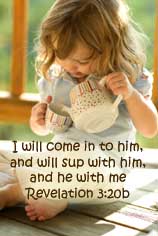
Jolie, our barely three-year-old granddaughter, asked me to read to her. She chose a book about a whimsical farm tractor. While I read, she held the book and turned the shiny cardboard pages. The tractor carried on quite a monologue about his “nine–to-five” field work. She skipped some of the pages, not showing interest in mechanical issues. After six pages, the tractor said, “And my dependable motor….”
We didn’t get any further. Jolie closed the book and said, “Amen.” I guess she mixed her closing remarks because she hears us say “Amen” when concluding a prayer and “the end” when finishing a book.
Later that day, she brought me the Little Golden book “Sleeping Beauty.” As I read to her, she tolerated the story line a bit better about a princess, an evil rival and a handsome prince.
Again, when she closed the book, she said, “Amen.” Since then, I’ve contemplated prayer over the “trivial” and larger issues.
In last week’s column I told the true story about a woman who had a pie in the oven and had to leave home to get a sick child from school. The mom had several delays and so she prayed for help to get home before the pie burned.
When small children are learning to pray, they pray about what they know, the intimate details of their family: dad, mom, siblings and pets. When younger, both of my grandsons prayed for their dog Willie long after his demise. At mealtimes, children express fresh faith when they give thanks for rice, water, ketchup, salt, pepper and the dinner plates.
As children-trained-in-prayer grows older, the world encroaches and their knowledge of good and evil grows. As concerns deepen, we’ve witnessed them begin to pray for victims of tragedies. Some adults have told me that they’ve come full circle in their prayer life. While their eyes are open to the rips and tears in the world’s character, they are back in tune with God who also cares about salt, pepper, and rice.
From the Bible, they’ve seen God in the minor details of life. God names stars and numbers hairs on heads. He sees sparrows fall from their nests. He rescues ax heads from deep waters. When he rid Egypt of flies, not a single one remained (Exodus 8:31). When Jesus taught his disciples to pray, he asked “give us this day our daily bread.” Far too often, I take the daily crust of bread for granted.
Selfish prayers are described in James 4:3. God is the only true judge of whether a prayer is motivated by selfishness. James says, that type of prayer is not answered “because you ask with wrong motives, that you may spend what you get on your pleasures.”
If all aspects of life were governed by good-motivation prayer, this old world might tilt its axis back toward living out the charity of God. What I’m trying to say is that every situation, every moment of every day could use a prayer. If we pray without ceasing and keep our eyes on the Father as he befriends us, we’ll naturally turn to him for big and small praises and requests.
“THE END” would come to many worries if we covered all moments, big and small, with an “Amen.”
Visit Cathy at www.cathymessecar.com
Friday, September 14, 2007


Friday, September 07, 2007
Mysterious Ways-Sept. 7
She put a pie in the oven and heard her phone ring. The school nurse said her son had a fever—could she pick him up?
Mental calculations began. The pie needed 45 minutes to bake. Satisfied, she zoomed out of her driveway to make the ten minute trip to school, run by the pharmacy, purchase over-the-counter medicines, get home and take the yummy pie out of the oven.
When I first read the story in Ronald Dunn’s Don’t Just Stand There, Pray Something, I thought, “Don’t do it. Something will go wrong.”
The mother-baker-nursemaid caught all green traffic lights, picked up her son, and drove to the pharmacy. Perhaps the on-schedule mom left the drugstore feeling smug until her hands fumbled inside her purse for car keys. A little sinking spell hit when she didn’t hear the familiar clank of metal.
At the car, Marie peeked in. Her son leaned his feverish forehead against the cool window saying, “Mom, they’re on the seat.”
Her mind conjured an overcooked pie and worse, yet, a charred house. But, she whispered a quick prayer, “Help me, Lord.” To her amazement she saw a clothes hanger on the ground. She unwound the corkscrew neck and set to work.
We’ve been the main character in similar scenes or watched a desperate soul try to lasso a latch. After futile attempts and more silent prayers, a young man walked up, “Ma’am, may I help you?”
Grateful, she handed off the spindly tool. He worked at worming the wire around, and in under a minute her car door unlocked. She beamed a compliment. “What a nice young man you are. You must be a really good boy.”
“No ma’am, I’m not a good boy.” He shuffled his feet, looked down in obvious embarrassment, “I just got out of prison.”
She said, “Praise God, he sent a professional!”
William Cowper (1731-1800), poet and hymnist wrote “God moves in mysterious ways, his wonders to perform.” If only the lessons from this mom’s story could sink in and settle.
Whenever God is invited to assist, we can expect the unexpected.
Reach Cathy at www.cathymessecar.com
Mental calculations began. The pie needed 45 minutes to bake. Satisfied, she zoomed out of her driveway to make the ten minute trip to school, run by the pharmacy, purchase over-the-counter medicines, get home and take the yummy pie out of the oven.
When I first read the story in Ronald Dunn’s Don’t Just Stand There, Pray Something, I thought, “Don’t do it. Something will go wrong.”
The mother-baker-nursemaid caught all green traffic lights, picked up her son, and drove to the pharmacy. Perhaps the on-schedule mom left the drugstore feeling smug until her hands fumbled inside her purse for car keys. A little sinking spell hit when she didn’t hear the familiar clank of metal.
At the car, Marie peeked in. Her son leaned his feverish forehead against the cool window saying, “Mom, they’re on the seat.”
Her mind conjured an overcooked pie and worse, yet, a charred house. But, she whispered a quick prayer, “Help me, Lord.” To her amazement she saw a clothes hanger on the ground. She unwound the corkscrew neck and set to work.
We’ve been the main character in similar scenes or watched a desperate soul try to lasso a latch. After futile attempts and more silent prayers, a young man walked up, “Ma’am, may I help you?”
Grateful, she handed off the spindly tool. He worked at worming the wire around, and in under a minute her car door unlocked. She beamed a compliment. “What a nice young man you are. You must be a really good boy.”
“No ma’am, I’m not a good boy.” He shuffled his feet, looked down in obvious embarrassment, “I just got out of prison.”
She said, “Praise God, he sent a professional!”
William Cowper (1731-1800), poet and hymnist wrote “God moves in mysterious ways, his wonders to perform.” If only the lessons from this mom’s story could sink in and settle.
Whenever God is invited to assist, we can expect the unexpected.
Reach Cathy at www.cathymessecar.com
Friday, August 31, 2007
God's Stars
On any clear night, glance at the stars and you’ll see tiny glimmers in dark navy sky. From Earth’s position, all the flickers of light look about the same, but magnified by the Hubbel Space Telescope, they reveal swirling colors and even new stars.
God keeps up with his stars. He numbers them and calls each by name (Psalms 147:4) Galaxies are delivery rooms, and God is still naming his newborn stars. Paul mentions that “even the stars differ from each other in their beauty and brightness” (1 Corinthians 15:41).
All the differing celestials, here-a-sparkle there-a-sparkle, remind me of the believers God places in different locations around the world. Jesus instructed his followers to “let your light shine before men, that they may see your good deeds and praise your Father in heaven” (Matthew 5:16).
Hospital volunteers, soup kitchen workers, stay-at-home moms, law enforcement, college students, or patient dads, these are just a few of the roles God uses to pierce darkness with light.
Peoria Journal Star in Illinois encourages readers to post about random acts of kindness at their Web site, PJStar. Pam wrote about an experience at Longhorn Steakhouse.
A husband took his wife Pam to Longhorn Steakhouse, to eat her last meal before chemo treatments began. The restaurant staff got wind of Pam’s future battle, and offered a dessert on the house. When the sweet arrived, a message encircled the luscious chocolate concoction: “GET WELL SOON.” The shining-star-staff left the light on for Pam.
I’m writing about kindness because I stood behind a rude person in a grocery line the other day. A customer ignored the clerk and talked to a friend who had walked up. When the small purchase ended, the customer talked down to the clerk for a simple bagging oversight.
The clerk remained friendly and cheerful and made the correction, despite receiving the cold shoulder and rude disgust. When Jesus pitched his tent among us, he remained sinless. Rude behavior, words or voice tone were not in his life. His true self expressed compassion, mercy, justice, and encouragement even to those in error.
Kindness is habit forming and counteracts rudeness. Adopt kindness as your standard because you reflect God’s light. This area is teeming with people. Crowded roadways and longer lines at checkouts leave ample room for kindness.
A galaxy of earthbound stars can be the backdrop for God’s work in any area.
Shine on.
Purchase copies of The Stained Glass Pickup at www.leafwoodpublishers.com www.christianbook.com or www.amazon.com Order autographed copies at www.stainedglasspickup.com
Friday, August 24, 2007
Psalms Calm
Twenty-four-hour news—do you want to turn the world off sometimes, retreat from news inundation? By clicking a remote, turning a dial, or logging on to the Internet, you can receive news—good and bad—from daybreak to daybreak. If you find yourself bloated by news and anxious, where do you go for comfort?
Anthony Ash wrote, "It has been said that somewhere in the Psalms can be found a reflection of virtually every religious experience known to man, and the person familiar with the Psalter can find balm for every wound." Mr. Ash admits that this statement may not be strictly true. However, it does reflect high regard for Bible psalms from those who experience kinship with the authors’ woes.
The Book of Psalms is a blend of theology, worship and daily living. One of my favorite psalms is the 46th and begins with these words, "God is our refuge and strength, and ever present help in trouble."
In the stanzas, this psalm recognizes three trouble-areas: natural disasters, political upheaval and battle fatigue. The third stanza identifies war and battle fatigue as wearisome, and a good word from the Lord is embedded there, "Be still, and know that I am God."
At first, quieting self in turmoil may seem a daunting request. But, it’s doable because God is the master of lightening in a storm and the calm that follows. He can scrub striving and straining out of hearts and replace them with serenity and trust.
If you need a refreshing break from news overload, take a long drink from the Psalms. Choose from over 150 or read them all. They motivate. In 1529, the 46th psalm inspired Martin Luther to write the words and music to a well known hymn, "A Mighty Fortress is Our God.”
When technology brings repetitious disasters to our doorsteps, it’s easy to lose sight of God-in-control. Like a spring loaded clock, the world ticks to God’s timetable. He remembers yesterday, he is present in the moment you are breathing in, and he will be in tomorrow. He knows what is happening and the psalmists praise his generous involvement.
Does news rankle and irk and un-tuck your feathers? "Be still, and know that I am God" isn't a take-it-or-leave-it suggestion. If God’s instructions are followed, he uncorks calm and pours peace into lives.
Some folks read one Psalm a day, and go through the Psalter several times a year. To experience God, read and heed. Read about the human experience, and heed God’s care in Psalms.
If you have a favorite psalm it may be in your memory. It's a good place to tuck away words from the Lord, words that can help one be still and remember that God is God.
What is your favorite psalm?
Anthony Ash wrote, "It has been said that somewhere in the Psalms can be found a reflection of virtually every religious experience known to man, and the person familiar with the Psalter can find balm for every wound." Mr. Ash admits that this statement may not be strictly true. However, it does reflect high regard for Bible psalms from those who experience kinship with the authors’ woes.
The Book of Psalms is a blend of theology, worship and daily living. One of my favorite psalms is the 46th and begins with these words, "God is our refuge and strength, and ever present help in trouble."
In the stanzas, this psalm recognizes three trouble-areas: natural disasters, political upheaval and battle fatigue. The third stanza identifies war and battle fatigue as wearisome, and a good word from the Lord is embedded there, "Be still, and know that I am God."
At first, quieting self in turmoil may seem a daunting request. But, it’s doable because God is the master of lightening in a storm and the calm that follows. He can scrub striving and straining out of hearts and replace them with serenity and trust.
If you need a refreshing break from news overload, take a long drink from the Psalms. Choose from over 150 or read them all. They motivate. In 1529, the 46th psalm inspired Martin Luther to write the words and music to a well known hymn, "A Mighty Fortress is Our God.”
When technology brings repetitious disasters to our doorsteps, it’s easy to lose sight of God-in-control. Like a spring loaded clock, the world ticks to God’s timetable. He remembers yesterday, he is present in the moment you are breathing in, and he will be in tomorrow. He knows what is happening and the psalmists praise his generous involvement.
Does news rankle and irk and un-tuck your feathers? "Be still, and know that I am God" isn't a take-it-or-leave-it suggestion. If God’s instructions are followed, he uncorks calm and pours peace into lives.
Some folks read one Psalm a day, and go through the Psalter several times a year. To experience God, read and heed. Read about the human experience, and heed God’s care in Psalms.
If you have a favorite psalm it may be in your memory. It's a good place to tuck away words from the Lord, words that can help one be still and remember that God is God.
What is your favorite psalm?
Thursday, August 16, 2007
Bibles and Backpacks
This weekend in Texas, if you buy blue jeans for school, you will not pay sales tax. What a deal. Would you like to purchase something else without sales tax? Year round, you can buy tax-free Bibles in Texas, also tax exempt in Florida, Massachusetts, and Missouri.
A leader in Bible distribution is The American Bible Society: “to make the Bible available to every person in a language and format each can understand and afford, so that all people may experience its life-changing message.”
The ABS formed in 1816, in New York City and early presidents included a Supreme Court chief justice and a New York City mayor. By 1817, the society gifted Bibles to the military crew of the USS John Adams. To this day, getting Bibles on battlefields is primary work. During Civil War years 1861—1865, Bibles were sent to the North and South armies.
Between 1940-1945, World War II, ABS provided more than 7.4 million scriptures to those serving in the U.S. armed forces. In 1991, they presented camouflage covered, compact Bibles to 300,000 serving in the Persian Gulf.
Early on, the society placed Bibles in hotels, and by the 1850s on steamships and railcars. Throughout the years, the society added Bibles to time capsule projects at World’s Fairs.
One of their major functions is translating the Bible into native languages. Within two years of formation, in 1818, the three letters of John were printed in Delaware Indian with English parallels.
For decades, the society has kept abreast of current technology, using slides, motion pictures, and radio and television broadcasting. Today, ABS at www.bibles.org offers Bibles and even downloads to cell phones.
Who will most influence your children this school term? The Weekly Reader poll, a leader in surveying teens, questioned 1,100 teens between the ages of 12-18 about influencers in their lives. Many, 67.7 percent, believe their parents to be the most significant role models. After parents were teachers, coaches, siblings and religious leaders.
Many school book purchases will be made in the next few weeks. Parents, each student could also use “a lamp to my feet and a light to my path” (Psalm 119:105). A Bible in a backpack is a good idea. Traditional book or text on a cell phone screen, your children can have God, the best influencer of all, at their fingertips.
Do you have a favorite Bible? If so, how long have you had it?
Visit Cathy at www.cathymessecar.com
A leader in Bible distribution is The American Bible Society: “to make the Bible available to every person in a language and format each can understand and afford, so that all people may experience its life-changing message.”
The ABS formed in 1816, in New York City and early presidents included a Supreme Court chief justice and a New York City mayor. By 1817, the society gifted Bibles to the military crew of the USS John Adams. To this day, getting Bibles on battlefields is primary work. During Civil War years 1861—1865, Bibles were sent to the North and South armies.
Between 1940-1945, World War II, ABS provided more than 7.4 million scriptures to those serving in the U.S. armed forces. In 1991, they presented camouflage covered, compact Bibles to 300,000 serving in the Persian Gulf.
Early on, the society placed Bibles in hotels, and by the 1850s on steamships and railcars. Throughout the years, the society added Bibles to time capsule projects at World’s Fairs.
One of their major functions is translating the Bible into native languages. Within two years of formation, in 1818, the three letters of John were printed in Delaware Indian with English parallels.
For decades, the society has kept abreast of current technology, using slides, motion pictures, and radio and television broadcasting. Today, ABS at www.bibles.org offers Bibles and even downloads to cell phones.
Who will most influence your children this school term? The Weekly Reader poll, a leader in surveying teens, questioned 1,100 teens between the ages of 12-18 about influencers in their lives. Many, 67.7 percent, believe their parents to be the most significant role models. After parents were teachers, coaches, siblings and religious leaders.
Many school book purchases will be made in the next few weeks. Parents, each student could also use “a lamp to my feet and a light to my path” (Psalm 119:105). A Bible in a backpack is a good idea. Traditional book or text on a cell phone screen, your children can have God, the best influencer of all, at their fingertips.
Do you have a favorite Bible? If so, how long have you had it?
Visit Cathy at www.cathymessecar.com
Friday, August 10, 2007
Short Prayers
Centuries ago, Christians retreated into the hot, barren Egyptian desert to escape persecution. Later, in 311 A.D., when Christianity became a recognized religion, some chose to stay in the desert, embracing an austere life. They attempted through disciplines to remember God is near every moment of every day. In ministry to others and in private prayers, they devoted themselves to God and became known as the Desert Fathers.
Out of their tradition, arose “breath prayers.” They based their short prayers (could be said in one breath) on the pattern of Jesus Christ. Even on the cross, Jesus said a brief prayer, “Into thy hands I commit my spirit.” When I’m in pain, my prayers are very short, too.
Also, when Jesus taught his disciples to pray, the succinct prayer included short phrases. The cited reasons these desert dwellers’ prayed repetitiously was to stay in constant contact with God. Also, they wanted to follow the apostle Paul’s urging to the Thessalonians, “pray continually.”
Out of their tradition arose short prayers, repeated in a breathe-in and breathe-out pattern, consequently the name breath prayers. By far, their favorite prayer was from a parable of Jesus when a repentant tax collector pled, “God, have mercy on me, a sinner” (Luke 18:13). Eventually, some even shortened the plea, “Lord [breathe in] . . . mercy [breathe out].”
With my many flaws, I could certainly pray that prayer each day, and even each hour. Before I ever heard of the monks known as the Desert Fathers, I saw many short prayers in the Bible. I admit, I’m not a chanter, saying them repeatedly throughout a day. I also don’t breathe a certain way when praying. Usually the quick prayer that springs to mind and on to God bypasses earthly regulations.
I’ll share a favorite. One praise prayer that can be imitated comes from Eve, the mother of all living. Part of women’s fates after the fall was childbearing plus – plus pain. And after Eve delivered Cain, her first son, she said, “With the help of the LORD, I have brought forth a man.”
I like to imitate her praise and tell God thank you for help. Usually, my accomplishment is not as labor intensive as childbearing: “With the help of the Lord, I finished the income tax” or “With the help of the Lord, I told my hurting friend about Jesus.”
Praying short phrases from the Bible is not new, and many find this natural and satisfactory. This summer, a young mother told me that when rowdiness reigns in her home she repeats this Bible praise back to God, “Children ARE a blessing from the Lord” (Psalm 127:3).
When you next read your Bible, watch for short phrases that describe where you are in life, and say them back to God. They may be the gentle whispers that keep you in God’s presence that day.
________________________________________________
Dear Readers: Some of you have asked where you can purchase copies of The Stained Glass Pickup. They are available at online bookstores—you can Google and find the best deals—or you can order autographed copies through Pay Pal at www.stainedglasspickup.com
Thanks for asking, and if you purchase, double thanks.
For those of you who have a copy, would you do me the favor of asking your local Christian bookstore to carry them? Also, several America’s Country Stores (Purina feed dealers) stock this book, and they are having great success, too. The Stained Glass Pickup sells well when it gets shelf space in gift areas and bookstores. I’m happy to talk with store owners about sales statistics.
Contact me at writecat@consolidated.net
Out of their tradition, arose “breath prayers.” They based their short prayers (could be said in one breath) on the pattern of Jesus Christ. Even on the cross, Jesus said a brief prayer, “Into thy hands I commit my spirit.” When I’m in pain, my prayers are very short, too.
Also, when Jesus taught his disciples to pray, the succinct prayer included short phrases. The cited reasons these desert dwellers’ prayed repetitiously was to stay in constant contact with God. Also, they wanted to follow the apostle Paul’s urging to the Thessalonians, “pray continually.”
Out of their tradition arose short prayers, repeated in a breathe-in and breathe-out pattern, consequently the name breath prayers. By far, their favorite prayer was from a parable of Jesus when a repentant tax collector pled, “God, have mercy on me, a sinner” (Luke 18:13). Eventually, some even shortened the plea, “Lord [breathe in] . . . mercy [breathe out].”
With my many flaws, I could certainly pray that prayer each day, and even each hour. Before I ever heard of the monks known as the Desert Fathers, I saw many short prayers in the Bible. I admit, I’m not a chanter, saying them repeatedly throughout a day. I also don’t breathe a certain way when praying. Usually the quick prayer that springs to mind and on to God bypasses earthly regulations.
I’ll share a favorite. One praise prayer that can be imitated comes from Eve, the mother of all living. Part of women’s fates after the fall was childbearing plus – plus pain. And after Eve delivered Cain, her first son, she said, “With the help of the LORD, I have brought forth a man.”
I like to imitate her praise and tell God thank you for help. Usually, my accomplishment is not as labor intensive as childbearing: “With the help of the Lord, I finished the income tax” or “With the help of the Lord, I told my hurting friend about Jesus.”
Praying short phrases from the Bible is not new, and many find this natural and satisfactory. This summer, a young mother told me that when rowdiness reigns in her home she repeats this Bible praise back to God, “Children ARE a blessing from the Lord” (Psalm 127:3).
When you next read your Bible, watch for short phrases that describe where you are in life, and say them back to God. They may be the gentle whispers that keep you in God’s presence that day.
________________________________________________
Dear Readers: Some of you have asked where you can purchase copies of The Stained Glass Pickup. They are available at online bookstores—you can Google and find the best deals—or you can order autographed copies through Pay Pal at www.stainedglasspickup.com
Thanks for asking, and if you purchase, double thanks.
For those of you who have a copy, would you do me the favor of asking your local Christian bookstore to carry them? Also, several America’s Country Stores (Purina feed dealers) stock this book, and they are having great success, too. The Stained Glass Pickup sells well when it gets shelf space in gift areas and bookstores. I’m happy to talk with store owners about sales statistics.
Contact me at writecat@consolidated.net
Thursday, August 02, 2007
31 Day Plan
Solomon spoke three thousand proverbs. 1 Kings 4:32
How would you like to go on a 31 day treasure hunt? If so, during August, plan to read the 31 chapters of Proverbs in the Bible, authored for the most part by King Solomon. Summer temperatures will sizzle near 100, and you’ll want to retreat into the air conditioning. Why not plan to turn off the television and visit ancient wisdom, still practical in 2007.
Not everything in the Bible is about heaven and salvation even though the Bible is God’s story about interaction with man. In the wisdom literature, God spells out ways to live ordinary lives on earth with integrity, right thinking.
In the prayer, commonly known as the Lord’s Prayer, Jesus prayed that the Father’s will be carried out “on earth as it is in heaven.” By reading Proverbs in 31 days, one can get a crash course of very good advice for living out God’s will on earth. The first chapters teach reverence for God, a good starting place for all.
The book of Proverbs also tackles topics such as morals, honesty, humility, eating habits, friendships, laying traps, fools, laziness, gossip, lessons from nature, taking advice, knowledge, money management, honoring parents, how drunkards learn lessons, and marriage. Following are favorite Proverb truisms:
“Finish your outdoor work and get your fields ready; after that, build your house” (24:27). Build up your nest egg, before you build the nest.
“Better to meet a bear robbed of her cubs than a fool in his folly” (17:12). An angry bear is recognizable, a fool, whoa, some of them look just like an average Joe.
“Seldom set foot in your neighbor’s house—too much of you, and he will hate you” (25:17). Situation comedy writers, are they reading Proverbs for screenplay ideas? How many times has the intrusive neighbor been a storyline?
“Let another praise you, not your own mouth, someone else, and not your own lips” (27:2). Bern Williams said, “The average man will bristle if you say his father was dishonest, but he will brag a little if he discovers that his great-grandfather was a pirate.”
One more proverb to whet your appetite: “A generous man will prosper, he who refreshes others will be refreshed” (11:25). You might not get a check in the mail, but heaven’s reward program is better than frequent flyer miles.
This August, I’ll pray a proverb over you—that you’re not waylaid by a she-bear with stray cubs or a fool with stray morals.
As you read 31 chapters in 31 days, watch for gems. You’ll absorb plenty of wisdom-guidelines, helping you to respect God and others for the other 334 days in a year.
Visit Cathy at www.cathymessecar.com
How would you like to go on a 31 day treasure hunt? If so, during August, plan to read the 31 chapters of Proverbs in the Bible, authored for the most part by King Solomon. Summer temperatures will sizzle near 100, and you’ll want to retreat into the air conditioning. Why not plan to turn off the television and visit ancient wisdom, still practical in 2007.
Not everything in the Bible is about heaven and salvation even though the Bible is God’s story about interaction with man. In the wisdom literature, God spells out ways to live ordinary lives on earth with integrity, right thinking.
In the prayer, commonly known as the Lord’s Prayer, Jesus prayed that the Father’s will be carried out “on earth as it is in heaven.” By reading Proverbs in 31 days, one can get a crash course of very good advice for living out God’s will on earth. The first chapters teach reverence for God, a good starting place for all.
The book of Proverbs also tackles topics such as morals, honesty, humility, eating habits, friendships, laying traps, fools, laziness, gossip, lessons from nature, taking advice, knowledge, money management, honoring parents, how drunkards learn lessons, and marriage. Following are favorite Proverb truisms:
“Finish your outdoor work and get your fields ready; after that, build your house” (24:27). Build up your nest egg, before you build the nest.
“Better to meet a bear robbed of her cubs than a fool in his folly” (17:12). An angry bear is recognizable, a fool, whoa, some of them look just like an average Joe.
“Seldom set foot in your neighbor’s house—too much of you, and he will hate you” (25:17). Situation comedy writers, are they reading Proverbs for screenplay ideas? How many times has the intrusive neighbor been a storyline?
“Let another praise you, not your own mouth, someone else, and not your own lips” (27:2). Bern Williams said, “The average man will bristle if you say his father was dishonest, but he will brag a little if he discovers that his great-grandfather was a pirate.”
One more proverb to whet your appetite: “A generous man will prosper, he who refreshes others will be refreshed” (11:25). You might not get a check in the mail, but heaven’s reward program is better than frequent flyer miles.
This August, I’ll pray a proverb over you—that you’re not waylaid by a she-bear with stray cubs or a fool with stray morals.
As you read 31 chapters in 31 days, watch for gems. You’ll absorb plenty of wisdom-guidelines, helping you to respect God and others for the other 334 days in a year.
Visit Cathy at www.cathymessecar.com
Friday, July 27, 2007
A Bird Named Promise
For five weeks, a misguided little bird has pecked on four of our home windows. She’s some type of grayish bird with a tuft of feathers on top. It’s obvious we’re not ornithologists.
A snippy little thing, she pecks and taps, and then flutters her wingspread against the shiny glass barriers. She’s becoming bolder and doesn’t zoom off as often. Perched on a small twig, looking into our home, her head twists this way and that when I tell her she’s wasting her life. But, maybe her life is not so barren because she inspired this column and reminded me of a song.
In 1905, Dr. and Mrs. Martin (Civilla) visited in Elmira, New York. While there, they formed a deep friendship with the Doolittles. The wife had been bedridden for nearly 20 years, and her husband, an incurable cripple, propelled himself to work in a wheelchair.
The Martins took note of the Doolittle’s happy Christian lives, how they inspired others with their cheerful outlooks. When asked for their secret, Mrs. Doolittle answered, “His eye is on the sparrow, and I know he watches me.”
Cavilla Martin said, “The beauty of this simple expression of boundless faith gripped the hearts and fired the imagination of Dr. Martin and me.” The very next day, Cavilla mailed her poem/lyrics to composer Charles Gabriel, who set the words to music. The hymn “His Eye Is on the Sparrow” was the outcome.
Today, I named my miscued bird Promise. I call her that because she reminds me of a security from God, one that involves his care of birds and us. When Jesus taught his followers about trust in God, he told how a common sparrow will not fall to the ground apart from God’s will. “So don’t be afraid, you are worth more than many sparrows” (Matthew 10:29-31).
Jesus also threw in the fact that the hairs of our heads are numbered, and with shedding, that’s a daily tallying, intimate knowledge of our bodies. Isn’t that comforting? That’s one reason to sing, that God knows everything about each person, from “irrelevant” information to the more pertinent things.
Poor little Promise is off her flight pattern. On a daily collision course, she’s out of step with her winged sisters. She gets up early, catches worms, and then worries at my windows. Maybe this is her destiny, but I wish she could supplement it with more soaring and singing.
We are God’s chorus of songbirds. We are in God’s line of vision, and despite barricades, we can croon the Doolittle inspired refrain: “I sing because I’m happy, I sing because I’m free, for His eye is on the sparrow, and I know He watches me.”
Visit Cathy at http://www.cathymessecar.com/
A snippy little thing, she pecks and taps, and then flutters her wingspread against the shiny glass barriers. She’s becoming bolder and doesn’t zoom off as often. Perched on a small twig, looking into our home, her head twists this way and that when I tell her she’s wasting her life. But, maybe her life is not so barren because she inspired this column and reminded me of a song.
In 1905, Dr. and Mrs. Martin (Civilla) visited in Elmira, New York. While there, they formed a deep friendship with the Doolittles. The wife had been bedridden for nearly 20 years, and her husband, an incurable cripple, propelled himself to work in a wheelchair.
The Martins took note of the Doolittle’s happy Christian lives, how they inspired others with their cheerful outlooks. When asked for their secret, Mrs. Doolittle answered, “His eye is on the sparrow, and I know he watches me.”
Cavilla Martin said, “The beauty of this simple expression of boundless faith gripped the hearts and fired the imagination of Dr. Martin and me.” The very next day, Cavilla mailed her poem/lyrics to composer Charles Gabriel, who set the words to music. The hymn “His Eye Is on the Sparrow” was the outcome.
Today, I named my miscued bird Promise. I call her that because she reminds me of a security from God, one that involves his care of birds and us. When Jesus taught his followers about trust in God, he told how a common sparrow will not fall to the ground apart from God’s will. “So don’t be afraid, you are worth more than many sparrows” (Matthew 10:29-31).
Jesus also threw in the fact that the hairs of our heads are numbered, and with shedding, that’s a daily tallying, intimate knowledge of our bodies. Isn’t that comforting? That’s one reason to sing, that God knows everything about each person, from “irrelevant” information to the more pertinent things.
Poor little Promise is off her flight pattern. On a daily collision course, she’s out of step with her winged sisters. She gets up early, catches worms, and then worries at my windows. Maybe this is her destiny, but I wish she could supplement it with more soaring and singing.
We are God’s chorus of songbirds. We are in God’s line of vision, and despite barricades, we can croon the Doolittle inspired refrain: “I sing because I’m happy, I sing because I’m free, for His eye is on the sparrow, and I know He watches me.”
Visit Cathy at http://www.cathymessecar.com/
Monday, July 23, 2007
Book of Hours
Book of Hours
The Book of Hours was the most popular book of the Middle Ages. Primarily belonging to the wealthy, written by hand and illuminated by noted artists, only nobility and the rich could afford them. Around the text, artists filled in with elaborate borders, colored miniatures and exquisite decorations. The Frick Fine Arts Library at the University of Pittsburgh contains a 15th century Book of Hours. There are many fine photos of this book at their website.
On July 8, 1999, Christie’s Auction House in London sold a Book of Hours dating from the early 1500’s. Confiscated by the Nazis during World War II and recently recovered, the book included 67 full-page illustrations. Nothing of that magnitude had been offered on the open market. The sale price was over fourteen million dollars, a record for an illuminated book.
The small handbooks were called Book of Hours because they encouraged hourly meditation and prayer and some sections are titled the Hours of the Cross and Hours of the Holy Spirit. They were produced in Europe, but were especially popular in France and Flanders.
Ages ago, town bells or church bells were used as signals within a community. If a need arose, the church bells could sound an alarm, or one tradition was to ring the bells on the hour reminding Christians to pray. Psalm 119:164 says, “Seven times a day, I praise you for your righteous laws.”
Daniel prayed daily: “He went home to his upstairs room where the windows opened toward Jerusalem. Three times a day he got down on his knees and prayed, giving thanks to his God” (6:10).
No one but God is truly aware of how often individuals speak with him. One of my favorite older books about prayer is Don’t Just Stand There: Pray Something by Ronald J. Dunn. Any prayer, no matter how inept in expression is better than no prayer. Occasionally an actor in a drama will say something like “Lord, I’m not used to talking to you, but if you’re listening. . ....” A one on one visit with God is a good prayer-start, a very good start.
Perhaps you began praying many years ago, or you may be a beginner. Today, when you notice the hour is about to change, be reminded that the Creator of time and prayer is longing to hear from you. You don’t need fancy printed prayers on decorated paper to get started. Just pray.
Visit Cathy at www.cathymessecar.com
The Book of Hours was the most popular book of the Middle Ages. Primarily belonging to the wealthy, written by hand and illuminated by noted artists, only nobility and the rich could afford them. Around the text, artists filled in with elaborate borders, colored miniatures and exquisite decorations. The Frick Fine Arts Library at the University of Pittsburgh contains a 15th century Book of Hours. There are many fine photos of this book at their website.
On July 8, 1999, Christie’s Auction House in London sold a Book of Hours dating from the early 1500’s. Confiscated by the Nazis during World War II and recently recovered, the book included 67 full-page illustrations. Nothing of that magnitude had been offered on the open market. The sale price was over fourteen million dollars, a record for an illuminated book.
The small handbooks were called Book of Hours because they encouraged hourly meditation and prayer and some sections are titled the Hours of the Cross and Hours of the Holy Spirit. They were produced in Europe, but were especially popular in France and Flanders.
Ages ago, town bells or church bells were used as signals within a community. If a need arose, the church bells could sound an alarm, or one tradition was to ring the bells on the hour reminding Christians to pray. Psalm 119:164 says, “Seven times a day, I praise you for your righteous laws.”
Daniel prayed daily: “He went home to his upstairs room where the windows opened toward Jerusalem. Three times a day he got down on his knees and prayed, giving thanks to his God” (6:10).
No one but God is truly aware of how often individuals speak with him. One of my favorite older books about prayer is Don’t Just Stand There: Pray Something by Ronald J. Dunn. Any prayer, no matter how inept in expression is better than no prayer. Occasionally an actor in a drama will say something like “Lord, I’m not used to talking to you, but if you’re listening. . ....” A one on one visit with God is a good prayer-start, a very good start.
Perhaps you began praying many years ago, or you may be a beginner. Today, when you notice the hour is about to change, be reminded that the Creator of time and prayer is longing to hear from you. You don’t need fancy printed prayers on decorated paper to get started. Just pray.
Visit Cathy at www.cathymessecar.com
Thursday, July 12, 2007
Funny Bone
In Melvin Helitzer’s Comedy Writing Secrets, he said nearly all humor is based upon feelings of superiority from the one who is laughing. Having never studied comedy writing before, the superiority reaction surprised me.
From chortles to guffaws, humor is an emotional response that is extremely subjective. If a comic pokes fun at something we revere, we tend to not laugh. However, when watching reruns of comedian Lucille Ball stomping grapes or stuffing candy in her mouth, most get tickled because we feel superior to her antics, knowing we would never fall prey in similar situations.
Humor aimed at fears allows release. Tell a joke about low wages, poor crops, or life-fumbles, and moods can ratchet up from wretched to barely miserable. Steve Allen said that good mental and physical health often depends on the ability to laugh at self.
Helitzer says, “Humor is criticism, cloaked as entertainment, directed at a specific target.” Bill Mauldin, wrote, “Humor is really laughing off a hurt, grinning at misery.” Both of these men echo a common saying, “It’s better to laugh than cry.”
To warm up an audience, speakers often begin presentations with a bit of self-deprecating humor, allowing the audience the chance to feel a wee bit superior. After an audience hears a speaker’s story about land-sliding mountainous oranges at Wal-Mart, they are more likely to sense that the speaker is just a normal person like them. They are more open to listen, friend to friend.
Wholesome, quick wit is also fun and engaging. Newsweek said Ronald Reagan sealed his election with a clever comeback. Reagan debated the younger Mondale and the subject of age came up. Seventy-six year old Reagan said: “I will not make age an issue in this campaign. I am not going to exploit, for political purposes, my opponent’s youth and inexperience.”
God created very capable hearts, ones that can even experience humor in the middle of misery. Wise King Solomon said, “A cheerful heart is good medicine, but a broken spirit saps a person's strength” (Proverbs 17:22 NLT). Our supreme God’s gift of wholesome humor is a blessed outlet from the grim side of life.
Go ahead, giggle, snigger, snort, chuckle a bunch this week. Who knows, a few belly laughs might lower your medical bills.
Visit Cathy at www.cathymessecar.com
From chortles to guffaws, humor is an emotional response that is extremely subjective. If a comic pokes fun at something we revere, we tend to not laugh. However, when watching reruns of comedian Lucille Ball stomping grapes or stuffing candy in her mouth, most get tickled because we feel superior to her antics, knowing we would never fall prey in similar situations.
Humor aimed at fears allows release. Tell a joke about low wages, poor crops, or life-fumbles, and moods can ratchet up from wretched to barely miserable. Steve Allen said that good mental and physical health often depends on the ability to laugh at self.
Helitzer says, “Humor is criticism, cloaked as entertainment, directed at a specific target.” Bill Mauldin, wrote, “Humor is really laughing off a hurt, grinning at misery.” Both of these men echo a common saying, “It’s better to laugh than cry.”
To warm up an audience, speakers often begin presentations with a bit of self-deprecating humor, allowing the audience the chance to feel a wee bit superior. After an audience hears a speaker’s story about land-sliding mountainous oranges at Wal-Mart, they are more likely to sense that the speaker is just a normal person like them. They are more open to listen, friend to friend.
Wholesome, quick wit is also fun and engaging. Newsweek said Ronald Reagan sealed his election with a clever comeback. Reagan debated the younger Mondale and the subject of age came up. Seventy-six year old Reagan said: “I will not make age an issue in this campaign. I am not going to exploit, for political purposes, my opponent’s youth and inexperience.”
God created very capable hearts, ones that can even experience humor in the middle of misery. Wise King Solomon said, “A cheerful heart is good medicine, but a broken spirit saps a person's strength” (Proverbs 17:22 NLT). Our supreme God’s gift of wholesome humor is a blessed outlet from the grim side of life.
Go ahead, giggle, snigger, snort, chuckle a bunch this week. Who knows, a few belly laughs might lower your medical bills.
Visit Cathy at www.cathymessecar.com
Friday, July 06, 2007
Stamp Out Starter Marriages
So Jacob served seven years to get Rachel, but they seemed like only a few days to him because of his love for her. ~ Genesis 29:20
We attended two weddings in June. One of those couples, Amy and Morgan Hughes, have four living sets of grandparents, all past their 50th wedding anniversaries, one couple at 60 years.
The grandparents’ names and years of marriage were listed in the wedding programs. As grandparents exited the ceremony, a country song “Long Line of Love” played. Arm in arm, the mature couples strolled out to the words, “My granddad’s still in love with my grandma.”
At Jean and Jamie’s wedding, their parents and guests pledged to assist him and her achieve their vows. The promises of help from wedding guests placed a catalog of mellow marriages, of know-how in the hands of the newlyweds.
A Conroe, TX couple, Kay and Bart Massey, met January 1956 on a blind date. Kay, a freshman at Texas Tech, and Bart, just out of the Army had one year of eligibility on his football scholarship. The blind date took, and they married November 17, 1957.
Bart retired as executive principal at Conroe High School, and then spent five years part time in building operations at central office. Kay retired as area superintendent at Aldine ISD. Last fall, their 50th anniversary finally arrived, but it didn’t bring about the usual fête.
Bart, otherwise in good health, needed hip replacement. The best surgery date encompassed their anniversary. Then, Kay needed emergency surgery.
They spent November 17th in hospital beds in different facilities. That day they celebrated by phone, and after healing, they cruised with four other couples having “fun the whole time.”
Starter homes I’ve heard of, but who dreamed up “starter marriages”? The descriptive is sad commentary on the high divorce rate among newly married couples.
To help wipe out “starter marriages,” here’s sage advice. One couple observes each marriage anniversary with a “growing” ceremony by planting a tree on their farm, a grove nearing 40.
Bailey McBride, married 51 years, says we grow and change. Husband and wife will need “commitment to understanding the heart and mind of the other.”
Kay Massey says “Keep God first in your life, love and respect each other, have patience, keep a positive attitude and a good sense of humor.” Our “humorous times began on our blind date and have continued.”
If you spot the Masseys, watch for the glow. A final word of advice for marriages from Bart:
“Be nice, and don’t hit.”
Visit Cathy at www.cathymessecar.com
Friday, June 29, 2007
Prayer and Citizen-Siblings
The Fourth of July, Independence Day for The United States, will arrive and fanfare will commence. A 231st birthday celebration is next week. Most will agree that citizenship involves more than just showing up at the birthday party each year.
What makes a country great? The laws of the land? Have perfect societies ever existed? Only in fiction. Look under “M” and read about Sir Thomas More’s island of Utopia.
Do we expect faultless legislation from men and women, imperfect beings like the rest of us? They eat their cornflakes one spoonful at a time. They do great some days and stumble before noon on others.
The good news is that we can do more than hope for better living conditions. First, pray for the rulers of countries. Paul wrote to Timothy: “I urge that entreaties and prayers, petitions and thanksgivings, be made on behalf of all men,” and he called for Christians to pray for “kings and all who are in authority, so that we may lead a tranquil and quiet life” (1 Timothy 2).
Also, Paul said praying for rulers opens avenues for folks to know about God. Prayer is the locomotive that precedes the arrival of truth.
The second thing is citizen-to-citizen respect, reflecting familial love. A sham-question in Genesis chapter 4 and Ruth Bell Graham’s rebuttal lead to understanding about respect for one another. After Cain killed his brother Abel, God came to Cain with a question:
“Where is your brother Abel?”
Cain lied, “I don’t know,” and then he asked this sham-question, “Am I my brother’s keeper?”
Ruth Bell Graham wrote these words in reply to Cain’s travesty:
“'AM I my brother’s keeper?'
No. He was his brother’s brother.
Zoos have keepers.
Bees have keepers.
Prisons have keepers.
Only families have brothers."
What makes countries exceptional? Better birthdays, more confetti, more fireworks? Two things will help: prayer and a sense of family from sea to shining sea.
Most likely we’ll never rule a country or county, but each day we can bring about change by praying for our leaders, and choosing to respect our “siblings.”
Here’s to a Happy Fourth of July and year full of prayer and brotherly love.
Visit Cathy at www.cathymessecar.com
What makes a country great? The laws of the land? Have perfect societies ever existed? Only in fiction. Look under “M” and read about Sir Thomas More’s island of Utopia.
Do we expect faultless legislation from men and women, imperfect beings like the rest of us? They eat their cornflakes one spoonful at a time. They do great some days and stumble before noon on others.
The good news is that we can do more than hope for better living conditions. First, pray for the rulers of countries. Paul wrote to Timothy: “I urge that entreaties and prayers, petitions and thanksgivings, be made on behalf of all men,” and he called for Christians to pray for “kings and all who are in authority, so that we may lead a tranquil and quiet life” (1 Timothy 2).
Also, Paul said praying for rulers opens avenues for folks to know about God. Prayer is the locomotive that precedes the arrival of truth.
The second thing is citizen-to-citizen respect, reflecting familial love. A sham-question in Genesis chapter 4 and Ruth Bell Graham’s rebuttal lead to understanding about respect for one another. After Cain killed his brother Abel, God came to Cain with a question:
“Where is your brother Abel?”
Cain lied, “I don’t know,” and then he asked this sham-question, “Am I my brother’s keeper?”
Ruth Bell Graham wrote these words in reply to Cain’s travesty:
“'AM I my brother’s keeper?'
No. He was his brother’s brother.
Zoos have keepers.
Bees have keepers.
Prisons have keepers.
Only families have brothers."
What makes countries exceptional? Better birthdays, more confetti, more fireworks? Two things will help: prayer and a sense of family from sea to shining sea.
Most likely we’ll never rule a country or county, but each day we can bring about change by praying for our leaders, and choosing to respect our “siblings.”
Here’s to a Happy Fourth of July and year full of prayer and brotherly love.
Visit Cathy at www.cathymessecar.com
Friday, June 22, 2007
Holy Hill Living
Looking for creative ways to teach your children? Leonard Pitts, journalist for the Miami Herald, taught his child a lesson when his son watched a banned television show. Pitts described it as “a sleazy talk show.”
If you walked into his kitchen right after the offense, you would have seen his son standing over the kitchen garbage, head bent, watching “moldy leftovers and empty cans.”
Mr. Pitts told his son, “If you are determined to look at trash, then here it is.” His teaching method was better than a tongue lashing, better than chalk on blackboard.
A common problem in homes is that outside forces come in through media. We wouldn’t think of literally opening our front doors and welcoming in active murderers, the profane, tattlers, or persons who displayed improprieties, those who conducted themselves in ways not considered moral or appropriate. However, the same sinister characters are sneaking in through the media backdoor.
Perhaps it’s a good time to revisit Psalm 15 where David gave a list for holy living. In verse 1, he asks a question of the Lord, “[W]ho may live on your holy hill?” I think he’s asking: what does it take to sit right up next to you and not feel dirty? What has to happen so I am not tainted when I talk to you?
David must have meditated and talked to God about this question because he reveals answers in the next four verses: First, he calls for a blameless walk and a righteous life. A blameless life doesn’t mean a perfect life, but it does mean one relies on the help of God, Jesus Christ, and the Holy Spirit. We all sin, but the blameless seek forgiveness from God and man when offenses occur. Those who remain clean – they keep making corrections listening to God’s correction as life unfolds.
David’s second bit of advice is to “speak the truth” from the heart and to not slander (not all news and talk shows slander, but many do). Third, do no wrong to your neighbor and don’t cast slurs on your fellow man.
Fourth and fifth, despise the wicked and honor those who love and obey God. Do we really despise the wicked? Or, are we entertained by programming, nonfiction and novels that glorify the wicked?
Sixth, keep oaths even when it’s painful. Seventh, lend money to your neighbors without interest, and never accept bribes against the innocent.
We can’t produce a tasty picnic from the contents of a garbage can. The old adage is true, “Garbage in, garbage out.” Looking to move your morals to a better neighborhood? Try “holy hill” living. David says we can be God’s neighbor and a better friend to our in-the-flesh neighbors when we incorporate these seven strategies for better living.
Visit Cathy at www.cathymessecar.com
References: Making Life Work by Paul Faulkner page 275
If you walked into his kitchen right after the offense, you would have seen his son standing over the kitchen garbage, head bent, watching “moldy leftovers and empty cans.”
Mr. Pitts told his son, “If you are determined to look at trash, then here it is.” His teaching method was better than a tongue lashing, better than chalk on blackboard.
A common problem in homes is that outside forces come in through media. We wouldn’t think of literally opening our front doors and welcoming in active murderers, the profane, tattlers, or persons who displayed improprieties, those who conducted themselves in ways not considered moral or appropriate. However, the same sinister characters are sneaking in through the media backdoor.
Perhaps it’s a good time to revisit Psalm 15 where David gave a list for holy living. In verse 1, he asks a question of the Lord, “[W]ho may live on your holy hill?” I think he’s asking: what does it take to sit right up next to you and not feel dirty? What has to happen so I am not tainted when I talk to you?
David must have meditated and talked to God about this question because he reveals answers in the next four verses: First, he calls for a blameless walk and a righteous life. A blameless life doesn’t mean a perfect life, but it does mean one relies on the help of God, Jesus Christ, and the Holy Spirit. We all sin, but the blameless seek forgiveness from God and man when offenses occur. Those who remain clean – they keep making corrections listening to God’s correction as life unfolds.
David’s second bit of advice is to “speak the truth” from the heart and to not slander (not all news and talk shows slander, but many do). Third, do no wrong to your neighbor and don’t cast slurs on your fellow man.
Fourth and fifth, despise the wicked and honor those who love and obey God. Do we really despise the wicked? Or, are we entertained by programming, nonfiction and novels that glorify the wicked?
Sixth, keep oaths even when it’s painful. Seventh, lend money to your neighbors without interest, and never accept bribes against the innocent.
We can’t produce a tasty picnic from the contents of a garbage can. The old adage is true, “Garbage in, garbage out.” Looking to move your morals to a better neighborhood? Try “holy hill” living. David says we can be God’s neighbor and a better friend to our in-the-flesh neighbors when we incorporate these seven strategies for better living.
Visit Cathy at www.cathymessecar.com
References: Making Life Work by Paul Faulkner page 275
Friday, June 15, 2007
Dads and Roads
Daddies aren’t perfect. None are. But sometimes there are perfect moments with dads. The favorite memories my children share of their dad are not about manufactured moments of fun or expensive gifts.
Over the years, two recollections get retold at family gatherings. One involves a parfait, and another is about a spitting contest. On both occasions, the children thought they might get scolded, but you can read the outcomes.
When we treated our young children to ice cream, they usually ordered something gooey. Once, our daughter had a peanut butter and chocolate parfait. It arrived in a tall, very thin plastic container. Seated in the booth — her parfait half finished half melted — she squeezed the fragile goblet, shattering it like an egg shell.
Parfait launched. Most went the direction of her dad’s face. We froze. Creamy goodness frosted his brows. After a quick swipe with a Dairy Queen napkin, he unveiled a smile. How do you spell relief? S-M-I-L-E.
The other memory is from our son, who proposed a reckless spitting contest on a summer day. The kids, now young teens, had worked alongside us building our hay barn. We waited for my husband, about ten feet away with his back to us, to put away his tools.
Our son said to his younger sister. “I bet you can’t spit to where daddy is.” Dry-mouthed she came up short. Then, practiced, husky son made his attempt, but at the perfect-wrong-moment, his dad turned to face him and was hit square in the chest. I saw the horrified looks on both the kids’ faces, and so did their dad. Their looks so comical, he had to laugh.
Kids of every age will mess up, and many problems can’t be swiped away by a Dairy Queen napkin. I believe that’s why Jesus told the story about the young man who left home and family, the prodigal son and the waiting father. Vacationing from family values, the son spiraled into life-threatening sin.
But God granted repentance to him, and he trekked toward home. He planned to ask his father to hire him as a laborer. Ashamed, he knew he didn’t deserve to sleep in the guest room or to be welcomed back into the family.
But it seems the dad’s eyes had never wandered far from the last place he’d seen his son, the road that took him away. One day, there was no mistaking the silhouette on the road. The father knew his unique son. He ran to meet him, wrapped his arms around his boy. Initiating a celebration, he said, “[T]his son of mine was dead and is alive again; he was lost and is found” (Luke 15:24).
Family misdemeanors and felonies will happen. Rifts or healing can follow. Many thanks to fathers who let children know that the road near your house is not a single lane but a two way street, one that leads home.
Happy Father’s Day.
Visit Cathy at www.cathymessecar.com/
Over the years, two recollections get retold at family gatherings. One involves a parfait, and another is about a spitting contest. On both occasions, the children thought they might get scolded, but you can read the outcomes.
When we treated our young children to ice cream, they usually ordered something gooey. Once, our daughter had a peanut butter and chocolate parfait. It arrived in a tall, very thin plastic container. Seated in the booth — her parfait half finished half melted — she squeezed the fragile goblet, shattering it like an egg shell.
Parfait launched. Most went the direction of her dad’s face. We froze. Creamy goodness frosted his brows. After a quick swipe with a Dairy Queen napkin, he unveiled a smile. How do you spell relief? S-M-I-L-E.
The other memory is from our son, who proposed a reckless spitting contest on a summer day. The kids, now young teens, had worked alongside us building our hay barn. We waited for my husband, about ten feet away with his back to us, to put away his tools.
Our son said to his younger sister. “I bet you can’t spit to where daddy is.” Dry-mouthed she came up short. Then, practiced, husky son made his attempt, but at the perfect-wrong-moment, his dad turned to face him and was hit square in the chest. I saw the horrified looks on both the kids’ faces, and so did their dad. Their looks so comical, he had to laugh.
Kids of every age will mess up, and many problems can’t be swiped away by a Dairy Queen napkin. I believe that’s why Jesus told the story about the young man who left home and family, the prodigal son and the waiting father. Vacationing from family values, the son spiraled into life-threatening sin.
But God granted repentance to him, and he trekked toward home. He planned to ask his father to hire him as a laborer. Ashamed, he knew he didn’t deserve to sleep in the guest room or to be welcomed back into the family.
But it seems the dad’s eyes had never wandered far from the last place he’d seen his son, the road that took him away. One day, there was no mistaking the silhouette on the road. The father knew his unique son. He ran to meet him, wrapped his arms around his boy. Initiating a celebration, he said, “[T]his son of mine was dead and is alive again; he was lost and is found” (Luke 15:24).
Family misdemeanors and felonies will happen. Rifts or healing can follow. Many thanks to fathers who let children know that the road near your house is not a single lane but a two way street, one that leads home.
Happy Father’s Day.
Visit Cathy at www.cathymessecar.com/
Friday, June 08, 2007
God's Command
The lack of rain, the visible withdrawal of God’s favor, had not caused repentance in Israel’s King Ahab, who “did more evil in the eyes of the LORD” than any kings before him. Everyone suffered from animals to men.
The thick-as-dust air caused prophet Elijah’s tongue to stick to the roof of his mouth. Each journey-step sent a flurry of dirt to the hem of his garment.
Nerves taut. Food supplies short. Leaves of trees and limbs of men longed for cleansing rain. At least twice during this three and one half year drought, the prophet Elijah heard from God.
On two occasions, the Lord used similar language, command language. God told Elijah to live by the Kerith Ravine, “I have commanded the ravens to feed you.”
For quite awhile, Elijah’s needs were met by birds and God’s flight plan. Elijah watched the glossy sheen of black wings fly toward him mornings and evenings—their payload meat and bread. How did ravens bring edible food? Those answers aren’t in 1 Kings 17.
Ravens were birds of prey, unclean, ate carrion, and sometimes neglected to feed their young. While we might have chosen a delivery dove, God commanded ravens to bring food to Elijah, perhaps sending a subtle message that good can come from any source. God has authority over all.
When the brook dried, God gave Elijah another itinerary using familiar words: “Go at once to Zarephath of Sidon . . .. I have commanded a widow in that place to supply you with food.”
How did the command arrive to the widow? Again, that information is not supplied, but it came during her very dire personal circumstances. At the city gates, she gathered sticks to make a fire and cook her last meal for herself and her son. Tired, Elijah arrived and asked for a little water, when she turned to get some, he added, “And bring me, please, a piece of bread.”
That’s when she outlined her poverty. All she had left was a handful of flour and a little oil in a jug. Elijah’s next words rained God’s favor. He told her not to be afraid, prepare a small piece of bread for Elijah, then herself and her son. “The jar of flour will not be used up and the jug of oil will not run dry until the day the LORD brings rain on the land.”
The widow trusted and obeyed, and because of God’s mercy the threesome made it through the drought.
I like knowing that the world is under God’s “command.” He directed ravens, a widow, a flour bin and oil jug. His multiplication powers are always above human efforts, and his arithmetic is above the calculations of men.
Visit Cathy at www.cathymessecar.com
The thick-as-dust air caused prophet Elijah’s tongue to stick to the roof of his mouth. Each journey-step sent a flurry of dirt to the hem of his garment.
Nerves taut. Food supplies short. Leaves of trees and limbs of men longed for cleansing rain. At least twice during this three and one half year drought, the prophet Elijah heard from God.
On two occasions, the Lord used similar language, command language. God told Elijah to live by the Kerith Ravine, “I have commanded the ravens to feed you.”
For quite awhile, Elijah’s needs were met by birds and God’s flight plan. Elijah watched the glossy sheen of black wings fly toward him mornings and evenings—their payload meat and bread. How did ravens bring edible food? Those answers aren’t in 1 Kings 17.
Ravens were birds of prey, unclean, ate carrion, and sometimes neglected to feed their young. While we might have chosen a delivery dove, God commanded ravens to bring food to Elijah, perhaps sending a subtle message that good can come from any source. God has authority over all.
When the brook dried, God gave Elijah another itinerary using familiar words: “Go at once to Zarephath of Sidon . . .. I have commanded a widow in that place to supply you with food.”
How did the command arrive to the widow? Again, that information is not supplied, but it came during her very dire personal circumstances. At the city gates, she gathered sticks to make a fire and cook her last meal for herself and her son. Tired, Elijah arrived and asked for a little water, when she turned to get some, he added, “And bring me, please, a piece of bread.”
That’s when she outlined her poverty. All she had left was a handful of flour and a little oil in a jug. Elijah’s next words rained God’s favor. He told her not to be afraid, prepare a small piece of bread for Elijah, then herself and her son. “The jar of flour will not be used up and the jug of oil will not run dry until the day the LORD brings rain on the land.”
The widow trusted and obeyed, and because of God’s mercy the threesome made it through the drought.
I like knowing that the world is under God’s “command.” He directed ravens, a widow, a flour bin and oil jug. His multiplication powers are always above human efforts, and his arithmetic is above the calculations of men.
Visit Cathy at www.cathymessecar.com
Friday, June 01, 2007
Red-Letter Lives
General Omar N. Bradley, a veteran of World War I and II, said, “Ours is a world of nuclear giants and ethical infants. We know more about war than we know about peace, more about killing than we know about living. We have grasped the mystery of the atom and rejected the Sermon on the Mount.”
This week, I wrote the Beatitudes from the Sermon on the Mount on a card to carry in my purse. The beatitudes will give me something more worthy to read than billboards.
“Beatitude” means happiness of the highest kind. One day when Jesus’ disciples came to him, a mountainside became his pulpit. Because Jesus had God-resources, he shared truths that could stamp out selfish will — truths that caused self to melt, leaving a hollowed out place for God to live. These are his blessings:
· Blessed are the poor in spirit, for theirs is the kingdom of heaven.
· Blessed are those who mourn, for they shall be comforted.
· Blessed are the meek, for they will inherit the earth.
· Blessed are those who hunger and thirst for righteousness, for they will be filled.
· Blessed are the merciful, for they will be shown mercy.
· Blessed are the pure in heart, for they will see God.
· Blessed are the peacemakers, for they will be called sons of God.
· Blessed are those who are persecuted because of righteousness, for theirs is the kingdom of heaven (Matthew 5:1-10).
As a child, I remember seeing red letter words in my parent’s Bibles and asking them why some sentences were written in red ink. They told me the text singled out by red noted words spoken by Jesus, and I later learned the method eliminated the use of so many quotations marks.
Tony Morgan, minister, meditating on the red letter portion of the New Testament, noticed 16 significant action words, words of instruction to followers: believe, turn, follow, thirst, give, forgive, ask, agree, serve, love, pray, worship, obey, seek, trust, and go. These are written on the other side of my index card (in red ink).
The beatitudes and action words of Jesus written in this column are not in red ink, but perhaps you’ll be inclined to meditate on these today and allow God to scoop out a place in your life, a place where he can grow happiness of the highest kind.
Nuclear giants still abound. Ethical infants have clones. However, practiced beatitudes and commanded actions of Jesus can become remedies. They are words to live by.
Visit Cathy at www.cathymessecar.com
This week, I wrote the Beatitudes from the Sermon on the Mount on a card to carry in my purse. The beatitudes will give me something more worthy to read than billboards.
“Beatitude” means happiness of the highest kind. One day when Jesus’ disciples came to him, a mountainside became his pulpit. Because Jesus had God-resources, he shared truths that could stamp out selfish will — truths that caused self to melt, leaving a hollowed out place for God to live. These are his blessings:
· Blessed are the poor in spirit, for theirs is the kingdom of heaven.
· Blessed are those who mourn, for they shall be comforted.
· Blessed are the meek, for they will inherit the earth.
· Blessed are those who hunger and thirst for righteousness, for they will be filled.
· Blessed are the merciful, for they will be shown mercy.
· Blessed are the pure in heart, for they will see God.
· Blessed are the peacemakers, for they will be called sons of God.
· Blessed are those who are persecuted because of righteousness, for theirs is the kingdom of heaven (Matthew 5:1-10).
As a child, I remember seeing red letter words in my parent’s Bibles and asking them why some sentences were written in red ink. They told me the text singled out by red noted words spoken by Jesus, and I later learned the method eliminated the use of so many quotations marks.
Tony Morgan, minister, meditating on the red letter portion of the New Testament, noticed 16 significant action words, words of instruction to followers: believe, turn, follow, thirst, give, forgive, ask, agree, serve, love, pray, worship, obey, seek, trust, and go. These are written on the other side of my index card (in red ink).
The beatitudes and action words of Jesus written in this column are not in red ink, but perhaps you’ll be inclined to meditate on these today and allow God to scoop out a place in your life, a place where he can grow happiness of the highest kind.
Nuclear giants still abound. Ethical infants have clones. However, practiced beatitudes and commanded actions of Jesus can become remedies. They are words to live by.
Visit Cathy at www.cathymessecar.com
Friday, May 25, 2007
Who Would Hide Me?
During danger he will keep me safe in his shelter. He will hide me in his Holy Tent, or he will keep me safe on a high mountain. Psalm 27:5 (New Century Version)
In Joseph Heller’s novel, Good as Gold, two men discuss friendship. One recalls the story of a Jewish man, who lived in Germany during his childhood. He and his family escaped the terror of Hitler because of courageous folks who hid them. During the conversation, one man asks the other longtime coworker, “Would you hide me?”
Ask a friend this question and you cut through shallow skin and into heart muscle. While researching for this article, I dialed my longtime friend Doris Allen and told her the story I just wrote for you. I didn’t phone to ask her the question. I called to thank her. I knew the answer.
Heller’s fiction grew out of real, horrific happenings. The Hebrew word “olah” means “burnt sacrifice.” Later, Greek words “holo” (whole) and “caustos” (burned) combined to form holocaust, a term used to describe the systematic murder of Jews by Nazi Germany.
Survivor David Katz wrote about his family and the Holocaust. After being separated from his parents, David, age 13, walked a five month journey to occupied France, mostly by moonlight. In hiding and disguise for several years, he found his first real bed and good night’s rest in the home of a Catholic priest. When the Gestapo prowled, the priest hid David inside an attic wall.
Other Jews left through underground networks. Some were shielded in outhouses, forests, behind false walls, and haylofts. During this time, plenty of folk turned their neighbors in for harboring Jews. Indoctrinated German children even turned in their own parents.
Julian Bilecki, a skinny teenager in Poland, and his family hid up to 23 refugees for several years in an underground bunker. In the winter, members of the rescue family jumped from tree to tree bringing food to the bunker to avoid leaving a trail of footprints in the snow.
Later from the United States, many of the bunker survivors sent gifts to the Bileckis, who remained poor. Eventually, the Jewish Foundation for the Righteous flew Julian Bilecki and his son to the United States to reunite with some of the people the Belecki family had helped.
Mrs. Grau Schnitzer, who was 9 when sheltered, met him at the airport and spoke to him in Russian and Ukranian, “God should be praised for this moment, and thanks for all your goodness.”
Pettiness and possessions pale, moving into the background, when deep inquiries about life surface. What are your answers to these questions?
Who would I hide?
Who would hide me?
You may reach Cathy at www.cathymessecar.com
PS Thanks to Mike Cope (blog and article in Christian Standard) and Darryl Tippens (book: Pilgrim Heart) where I first read the question: Who would hide me?
In Joseph Heller’s novel, Good as Gold, two men discuss friendship. One recalls the story of a Jewish man, who lived in Germany during his childhood. He and his family escaped the terror of Hitler because of courageous folks who hid them. During the conversation, one man asks the other longtime coworker, “Would you hide me?”
Ask a friend this question and you cut through shallow skin and into heart muscle. While researching for this article, I dialed my longtime friend Doris Allen and told her the story I just wrote for you. I didn’t phone to ask her the question. I called to thank her. I knew the answer.
Heller’s fiction grew out of real, horrific happenings. The Hebrew word “olah” means “burnt sacrifice.” Later, Greek words “holo” (whole) and “caustos” (burned) combined to form holocaust, a term used to describe the systematic murder of Jews by Nazi Germany.
Survivor David Katz wrote about his family and the Holocaust. After being separated from his parents, David, age 13, walked a five month journey to occupied France, mostly by moonlight. In hiding and disguise for several years, he found his first real bed and good night’s rest in the home of a Catholic priest. When the Gestapo prowled, the priest hid David inside an attic wall.
Other Jews left through underground networks. Some were shielded in outhouses, forests, behind false walls, and haylofts. During this time, plenty of folk turned their neighbors in for harboring Jews. Indoctrinated German children even turned in their own parents.
Julian Bilecki, a skinny teenager in Poland, and his family hid up to 23 refugees for several years in an underground bunker. In the winter, members of the rescue family jumped from tree to tree bringing food to the bunker to avoid leaving a trail of footprints in the snow.
Later from the United States, many of the bunker survivors sent gifts to the Bileckis, who remained poor. Eventually, the Jewish Foundation for the Righteous flew Julian Bilecki and his son to the United States to reunite with some of the people the Belecki family had helped.
Mrs. Grau Schnitzer, who was 9 when sheltered, met him at the airport and spoke to him in Russian and Ukranian, “God should be praised for this moment, and thanks for all your goodness.”
Pettiness and possessions pale, moving into the background, when deep inquiries about life surface. What are your answers to these questions?
Who would I hide?
Who would hide me?
You may reach Cathy at www.cathymessecar.com
PS Thanks to Mike Cope (blog and article in Christian Standard) and Darryl Tippens (book: Pilgrim Heart) where I first read the question: Who would hide me?
Friday, May 18, 2007
Chatter Not the Truth
A country preacher complained to one of his members who missed church the previous Sunday. The farmer explained, "I had haying to do. It was over in the back field where no one could see me working on a Sunday.”
"But God saw you," the preacher protested. "I know that, but He's not a gossip like the folks around here."
Gossip has been on my mind. In the laundry room while folding dish towels and sheets, I contemplated gossip. Not behind-the-back talk that I planned to do, but I thought about one more reason not to gossip.
When one says too much about a person or tells information not needed, the listener, especially if they’ve never met the person being talked about, may use the information to make a wrong judgment.
If the person being spoken about is unknown to the hearer, they can be influenced by the verbal portrayal. Praise or slander can sway the listener.
Bible proverbs have quite a bit to “say” about word exchanges, but here is my favorite: “Those who guard their mouths and tongues keep themselves from calamity” (Proverbs 21:23). James says learning to tame the tongue is an aim at perfection.
Some defend tittle-tattle saying, “If it’s true, it’s not gossip.” Pardon me, but I don’t want all the true things about my life bantered about. At times, even if something is true, prudence calls one to “chatter not the truth” (I don’t remember where I read that, but I like it.)
C. S. Lewis in “God in the Dock” said it’s best when we can “[a]bstain from all thinking about others unless your duties as a teacher or parent make it necessary to think about them.”
He suggests that when we’re our thoughts are tempted to stagnate on others’ faults that we “simply shove them away.” Instead of character assassinations, Lewis encourages considering our own bungles: “Of all the awkward people in your house or job there is only one whom you can improve very much.”
Some days I feel just like a Kindergartner, a beginning learner. My husband is fond of saying, “Get out your Big Chief Tablet.” Oh, the truth of it.
Jesus said to remove the timber protruding from my eye before trying to finger-pinch the speck of sawdust out of a friend’s eye.
The farmer was right. God doesn’t like gossip. He likes to cure it.
"But God saw you," the preacher protested. "I know that, but He's not a gossip like the folks around here."
Gossip has been on my mind. In the laundry room while folding dish towels and sheets, I contemplated gossip. Not behind-the-back talk that I planned to do, but I thought about one more reason not to gossip.
When one says too much about a person or tells information not needed, the listener, especially if they’ve never met the person being talked about, may use the information to make a wrong judgment.
If the person being spoken about is unknown to the hearer, they can be influenced by the verbal portrayal. Praise or slander can sway the listener.
Bible proverbs have quite a bit to “say” about word exchanges, but here is my favorite: “Those who guard their mouths and tongues keep themselves from calamity” (Proverbs 21:23). James says learning to tame the tongue is an aim at perfection.
Some defend tittle-tattle saying, “If it’s true, it’s not gossip.” Pardon me, but I don’t want all the true things about my life bantered about. At times, even if something is true, prudence calls one to “chatter not the truth” (I don’t remember where I read that, but I like it.)
C. S. Lewis in “God in the Dock” said it’s best when we can “[a]bstain from all thinking about others unless your duties as a teacher or parent make it necessary to think about them.”
He suggests that when we’re our thoughts are tempted to stagnate on others’ faults that we “simply shove them away.” Instead of character assassinations, Lewis encourages considering our own bungles: “Of all the awkward people in your house or job there is only one whom you can improve very much.”
Some days I feel just like a Kindergartner, a beginning learner. My husband is fond of saying, “Get out your Big Chief Tablet.” Oh, the truth of it.
Jesus said to remove the timber protruding from my eye before trying to finger-pinch the speck of sawdust out of a friend’s eye.
The farmer was right. God doesn’t like gossip. He likes to cure it.
Friday, May 11, 2007
A Mother's Hand-Me-Downs
Mother’s Day contests abound. The Internet, television, radio, newspapers, and magazines call for entrants and offer prizes if contestants can tell why their Mom is a “Super Mom.” Or one contest queries, “What is your favorite memory about your mother?”
Another contest asked mothers to send in photos of their favorite family moments. Perhaps the contest judges received candid shots of families at home or posed with pets.
But, cameras don’t always capture the moments we remember. For many adult children, favorite moments about mothers are stored in our lofts. Moms hand off a lot of stuff that is never captured on film such as values, caresses, cooking lessons, recipes, genes, likes and dislikes.
Stored in my memory bank are three favorite movie-shorts of my mom. When I was about nine, I heard Mother talking in our tiny bathroom. I knew spying was wrong but peeked through the keyhole anyway and saw her kneeling and praying. I received a gift that day, a hand-me-down, a prayer of faith.
I suspect it might have been a prayer of desperation poured out one summer day when we’d spilled enough KOOL-AID to drown the cat and slammed the door the gazillionth time.
The second image is Mother’s antics. I especially remember the times she conned the kitchen broom into a waltz. From those memory flashes, she hands down humor.
The third image is of her bent over the sewing machine, guiding yards of fabric under the pressure foot while the needle click-clacked. Out came Sunday clothes, costumes, and curtains. Corduroys, brocades, piqué, gingham checks — all became clothing rivaling any garment bought off of a retail rack. The hand-me-down was selflessness.
Selflessness may be the most outstanding characteristic of moms. Mothers are sturdy, surviving for years on crusts, the last lick of peanut butter, and cat naps.
Tenneva Jordan said, “A mother is a person who seeing there are only four pieces of pie for five people promptly announces she never did care for pie.”
God said through the prophet Micah that mothers in pleasant homes were intended blessings for children (2:9). If you are a mother, learn the lesson of hand-me-downs. Pass along some good stuff.
If your mom is alive, tell her about the snapshots stored in your heart -- the ones only you can see.
Care to comment or share a memory about your mom?
Another contest asked mothers to send in photos of their favorite family moments. Perhaps the contest judges received candid shots of families at home or posed with pets.
But, cameras don’t always capture the moments we remember. For many adult children, favorite moments about mothers are stored in our lofts. Moms hand off a lot of stuff that is never captured on film such as values, caresses, cooking lessons, recipes, genes, likes and dislikes.
Stored in my memory bank are three favorite movie-shorts of my mom. When I was about nine, I heard Mother talking in our tiny bathroom. I knew spying was wrong but peeked through the keyhole anyway and saw her kneeling and praying. I received a gift that day, a hand-me-down, a prayer of faith.
I suspect it might have been a prayer of desperation poured out one summer day when we’d spilled enough KOOL-AID to drown the cat and slammed the door the gazillionth time.
The second image is Mother’s antics. I especially remember the times she conned the kitchen broom into a waltz. From those memory flashes, she hands down humor.
The third image is of her bent over the sewing machine, guiding yards of fabric under the pressure foot while the needle click-clacked. Out came Sunday clothes, costumes, and curtains. Corduroys, brocades, piqué, gingham checks — all became clothing rivaling any garment bought off of a retail rack. The hand-me-down was selflessness.
Selflessness may be the most outstanding characteristic of moms. Mothers are sturdy, surviving for years on crusts, the last lick of peanut butter, and cat naps.
Tenneva Jordan said, “A mother is a person who seeing there are only four pieces of pie for five people promptly announces she never did care for pie.”
God said through the prophet Micah that mothers in pleasant homes were intended blessings for children (2:9). If you are a mother, learn the lesson of hand-me-downs. Pass along some good stuff.
If your mom is alive, tell her about the snapshots stored in your heart -- the ones only you can see.
Care to comment or share a memory about your mom?
Friday, May 04, 2007
Pig Trails and Highways
Recently, a surveyor told us that his field crew often machetes their way onto dense undergrowth properties. Have you ever walked into the woods when you had to push limbs out of the way and step through brush cover? With no path visible did it look as though your feet were the first to tread that section of earth?
Years ago, in pasture lands, the cows might have been the first to make tracks as they walked to watering holes. Cow trails snake all over our farm. In most of those areas, the cows have hoofed the grass and wild rose bushes down to a bare dirt lane.
I prefer a path that’s been walked before.
The book of Esther reminded me how God sees around bends in the road. While I have no foreknowledge of exactly what will happen in the days ahead, God does. Again and again in the Bible, I see God walking two steps, ten years, and centuries ahead to arrange future events to meet his children’s needs.
Esther’s early placement in the palace to intercede for the Jews doomed for annihilation; Daniel the dream interpreter placed in the court of King Darius: the deceiver Jacob allowed to escape Esau’s wrath — all walked down a specific road because God directed their futures.
When teaching his followers how to pray, Jesus told them, “[Y]our Father knows what you need before you ask him” (Matthew 6:8). In my own life, I’ve found this to be true. And another Houston family did, too.
Preacher Ron Hill had kidney failure and needed a kidney transplant. The usual testing of family members began, and his 36-year-old son was found to be a perfect match. You might ask, what’s so unusual about that? His son Tony was adopted 36 years earlier. God walked ahead of this godly family and prepared for an advance need.
When you turn the next calendar page, know that God extends his hand, take hold and follow him. Brambles and briars or a smooth cement walkway may wait around the corner of tomorrow.
Give thanks because God lives in today and tomorrow. He knows your needs. He is watching.
You may contact at www.cathymessecar.com
Years ago, in pasture lands, the cows might have been the first to make tracks as they walked to watering holes. Cow trails snake all over our farm. In most of those areas, the cows have hoofed the grass and wild rose bushes down to a bare dirt lane.
I prefer a path that’s been walked before.
The book of Esther reminded me how God sees around bends in the road. While I have no foreknowledge of exactly what will happen in the days ahead, God does. Again and again in the Bible, I see God walking two steps, ten years, and centuries ahead to arrange future events to meet his children’s needs.
Esther’s early placement in the palace to intercede for the Jews doomed for annihilation; Daniel the dream interpreter placed in the court of King Darius: the deceiver Jacob allowed to escape Esau’s wrath — all walked down a specific road because God directed their futures.
When teaching his followers how to pray, Jesus told them, “[Y]our Father knows what you need before you ask him” (Matthew 6:8). In my own life, I’ve found this to be true. And another Houston family did, too.
Preacher Ron Hill had kidney failure and needed a kidney transplant. The usual testing of family members began, and his 36-year-old son was found to be a perfect match. You might ask, what’s so unusual about that? His son Tony was adopted 36 years earlier. God walked ahead of this godly family and prepared for an advance need.
When you turn the next calendar page, know that God extends his hand, take hold and follow him. Brambles and briars or a smooth cement walkway may wait around the corner of tomorrow.
Give thanks because God lives in today and tomorrow. He knows your needs. He is watching.
You may contact at www.cathymessecar.com
Friday, April 27, 2007
Storm Community
Three gruff buzzes sounded from the small black radio in the convenience store. My husband and I had stopped for fuel near Abilene, Texas and the NOAA (National Oceanic and Atmospheric Administration) alert system sounded because of a reported tornado on the ground, 30 miles west of our location.
We’d planned to continue our travel west on I-20, but the interstate lay in the projected path of the storm.
The alert threw us a curve. With its predicted baseball size hail, we parked under an awning to wait for the storm to pass.
We weren’t the only ones who sought shelter in the convenience store. The manager about to go off duty informed the new shift that if hail began, no customers were to remain at fuel pumps. He gave further instructions: get everyone inside, lock the doors and herd all into a small storeroom.
Of the three new clerks on duty, with permission, one left to get her daughter and infant granddaughter at a mobile home park and bring them to the store. Another woman and her senior parents stopped for fuel and after hearing the threat of bad weather, decided to join our growing community of storm watchers.
Also, a neighbor woman joined us because of an alert system on her AT&T landline. The most interesting character of all was a cowboy, of sorts, with a wide brimmed cactus fiber hat, who arrived in a small pinkish car with his cow dog, Blue, a gray speckled blue heeler.
Within half an hour, jet engine winds and neon flashing clouds blew within a few miles of our location, but as the American Indian said about the lectern pounding preacher: “Big wind, loud thunder, not much rain.”
The fierce storm passed to the north without a drop of moisture on our location. Happy to avoid bad weather, we said goodbye to the newly formed community and each of us went our separate ways.
Something about the little group of forced-together, stranded travelers filled me with hope. In the few moments we had together, everyone was kind. No doubt if we’d stayed together much longer, we would have elected a mayor and school board. A familiar saying bears repeating: Be kinder than necessary, for everyone you meet is fighting some kind of battle. For a few moments this week, kindness trumped a little group’s past problems or future worries. We were strangers in the night, but friendliness and kindness ruled the tense hour.
You may contact Cathy at www.cathymessecar.com or at www.stainedglasspickup.com
We’d planned to continue our travel west on I-20, but the interstate lay in the projected path of the storm.
The alert threw us a curve. With its predicted baseball size hail, we parked under an awning to wait for the storm to pass.
We weren’t the only ones who sought shelter in the convenience store. The manager about to go off duty informed the new shift that if hail began, no customers were to remain at fuel pumps. He gave further instructions: get everyone inside, lock the doors and herd all into a small storeroom.
Of the three new clerks on duty, with permission, one left to get her daughter and infant granddaughter at a mobile home park and bring them to the store. Another woman and her senior parents stopped for fuel and after hearing the threat of bad weather, decided to join our growing community of storm watchers.
Also, a neighbor woman joined us because of an alert system on her AT&T landline. The most interesting character of all was a cowboy, of sorts, with a wide brimmed cactus fiber hat, who arrived in a small pinkish car with his cow dog, Blue, a gray speckled blue heeler.
Within half an hour, jet engine winds and neon flashing clouds blew within a few miles of our location, but as the American Indian said about the lectern pounding preacher: “Big wind, loud thunder, not much rain.”
The fierce storm passed to the north without a drop of moisture on our location. Happy to avoid bad weather, we said goodbye to the newly formed community and each of us went our separate ways.
Something about the little group of forced-together, stranded travelers filled me with hope. In the few moments we had together, everyone was kind. No doubt if we’d stayed together much longer, we would have elected a mayor and school board. A familiar saying bears repeating: Be kinder than necessary, for everyone you meet is fighting some kind of battle. For a few moments this week, kindness trumped a little group’s past problems or future worries. We were strangers in the night, but friendliness and kindness ruled the tense hour.
You may contact Cathy at www.cathymessecar.com or at www.stainedglasspickup.com
Wednesday, April 18, 2007
A new book's in town: The Great American Supper Swap by Trish Berg
The Great American Supper Swap
Solving the Busy Woman’s Family Dinnertime Dilemma
By Trish Berg
Many moms struggle with their endless to-do list, and dinner is just one more thing that usually doesn’t get done. Author and speaker Trish Berg has a great way to solve your dinnertime dilemma and shares all her secrets in her new book, The Great American Supper Swap.
Thanks for being here, today, Trish.
Thanks for having me.
I wanted to begin by asking you what IS supper swapping?
Supper swapping is really a simple solution to that ever present “What’s for dinner,” question that hits most moms at 4:30 every afternoon.
Supper swapping is moms helping moms by sharing the cooking responsibility for their families. Moms cook in bulk then swapping meals during the workweek.
To give moms an idea of how supper swapping works, could you share with us what your supper swap group looks like?
Sure. Right now we have 3 families in our group, though I have swapped with 4 families in the past as well.
Our typical week looks like this:
Monday – Nann delivers supper to us at 5:30, hot and ready to eat.
Tuesday – Kelly delivers her meal at noon, prepared but not cooked. At supper time, I throw it in the oven and voila!
Wednesday – Our day off. We eat leftovers from Mon and Tues.
Thursday – My cooking day. I prepare my meal Wednesday evening, and deliver it Thursday around noon, prepared but not cooked.
Friday – Since we have had larger meals already, it’s easy on Fridays to make something simple like spaghetti, sandwiches or grilled burgers.
Each group can decide what constitutes a meal. We only swap one main dish and one side dish, and each family adds salad, bread or vegetables on their own to complete each meal.
We usually plan 3 months at a time and print out meal calendars so everybody knows what meals are coming when. (Moms can print FREE meal calendars at www.trishberg.com)
Why do you think families have given up on dinner?
I think moms are just exhausted. Run down. Stressed out.
According to current research, only 50% of American families have supper together regularly today. Of those meals, 34% are fast food or take out.
Why is the family meal so important to our kids?
Eating dinner together as a family opens communication, helps children to eat healthier, feel more connected to their parents, feel loved and cherished. These benefits have a lifelong impact on our children.
According to research from Columbia University, children who eat dinner with their family on a regular basis are 60% less likely to smoke cigarettes, 50% less likely to use drugs, and 66% less likely to drink alcohol.
The family meal has a lifelong impact on our kids!
In your book, you also mention saving money through supper swapping.
Supper swapping can save families up to $4000 a year or more as they buy groceries more in bulk, shop with a plan wasting less food, and reduce their expenditures on fast food and pizza.
I give several examples of how supper swapping can save families money, but here’s one quick example:
Ordering pizza or take out costs around $25 for a family of 6. If you are now ordering pizza or buying take out 3 times a week:
$25 * 3 = $75 a week
$75 * 4.5 weeks a month = $337.50 per month
$337.50 * 12 months = $4,050 per year
You could save over $4000 a year on that alone, and that’s not even counting the money you’ll save buying in bulk and shopping with a plan!
With so many other dinner options out there, why do you think supper swapping is becoming a hot trend?
Basically because moms need help. Today families run at a fast pace unheard of 30 years ago. Usually, dinner is a fast food, on the go grab bag, or relegated to pizza, take out or frozen quick fix meals. These meals are unhealthy and expensive.
Supper swapping cuts a moms cooking by up to 80% since she only cooks one day a week.
For about 1-2 hours of meal preparation and 15-30 minutes or less of meal delivery one day a week, you get a week’s worth of hot, fresh, homemade dinners.
If a mom wants to start supper swapping, where can she get more information?
There is a ton of how to information, delicious recipes, encouragement and support in my book The Great American Supper Swap, available at bookstores and online at amazon.com, christianbooks.com and barnesandnoble.com. Moms can also contact me through my website to order a signed copy.
What do you hope families gain from The Great American Supper Swap?
Supper swapping can save families $4000 a year or more, reduce cooking by 80%, create a greater sense of community by adding deeper faith and friendships, and help families eat healthier food.
BUT MOST OF ALL – it gathers families around their dinner table together. That’s my mission. A return to the family meal.
Though I’m an avid supper swap mom, each family must find what works for them and re-claim their family dinner however they can. Supper swapping is just one simple tool to help moms make that happen.
For more information on The Great American Supper Swap or Trish Berg, go to www.trishberg.com.
Solving the Busy Woman’s Family Dinnertime Dilemma
By Trish Berg
Many moms struggle with their endless to-do list, and dinner is just one more thing that usually doesn’t get done. Author and speaker Trish Berg has a great way to solve your dinnertime dilemma and shares all her secrets in her new book, The Great American Supper Swap.
Thanks for being here, today, Trish.
Thanks for having me.
I wanted to begin by asking you what IS supper swapping?
Supper swapping is really a simple solution to that ever present “What’s for dinner,” question that hits most moms at 4:30 every afternoon.
Supper swapping is moms helping moms by sharing the cooking responsibility for their families. Moms cook in bulk then swapping meals during the workweek.
To give moms an idea of how supper swapping works, could you share with us what your supper swap group looks like?
Sure. Right now we have 3 families in our group, though I have swapped with 4 families in the past as well.
Our typical week looks like this:
Monday – Nann delivers supper to us at 5:30, hot and ready to eat.
Tuesday – Kelly delivers her meal at noon, prepared but not cooked. At supper time, I throw it in the oven and voila!
Wednesday – Our day off. We eat leftovers from Mon and Tues.
Thursday – My cooking day. I prepare my meal Wednesday evening, and deliver it Thursday around noon, prepared but not cooked.
Friday – Since we have had larger meals already, it’s easy on Fridays to make something simple like spaghetti, sandwiches or grilled burgers.
Each group can decide what constitutes a meal. We only swap one main dish and one side dish, and each family adds salad, bread or vegetables on their own to complete each meal.
We usually plan 3 months at a time and print out meal calendars so everybody knows what meals are coming when. (Moms can print FREE meal calendars at www.trishberg.com)
Why do you think families have given up on dinner?
I think moms are just exhausted. Run down. Stressed out.
According to current research, only 50% of American families have supper together regularly today. Of those meals, 34% are fast food or take out.
Why is the family meal so important to our kids?
Eating dinner together as a family opens communication, helps children to eat healthier, feel more connected to their parents, feel loved and cherished. These benefits have a lifelong impact on our children.
According to research from Columbia University, children who eat dinner with their family on a regular basis are 60% less likely to smoke cigarettes, 50% less likely to use drugs, and 66% less likely to drink alcohol.
The family meal has a lifelong impact on our kids!
In your book, you also mention saving money through supper swapping.
Supper swapping can save families up to $4000 a year or more as they buy groceries more in bulk, shop with a plan wasting less food, and reduce their expenditures on fast food and pizza.
I give several examples of how supper swapping can save families money, but here’s one quick example:
Ordering pizza or take out costs around $25 for a family of 6. If you are now ordering pizza or buying take out 3 times a week:
$25 * 3 = $75 a week
$75 * 4.5 weeks a month = $337.50 per month
$337.50 * 12 months = $4,050 per year
You could save over $4000 a year on that alone, and that’s not even counting the money you’ll save buying in bulk and shopping with a plan!
With so many other dinner options out there, why do you think supper swapping is becoming a hot trend?
Basically because moms need help. Today families run at a fast pace unheard of 30 years ago. Usually, dinner is a fast food, on the go grab bag, or relegated to pizza, take out or frozen quick fix meals. These meals are unhealthy and expensive.
Supper swapping cuts a moms cooking by up to 80% since she only cooks one day a week.
For about 1-2 hours of meal preparation and 15-30 minutes or less of meal delivery one day a week, you get a week’s worth of hot, fresh, homemade dinners.
If a mom wants to start supper swapping, where can she get more information?
There is a ton of how to information, delicious recipes, encouragement and support in my book The Great American Supper Swap, available at bookstores and online at amazon.com, christianbooks.com and barnesandnoble.com. Moms can also contact me through my website to order a signed copy.
What do you hope families gain from The Great American Supper Swap?
Supper swapping can save families $4000 a year or more, reduce cooking by 80%, create a greater sense of community by adding deeper faith and friendships, and help families eat healthier food.
BUT MOST OF ALL – it gathers families around their dinner table together. That’s my mission. A return to the family meal.
Though I’m an avid supper swap mom, each family must find what works for them and re-claim their family dinner however they can. Supper swapping is just one simple tool to help moms make that happen.
For more information on The Great American Supper Swap or Trish Berg, go to www.trishberg.com.
Friday, April 13, 2007
Wing and Shadow Protection
Divine Protection
If you make the Most High your dwelling—even the LORD, who is my refuge—then no harm will befall you, no disaster will come near your tent. Psalm 91:9-10.
Accidents happen. We’ve all had a few—a fall, a car crash, or a job injury. The average American will be involved in seven car accidents, from major to minor. Personal crises can be tallied, but what about all the misses, the bad things that could have happened but didn’t. I wonder how many mishaps we escaped because the Almighty’s hand shielded us?
When I was an infant, I needed medical help to survive. At my grandmother’s home, I became ill and had a very high fever, and cool baths did nothing to bring the fever within normal range. My frantic parents paced and prayed.
Grandma Turner walked the floor, holding me and whispering again and again, “My sweet baby, my sweet baby.” Mother suspected that my church-going, Lord-loving grandmother was praying, too.
To complicate matters, all the vehicles were gone. Dad walked to my aunt and uncle’s home to borrow their car. My aunt said Dad’s eyes misted as he told them of my condition. Dad drove to the nearest telephone and called the local doctor, who made a house call. Obviously, I lived to write the story that I recently heard.
The family history made me think about all the times we are protected from harm and never even know about them. Psalm 91 is a song of praise to God for just this sort of protection.
“Because he loves me,” says the LORD, “I will rescue him; I will protect him, for he acknowledges my name.” God also says that those who love him can call out when we see trouble coming, and he will deliver us (14-16).
When Grandmother was in her late 80s I visited her. That evening when I went into her bedroom to say goodnight, she lifted the covers, patted the bed and said, “Hon, climb in here with me.”
I felt like I was four instead of 40. In her tall bed, I snuggled down. In our flannels, we discussed life and God-rescues. Grandma told family stories of hard times and a sawmill accident that could have killed Grandpa, but he was spared to live 30 more years.
I wonder about you, too. How many times has God commanded “his angels concerning you to guard you in all your ways”? Or, how often have the angels lifted “you up in their hands, so that you will not strike your foot against a stone” (11-12)?
I wonder?
You may reach Cathy at www.cathymessecar.com
If you make the Most High your dwelling—even the LORD, who is my refuge—then no harm will befall you, no disaster will come near your tent. Psalm 91:9-10.
Accidents happen. We’ve all had a few—a fall, a car crash, or a job injury. The average American will be involved in seven car accidents, from major to minor. Personal crises can be tallied, but what about all the misses, the bad things that could have happened but didn’t. I wonder how many mishaps we escaped because the Almighty’s hand shielded us?
When I was an infant, I needed medical help to survive. At my grandmother’s home, I became ill and had a very high fever, and cool baths did nothing to bring the fever within normal range. My frantic parents paced and prayed.
Grandma Turner walked the floor, holding me and whispering again and again, “My sweet baby, my sweet baby.” Mother suspected that my church-going, Lord-loving grandmother was praying, too.
To complicate matters, all the vehicles were gone. Dad walked to my aunt and uncle’s home to borrow their car. My aunt said Dad’s eyes misted as he told them of my condition. Dad drove to the nearest telephone and called the local doctor, who made a house call. Obviously, I lived to write the story that I recently heard.
The family history made me think about all the times we are protected from harm and never even know about them. Psalm 91 is a song of praise to God for just this sort of protection.
“Because he loves me,” says the LORD, “I will rescue him; I will protect him, for he acknowledges my name.” God also says that those who love him can call out when we see trouble coming, and he will deliver us (14-16).
When Grandmother was in her late 80s I visited her. That evening when I went into her bedroom to say goodnight, she lifted the covers, patted the bed and said, “Hon, climb in here with me.”
I felt like I was four instead of 40. In her tall bed, I snuggled down. In our flannels, we discussed life and God-rescues. Grandma told family stories of hard times and a sawmill accident that could have killed Grandpa, but he was spared to live 30 more years.
I wonder about you, too. How many times has God commanded “his angels concerning you to guard you in all your ways”? Or, how often have the angels lifted “you up in their hands, so that you will not strike your foot against a stone” (11-12)?
I wonder?
You may reach Cathy at www.cathymessecar.com
Friday, April 06, 2007
Resurrection Cookies
Last year, on Saturday evening before Easter, my grandsons and I made resurrection cookies. As the boys helped mix ingredients, I told them the story of Christ’s crucifixion and afflictions. We placed the cookies into a sealed oven, and on Easter morning they took the cookies out and they heard the good news of Jesus’ resurrection.
To promote the sacredness of this season, make these cookies and retell the old, old story, the always relevant story of Jesus.
(Preheat oven to 300 degrees.)
INGREDIENTS:
1 cup whole pecans, 3 egg whites, 1 cup of sugar
1 tsp. vinegar, 1 pinch of salt
OTHER SUPPLIES:
Mixing bowl, wooden spoon, Bible, zipper baggie, waxed paper, cookie sheet, tape
Place pecans in zipper baggie and let children beat them into small pieces with the wooden spoon. Tell about Jesus’ arrest and beatings by Roman soldiers. Read John 19:1-3. Scripture readings may be paraphrased for younger children.
Let children smell the vinegar. Put 1 tsp. into mixing bowl, explaining Jesus’ thirst and the offering of vinegar to quench it. Read John 19:28-30.
Add egg whites to the vinegar. Eggs represent life. Explain that Jesus gave his life so we may live eternally. Read John 10:10-11.
Sprinkle a little salt into each child's hand. Let them taste it and brush the rest into the bowl. The salt represents the salty tears shed by Jesus' followers, and the bitterness of our sins. Read Luke 23:27.
So far, the ingredients are not very appetizing. Add 1 cup sugar, and explain that the sweetest part of the story is that Jesus gave his life because he loved us. Read Psalm 34:8 and John 3:16.
Beat with a mixer on high speed for 11-15 minutes until stiff peaks are formed, explaining that the color white represents the purity of those whose sins are cleansed by Jesus. Read Isaiah 1:18 and John 3:1-3.
Fold in broken nuts. Drop cookie dough by teaspoonfuls onto waxed paper covered cookie sheet. Each mound represents the rocky tomb where Jesus' body laid.
Put cookie sheet in the oven. Close the door and TURN OFF OVEN. Give each child a piece of tape and seal the oven door. Tell how Jesus' tomb was sealed. Read Matthew 27:65-66.
Go to bed. On Easter morning, open the oven and give everyone a cookie. The cookies are hollow. On the first Resurrection Day, Jesus' followers were amazed to find the tomb open and empty. Read Matthew 28:1-9.
Jesus’ victory at the tomb is the foundation of the Christian faith because “He was wounded for our transgressions, he was bruised for our iniquities: the chastisement of our peace was upon him; and with his stripes we are healed” (Isaiah 53:5).
Happy Easter! He is risen! Hallelujah!
You may reach Cathy at www.cathymessecar.com
To promote the sacredness of this season, make these cookies and retell the old, old story, the always relevant story of Jesus.
(Preheat oven to 300 degrees.)
INGREDIENTS:
1 cup whole pecans, 3 egg whites, 1 cup of sugar
1 tsp. vinegar, 1 pinch of salt
OTHER SUPPLIES:
Mixing bowl, wooden spoon, Bible, zipper baggie, waxed paper, cookie sheet, tape
Place pecans in zipper baggie and let children beat them into small pieces with the wooden spoon. Tell about Jesus’ arrest and beatings by Roman soldiers. Read John 19:1-3. Scripture readings may be paraphrased for younger children.
Let children smell the vinegar. Put 1 tsp. into mixing bowl, explaining Jesus’ thirst and the offering of vinegar to quench it. Read John 19:28-30.
Add egg whites to the vinegar. Eggs represent life. Explain that Jesus gave his life so we may live eternally. Read John 10:10-11.
Sprinkle a little salt into each child's hand. Let them taste it and brush the rest into the bowl. The salt represents the salty tears shed by Jesus' followers, and the bitterness of our sins. Read Luke 23:27.
So far, the ingredients are not very appetizing. Add 1 cup sugar, and explain that the sweetest part of the story is that Jesus gave his life because he loved us. Read Psalm 34:8 and John 3:16.
Beat with a mixer on high speed for 11-15 minutes until stiff peaks are formed, explaining that the color white represents the purity of those whose sins are cleansed by Jesus. Read Isaiah 1:18 and John 3:1-3.
Fold in broken nuts. Drop cookie dough by teaspoonfuls onto waxed paper covered cookie sheet. Each mound represents the rocky tomb where Jesus' body laid.
Put cookie sheet in the oven. Close the door and TURN OFF OVEN. Give each child a piece of tape and seal the oven door. Tell how Jesus' tomb was sealed. Read Matthew 27:65-66.
Go to bed. On Easter morning, open the oven and give everyone a cookie. The cookies are hollow. On the first Resurrection Day, Jesus' followers were amazed to find the tomb open and empty. Read Matthew 28:1-9.
Jesus’ victory at the tomb is the foundation of the Christian faith because “He was wounded for our transgressions, he was bruised for our iniquities: the chastisement of our peace was upon him; and with his stripes we are healed” (Isaiah 53:5).
Happy Easter! He is risen! Hallelujah!
You may reach Cathy at www.cathymessecar.com
Friday, March 30, 2007
Touch A Life Ministries-What the Eyes See
What the Eyes See
On a trip to New York in October 2006, Pam Cope saw a full page story in the New York Times showing the face of six-year-old Mark Kwadwo, enslaved to fishermen.
Before five each morning the child was awakened to work a 14 hour day, bailing water from a fishing canoe, paddled by an 11 year old, another indentured child. Each year over one and half million children are sold into slavery and brothels. Some parents are promised their children will be treated well, but the opposite is the norm because ruthless people use child labor to line their pockets.
The photo of Mark's face uploaded into Ms. Cope's heart. When she arrived back in her home state of Missouri, she made many phone calls to find the exact location of Mark Kwadwo. She longed to purchase his freedom.
Several years ago, Randy and Pam Cope's athletic son Jantsen died due to an undetected heart defect. With his memorial fund, they set up a foundation, Touch a Life Ministries. James 1:27 became their guide: Pure and lasting religion in the sight of God our Father means that we must care for orphans and widows in their troubles, and refuse to let the world corrupt us.
TV empress Oprah saw the same New York Times story and Mark's picture haunted her, too. She ordered a search. By the time her many resources found the fishing village in Ghana, Pam Cope had already rescued Mark and six other children, who by then thrived in The Village of Hope orphanage.
Pam Cope was invited to tell her story on The Oprah Winfrey Show. Oprah and her audience gave Ms. Cope a standing ovation, because a mom with few resources chose not to turn her eyes away from exploited children.
Through Touch A Life Ministries, the Copes were already rescuing children in Vietnam and Cambodia, and had adopted two Vietnamese orphans. Their eyes saw needs.
Jesus set the example of eyes-that-really-see. Every day, his eyes looked beyond his current condition to the despair of others. Because of his example, many people, both rich and poor, had heart changes.
Poor fishermen helped the lame. Rich Joseph of Arimathea buried Jesus after his cruel death. Joanna, Susanna, and other women financially supported the ministry of Christ. They had eyes for service rather than eyes for their riches.
The season of Easter shouts renewal. "Refuse to let the world corrupt you." When we remove our eyes from temporal treasures, they can focus on the real jewels of this earth-little children. Like the Copes, we can hand out passports to a better life.
(As you read this the Copes are now in Ghana rescuing 14 more child slaves. To keep up with their campaign to free these children, visit http://www.touchalifekids.blogspot.com)
You may contact Cathy at www.stainedglasspickup.com
On a trip to New York in October 2006, Pam Cope saw a full page story in the New York Times showing the face of six-year-old Mark Kwadwo, enslaved to fishermen.
Before five each morning the child was awakened to work a 14 hour day, bailing water from a fishing canoe, paddled by an 11 year old, another indentured child. Each year over one and half million children are sold into slavery and brothels. Some parents are promised their children will be treated well, but the opposite is the norm because ruthless people use child labor to line their pockets.
The photo of Mark's face uploaded into Ms. Cope's heart. When she arrived back in her home state of Missouri, she made many phone calls to find the exact location of Mark Kwadwo. She longed to purchase his freedom.
Several years ago, Randy and Pam Cope's athletic son Jantsen died due to an undetected heart defect. With his memorial fund, they set up a foundation, Touch a Life Ministries. James 1:27 became their guide: Pure and lasting religion in the sight of God our Father means that we must care for orphans and widows in their troubles, and refuse to let the world corrupt us.
TV empress Oprah saw the same New York Times story and Mark's picture haunted her, too. She ordered a search. By the time her many resources found the fishing village in Ghana, Pam Cope had already rescued Mark and six other children, who by then thrived in The Village of Hope orphanage.
Pam Cope was invited to tell her story on The Oprah Winfrey Show. Oprah and her audience gave Ms. Cope a standing ovation, because a mom with few resources chose not to turn her eyes away from exploited children.
Through Touch A Life Ministries, the Copes were already rescuing children in Vietnam and Cambodia, and had adopted two Vietnamese orphans. Their eyes saw needs.
Jesus set the example of eyes-that-really-see. Every day, his eyes looked beyond his current condition to the despair of others. Because of his example, many people, both rich and poor, had heart changes.
Poor fishermen helped the lame. Rich Joseph of Arimathea buried Jesus after his cruel death. Joanna, Susanna, and other women financially supported the ministry of Christ. They had eyes for service rather than eyes for their riches.
The season of Easter shouts renewal. "Refuse to let the world corrupt you." When we remove our eyes from temporal treasures, they can focus on the real jewels of this earth-little children. Like the Copes, we can hand out passports to a better life.
(As you read this the Copes are now in Ghana rescuing 14 more child slaves. To keep up with their campaign to free these children, visit http://www.touchalifekids.blogspot.com)
You may contact Cathy at www.stainedglasspickup.com
Thursday, March 22, 2007
Bare Feet
I wear shoes in public, but at home I go barefoot most of the time. My ancestry roots run back to the red dirt of Arkansas, but probably have nothing to do with my barefoot habit. To me, wearing shoes in my intimate home setting doesn’t feel comfortable.
In a recent women’s Bible class, the subject of bare feet came up. We studied the life of Moses, called at age 80 to lead the Israelites from slavery. At God’s command, Moses took off his shoes near a bush that had internal fire. God eventually caused flames within Moses, igniting a deeper devotion to God and for the oppressed.
The Bible includes other barefoot remembrances. In innocence, the first humans Adam and Eve were barefoot in the Garden of Delight (Eden). Much later, during the tabernacle and temple eras, the High Priests entered the Holy of Holies shoeless, anointed on their right ears, right thumbs, and right big toes, the whole man set apart to serve God.
Outside of Jericho, Joshua removed his shoes, instructed by an angel of the Lord to do so (Joshua 5:13-15). Also, Hebrew mourning traditions included taking off shoes (Ezekiel 24:15-17). Later, on the cross and barefoot, God rescued our High Priest Jesus from life, and Jesus reentered holy heaven to plead our cases.
At age 8, my grandson Jack and I talked about these events. Since our fellowship practices baptism by immersion, Jack said, “And we’re barefoot when we’re baptized.” Why are these moments so significant in the lives of Bible heroes? It’s about more than not having shoes on our feet. Each meeting with God offers an opportunity for a light-catching, for becoming more like his goodness.
Speaker Rick Warren, addressed a group of 20,000 young people and asked them to hold up three fingers to form a “W”. This sign signified “whatever, whenever, wherever” for the cause of Christ. Speakers often use prompts such as Warren's illustration to help audiences remember presentation points, to propel the message beyond an immediate hearing into everyday living.
Your bare feet can be a prompt. Next time you wiggle your toes out of sandals, socks or shoes, think about “holy ground” moments and the humble heroes of the Bible who encountered God and took off their shoes.
Whenever we humble ourselves toward God, we become kindling, lives where just a spark from God can light fires within.
You may reach Cathy at www.cathymessecar.com
In a recent women’s Bible class, the subject of bare feet came up. We studied the life of Moses, called at age 80 to lead the Israelites from slavery. At God’s command, Moses took off his shoes near a bush that had internal fire. God eventually caused flames within Moses, igniting a deeper devotion to God and for the oppressed.
The Bible includes other barefoot remembrances. In innocence, the first humans Adam and Eve were barefoot in the Garden of Delight (Eden). Much later, during the tabernacle and temple eras, the High Priests entered the Holy of Holies shoeless, anointed on their right ears, right thumbs, and right big toes, the whole man set apart to serve God.
Outside of Jericho, Joshua removed his shoes, instructed by an angel of the Lord to do so (Joshua 5:13-15). Also, Hebrew mourning traditions included taking off shoes (Ezekiel 24:15-17). Later, on the cross and barefoot, God rescued our High Priest Jesus from life, and Jesus reentered holy heaven to plead our cases.
At age 8, my grandson Jack and I talked about these events. Since our fellowship practices baptism by immersion, Jack said, “And we’re barefoot when we’re baptized.” Why are these moments so significant in the lives of Bible heroes? It’s about more than not having shoes on our feet. Each meeting with God offers an opportunity for a light-catching, for becoming more like his goodness.
Speaker Rick Warren, addressed a group of 20,000 young people and asked them to hold up three fingers to form a “W”. This sign signified “whatever, whenever, wherever” for the cause of Christ. Speakers often use prompts such as Warren's illustration to help audiences remember presentation points, to propel the message beyond an immediate hearing into everyday living.
Your bare feet can be a prompt. Next time you wiggle your toes out of sandals, socks or shoes, think about “holy ground” moments and the humble heroes of the Bible who encountered God and took off their shoes.
Whenever we humble ourselves toward God, we become kindling, lives where just a spark from God can light fires within.
You may reach Cathy at www.cathymessecar.com
Saturday, March 17, 2007
Saint Patrick's Shield
Today's post from New Wineskins Daily Lent Reflection:
Shield of Saint Patrick
I bind unto myself today the strong name of the trinity,
by invocation of the same, the Three in One, the One in Three.
I bind this day to me forever by power of faith Christ's incarnation,
His baptism in the Jordan river, his death on the cross for my salvation;
His bursting from the spiced tomb, his riding up the heavenly way,
His coming at the day of doom I bind unto myself today.
I bind unto myself today the power of God to hold and lead,
His eye to watch, his might to stay, his ear to harken to my need,
The wisdom of my God to teach, his hand to guide, his shield to ward,
The Word of God to give me speech, his heavenly host to be my guard.
Christ be with me, Christ within me,
Christ behind me, Christ before me,
Christ beside me, Christ to win me;
Christ to comfort and restore me;
Christ beneath me, Christ above me,
Christ in quiet, Christ in danger,
Christ in hearts of all that love me,
Christ in mouth of friend and stranger.
I bind unto myself the name, the strong name of the Trinity,
By invocation of the same, the Three in One, and One in Three,
Of whom all nature hath creation, eternal Father, Spirit, Word;
Praise to the God of my salvation, salvation is of Christ the Lord!
New Wineskins Online Magazine http://www.wineskins.org/
Shield of Saint Patrick
I bind unto myself today the strong name of the trinity,
by invocation of the same, the Three in One, the One in Three.
I bind this day to me forever by power of faith Christ's incarnation,
His baptism in the Jordan river, his death on the cross for my salvation;
His bursting from the spiced tomb, his riding up the heavenly way,
His coming at the day of doom I bind unto myself today.
I bind unto myself today the power of God to hold and lead,
His eye to watch, his might to stay, his ear to harken to my need,
The wisdom of my God to teach, his hand to guide, his shield to ward,
The Word of God to give me speech, his heavenly host to be my guard.
Christ be with me, Christ within me,
Christ behind me, Christ before me,
Christ beside me, Christ to win me;
Christ to comfort and restore me;
Christ beneath me, Christ above me,
Christ in quiet, Christ in danger,
Christ in hearts of all that love me,
Christ in mouth of friend and stranger.
I bind unto myself the name, the strong name of the Trinity,
By invocation of the same, the Three in One, and One in Three,
Of whom all nature hath creation, eternal Father, Spirit, Word;
Praise to the God of my salvation, salvation is of Christ the Lord!
New Wineskins Online Magazine http://www.wineskins.org/
Friday, March 16, 2007
Right Hand Shade
The LORD watches over you—the LORD is your shade at your right hand. Psalm 121:5
This week thoughts about shade and the right hand sleuthed through my mind: shade, as in any shelter from harshness, and right hand, as the one most people on earth use, about 85 per cent.
Several years ago, I longed for shade when my pickup truck quit running. The breakdown happened on a rural, sparsely traveled road, and before I had a cell phone or a network.
I began a ten mile trek to the nearest town. Drawbacks were numerous: August afternoon, 100 plus temps, no hat, a pair of cutesy not-made-for-walking sandals, and only three ounces of Diet Sprite.
After two miles of walking, eight vehicles had zoomed past me. I counted. They avoided eye contact. So did I. Meanwhile, I wrestled with the idea of roasting or getting into a vehicle with a stranger.
Finally, with a parched voice I said aloud, “Lord, I trust you to send someone. So, the first person who offers me a ride, I’ll get into their car.”
Soon after, an eighteen wheeler pulled to the side of the road, and the kind driver gave me a lift to Montgomery. Good enough. I like big trucks. The shade of the cab was as cooling as the biggest floppy hat I’d ever worn. What relief!
The second element of the scripture is about the right hand. This week, I experimented with not using mine. For 15 minutes I put my work hand behind my back and proceeded through my early morning routine.
With my chin and ingenuity, I unscrewed a soy milk cap, and poured the liquid on bran cereal, without spilling. But spooning bran and liquid soy with my leftie caused a few dribbles down the chin.
After breakfast, I gathered clothes hangers to place fresh washed garments over them. My meager successes were accomplished only after frustrating, clumsy attempts that took ten times longer than normal.
In this psalm’s metaphor, God is described as shade over a right hand. When someone offers shade under an umbrella, an awning or a tree, respite arrives. Cruel conditions pause.
Also, the portrayal of someone near your work hand is the depiction of aid. A trusted friend or coworker may even be referred to as a “right hand man.”
How many times do we strike out to work without noticing that God is near our work stations, longing to shade pleasant and strenuous chores.
“The LORD watches over you.” Sun block is available. Help is near because the Tree-of-Life God is shading your right hand.
You may reach Cathy at www.cathymessecar.com
This week thoughts about shade and the right hand sleuthed through my mind: shade, as in any shelter from harshness, and right hand, as the one most people on earth use, about 85 per cent.
Several years ago, I longed for shade when my pickup truck quit running. The breakdown happened on a rural, sparsely traveled road, and before I had a cell phone or a network.
I began a ten mile trek to the nearest town. Drawbacks were numerous: August afternoon, 100 plus temps, no hat, a pair of cutesy not-made-for-walking sandals, and only three ounces of Diet Sprite.
After two miles of walking, eight vehicles had zoomed past me. I counted. They avoided eye contact. So did I. Meanwhile, I wrestled with the idea of roasting or getting into a vehicle with a stranger.
Finally, with a parched voice I said aloud, “Lord, I trust you to send someone. So, the first person who offers me a ride, I’ll get into their car.”
Soon after, an eighteen wheeler pulled to the side of the road, and the kind driver gave me a lift to Montgomery. Good enough. I like big trucks. The shade of the cab was as cooling as the biggest floppy hat I’d ever worn. What relief!
The second element of the scripture is about the right hand. This week, I experimented with not using mine. For 15 minutes I put my work hand behind my back and proceeded through my early morning routine.
With my chin and ingenuity, I unscrewed a soy milk cap, and poured the liquid on bran cereal, without spilling. But spooning bran and liquid soy with my leftie caused a few dribbles down the chin.
After breakfast, I gathered clothes hangers to place fresh washed garments over them. My meager successes were accomplished only after frustrating, clumsy attempts that took ten times longer than normal.
In this psalm’s metaphor, God is described as shade over a right hand. When someone offers shade under an umbrella, an awning or a tree, respite arrives. Cruel conditions pause.
Also, the portrayal of someone near your work hand is the depiction of aid. A trusted friend or coworker may even be referred to as a “right hand man.”
How many times do we strike out to work without noticing that God is near our work stations, longing to shade pleasant and strenuous chores.
“The LORD watches over you.” Sun block is available. Help is near because the Tree-of-Life God is shading your right hand.
You may reach Cathy at www.cathymessecar.com
Friday, March 09, 2007
King Cake
Early this year I bought a king cake. I told my Ohioan friends about it, and they had never heard of one.
Centuries ago, the church took a pagan treat and attached a higher meaning to the sweet. Traditions vary, but in some Eastern churches on Epiphany or Twelfth Night (after Christmas) a feast is held, celebrated on January 6th. The feast is in memory of “the appearance” of God’s son in human form and the visit of the kings from the East, the magi.
These feasts usually include a cake with a bean or trinket baked inside. Whoever gets the slice of cake with the trinket gets to be king of the feast. Early French settlers brought the king cake tradition to Louisiana, mostly a family celebration until after the Civil War. Afterwards, the cake became part of public feasts.
In the Southern United States the king cake is sold by bakeries from January to the beginning of Lent. Since the 1950s, the trinket most often added to the coffee cake like pastries is a small plastic baby. Some attach no significance to the trinket, while others see it as a symbol of the baby Jesus, carried over from Christmas celebrations.
I see the king cake as an opportunity to teach my grandchildren about the life of Christ and doing something for the sole benefit of others. Another tradition associated with the cake involves Southern hospitality: the one who finds the trinket in their piece has to throw a party and supply the next cake. In the south, schools, office workers, and society circles keep this tradition alive.
Of course, most partygoers are eager to get the piece of cake with the trinket. However, during the Great Depression, many southern mothers had limited resources and dreaded their child receiving the coveted trinket. Custom dictated the receiver furnish the cake for the next week’s school party.
I know our family is breaking protocol, but we’ve stretched the tradition. Our timeframe is from Christmas to Easter. When we ate our first King Cake with the grands, it opened an avenue to talk about Jesus, his birth, baptism, forty day fast, ministry, final sacrifice, and resurrection.
Watch for opportunities to engage your little ones in conversations about God. This week, I’ll help a grandchild bake another cake with a trinket inside, one to share with his siblings. We’ll talk about Jesus while stirring cake batter. When we divide up the cake, we’ll discuss what it means to make a place for Jesus in their lives. Each child longs to find the baby Jesus in their slice of cake.
Grandma longs for Jesus to be hidden in four young hearts.
“These commandments . . . are to be on your hearts. Impress them on your children. Talk about them when you sit at home and when you walk along on the road, when you lie down and when you get up” (Deuteronomy 6:6-7).
You may reach Cathy at www.cathymessecar.com
Friday, March 02, 2007
"Ex-aisles"
I’m borrowing a coined phrase from the current issue of New Wineskins Online Magazine. The word is “ex-aisles.” Many Christian periodicals emphasize, with new zeal, the mission of the church outside of our meeting places. After we leave our Sunday pews, what happens Monday through Saturday? How do Christians act like Jesus in their communities?
Jesus set the outside-of-the-synagogue standard. Daily he engaged in conversations, helping the most religious and the outcast. He shunned no one.
Because of past and current language, the term “church” has weakened. We go to church. We wear our church clothes. We ask, “What church do you go to?” or “Where is your church building?”
The “church,” the living body of Christ, resurrected people, is a fellowship of believers assembled by the grace of God. The “church” is not a place. The church doesn’t have a physical address.
The church is built of “living stones.” We walk on two legs out of the aisles after our corporate worships to live like Christ. Much of those days will be engaged in bread-winning and keeping our families nourished and tidy, but beyond those expected tasks, where do our hearts roam?
One way hearts travel is the movin’-on-up path. When you get a raise at work? What are your first thoughts? We can eat less hamburger. We can have steak and shrimp once in a while. I can buy more expensive and deserved clothing. I’m trading up from the old Chevy to a sporty car.
When blessed with more, how do we choose to spend it? Do we have thoughts of others or simply how to better our own lives? Who comes first in our hearts? Me-first is a tough little devil to slay.
And the old lying devil is good at feeding us propaganda. He daily offers up tasty procrastinations: When you have more time, you can help the poor. When you get more money, you’ll redecorate your home, and then invite your neighbors for dinner. You’re not in any position to really help that troubled marriage. Wait. Tomorrow. Maybe. Try later.
Oswald Chambers said you shouldn't worry about being useful where you are, because you certainly can't be useful where you aren't. Start today. Be the church, the body of Christ, Sunday through Saturday. Be “ex-aisles.”
Give the church a new address—General Delivery to the World. On Sundays, when we hug and shake hands goodbye, we’ll know the church has left the building.
You may reach Cathy at www.cathymessecar.com
Jesus set the outside-of-the-synagogue standard. Daily he engaged in conversations, helping the most religious and the outcast. He shunned no one.
Because of past and current language, the term “church” has weakened. We go to church. We wear our church clothes. We ask, “What church do you go to?” or “Where is your church building?”
The “church,” the living body of Christ, resurrected people, is a fellowship of believers assembled by the grace of God. The “church” is not a place. The church doesn’t have a physical address.
The church is built of “living stones.” We walk on two legs out of the aisles after our corporate worships to live like Christ. Much of those days will be engaged in bread-winning and keeping our families nourished and tidy, but beyond those expected tasks, where do our hearts roam?
One way hearts travel is the movin’-on-up path. When you get a raise at work? What are your first thoughts? We can eat less hamburger. We can have steak and shrimp once in a while. I can buy more expensive and deserved clothing. I’m trading up from the old Chevy to a sporty car.
When blessed with more, how do we choose to spend it? Do we have thoughts of others or simply how to better our own lives? Who comes first in our hearts? Me-first is a tough little devil to slay.
And the old lying devil is good at feeding us propaganda. He daily offers up tasty procrastinations: When you have more time, you can help the poor. When you get more money, you’ll redecorate your home, and then invite your neighbors for dinner. You’re not in any position to really help that troubled marriage. Wait. Tomorrow. Maybe. Try later.
Oswald Chambers said you shouldn't worry about being useful where you are, because you certainly can't be useful where you aren't. Start today. Be the church, the body of Christ, Sunday through Saturday. Be “ex-aisles.”
Give the church a new address—General Delivery to the World. On Sundays, when we hug and shake hands goodbye, we’ll know the church has left the building.
You may reach Cathy at www.cathymessecar.com
Friday, February 23, 2007
Opinions
“Knowledge is true opinion.” Plato
I cringed. While listening to a recording of the New Testament, I heard something that made me wince. In a crowd around Jesus, a few sideliners voiced untruth and slandered John the Baptist and Jesus.
When someone shares an “opinion,” they express their view, their judgment, and their estimation. Even though John the Baptist lived an austere life of fasting and tee totaling, the street buzz became, “He has a demon.” He’s crazy.
Jesus ate with the elite and also dined on bread with the common man and outcasts. And the opinionated complained, “He is a glutton and a drunkard, a friend of tax collectors and ‘sinners’” (Matthew 11).
After history weighed in, it’s plain to see the truthful character of John and Jesus. And, yet, many voiced false statements about them.
Whatever happened to the adage, “Wait and see?”
Much of media, masquerading as newsworthy, could be silenced if people waited to gather facts.
Jesus made a statement after he confronted the opinionated people around him. “Wisdom is proved right by her actions.” Eugene Peterson in The Message rendered Jesus’ words, “Opinion polls don’t count for much.”
Opinion polls are a nickel a hundred in 2007. Cranky opinionated people are numerous, too. Obviously some poll questions are trite and just for fun, but others seem to stir boiling cauldrons and the contents are splattered on those around the pot. Well, at least that’s my opinion.
When practiced, the sage advice James gives is powerful. “Everyone should be quick to listen, slow to speak, and slow to become angry, for man’s anger does not bring about the righteousness of God” (1:19-20).
Listen. Be slow to speak. Be even slower about becoming angry. It’s a proven formula for ushering in the righteousness of God. In that slow processing of information, there’s also time to utter a prayer for help.
Coins have two sides. As William Ralph Inge said, “It’s useless for the sheep to pass resolutions in favor of vegetarianism, while the wolf remains of a different opinion.”
Listening, slow answers, controlled anger—good advice for both sides of any coin.
www.stainedglasspickup.com
I cringed. While listening to a recording of the New Testament, I heard something that made me wince. In a crowd around Jesus, a few sideliners voiced untruth and slandered John the Baptist and Jesus.
When someone shares an “opinion,” they express their view, their judgment, and their estimation. Even though John the Baptist lived an austere life of fasting and tee totaling, the street buzz became, “He has a demon.” He’s crazy.
Jesus ate with the elite and also dined on bread with the common man and outcasts. And the opinionated complained, “He is a glutton and a drunkard, a friend of tax collectors and ‘sinners’” (Matthew 11).
After history weighed in, it’s plain to see the truthful character of John and Jesus. And, yet, many voiced false statements about them.
Whatever happened to the adage, “Wait and see?”
Much of media, masquerading as newsworthy, could be silenced if people waited to gather facts.
Jesus made a statement after he confronted the opinionated people around him. “Wisdom is proved right by her actions.” Eugene Peterson in The Message rendered Jesus’ words, “Opinion polls don’t count for much.”
Opinion polls are a nickel a hundred in 2007. Cranky opinionated people are numerous, too. Obviously some poll questions are trite and just for fun, but others seem to stir boiling cauldrons and the contents are splattered on those around the pot. Well, at least that’s my opinion.
When practiced, the sage advice James gives is powerful. “Everyone should be quick to listen, slow to speak, and slow to become angry, for man’s anger does not bring about the righteousness of God” (1:19-20).
Listen. Be slow to speak. Be even slower about becoming angry. It’s a proven formula for ushering in the righteousness of God. In that slow processing of information, there’s also time to utter a prayer for help.
Coins have two sides. As William Ralph Inge said, “It’s useless for the sheep to pass resolutions in favor of vegetarianism, while the wolf remains of a different opinion.”
Listening, slow answers, controlled anger—good advice for both sides of any coin.
www.stainedglasspickup.com
Saturday, February 17, 2007
Sweet Home
A recent close encounter with a skunk reminded me of a pair of skunks on this same property some years back. Then, we lived in a 150-year-old farm house with a crawl space beneath. The frame rested on wooden and cinder blocks.
Night after night, a pair of skunks ventured under the house. Perhaps our home simply lay in the path to the watering hole. Or maybe they liked sneaking up on our cats and the dog Bengie. We usually heard the mêlée of critters before the nose-wrinkling smell assaulted us. They cavorted, bumped water pipes and caused a ruckus under the house.
After the skunk pair awakened the snoozing guard dog, he responded to their capers, and a rancid odor drifted up through the old wood flooring and linoleum rugs. David and I didn’t relish the idea of shooing skunks from under the house, but we planned to defend home turf and devised a plan.
The next time we heard or smelled them, we’d go outside with the old 12-guage shotgun. I’d hold the light, while David shot under the house, close to the dirt, hoping to scare them away permanently.
On a cool fall evening near midnight, the skunks arrived. Bumping, thumping, jumping noises were the alarms that awakened us. In our PJs, we sneaked out the back screen door and around to the side of the house. A brisk wind skittered leaves about our ankles.
After the flashlight beam made a few sweeps beneath the carriage of the house, we spotted the pair and their question-mark black and white tails.
I cowered behind David, dreading a possible dousing from a skunk in close combat. Our children slept soundly while their fearless parents fought to keep our home unsullied by the night marauders.
Ka-boom! Bird shot sprayed beneath the house, kicking up spiffs of dirt.
Fortunately the skunks didn’t retaliate with any smelly ammunition. They scampered out the other side of the house. We never sniffed evidence that they were under the house again.
Our children, lulled to sleep with a sense of security, had slept through the entire night-capades. We asked them the next morning if they’d heard anything. They both answered “No.”
Parents can be the buffer zone between children and harm. And more than just defending the home turf, parents can create an atmosphere of learning the basic tenets of family life. The family IQ Center lists the traditional basic tasks in life as work, play and love.
Defend home, protect homes, of course, but also create a haven where work, play and love is adequately practiced and learned.
“Home, Sweet Home,” the best smell for any culture.
www.stainedglasspickup.com
Night after night, a pair of skunks ventured under the house. Perhaps our home simply lay in the path to the watering hole. Or maybe they liked sneaking up on our cats and the dog Bengie. We usually heard the mêlée of critters before the nose-wrinkling smell assaulted us. They cavorted, bumped water pipes and caused a ruckus under the house.
After the skunk pair awakened the snoozing guard dog, he responded to their capers, and a rancid odor drifted up through the old wood flooring and linoleum rugs. David and I didn’t relish the idea of shooing skunks from under the house, but we planned to defend home turf and devised a plan.
The next time we heard or smelled them, we’d go outside with the old 12-guage shotgun. I’d hold the light, while David shot under the house, close to the dirt, hoping to scare them away permanently.
On a cool fall evening near midnight, the skunks arrived. Bumping, thumping, jumping noises were the alarms that awakened us. In our PJs, we sneaked out the back screen door and around to the side of the house. A brisk wind skittered leaves about our ankles.
After the flashlight beam made a few sweeps beneath the carriage of the house, we spotted the pair and their question-mark black and white tails.
I cowered behind David, dreading a possible dousing from a skunk in close combat. Our children slept soundly while their fearless parents fought to keep our home unsullied by the night marauders.
Ka-boom! Bird shot sprayed beneath the house, kicking up spiffs of dirt.
Fortunately the skunks didn’t retaliate with any smelly ammunition. They scampered out the other side of the house. We never sniffed evidence that they were under the house again.
Our children, lulled to sleep with a sense of security, had slept through the entire night-capades. We asked them the next morning if they’d heard anything. They both answered “No.”
Parents can be the buffer zone between children and harm. And more than just defending the home turf, parents can create an atmosphere of learning the basic tenets of family life. The family IQ Center lists the traditional basic tasks in life as work, play and love.
Defend home, protect homes, of course, but also create a haven where work, play and love is adequately practiced and learned.
“Home, Sweet Home,” the best smell for any culture.
www.stainedglasspickup.com
Friday, February 09, 2007
The Impossible-February 9
THE IMPOSSIBLE
Alden, barely four years old, said to her granddad. “I love three things.”
Granddad asked, “What three things do you love?”
“I love God . . .” With the naming of the first, Granddad’s heart became happy.
Alden listed her second-love. “I love Jesus . . .” Granddad grew even happier.
Alden finished the list, “. . .and I love money!”
When my friend told me the story about her granddaughter, I chuckled. But, Jesus met adults who still believed they could love God and money with equal devotion.
A rich young ruler thought he wanted to follow Jesus, but when asked to give his inheritance to the poor and follow Jesus, he grew sad. The young man chose the god Money. He followed the scent of wealth, the jingle of coins, preferring slippery riches over an ever-present God.
Jesus told about an impossibility. “No one can serve two masters. Either he will hate the one and love the other, or he will be devoted to one and despise the other. You cannot serve both God and Money.” (Matthew 6:24).
This is a strong statement, a strong contrast, a line drawn in the sand of Israel, a call to make a decision because fence-straddling is soul dangerous.
Much earlier, God warned the Israelites and aliens living among them that heart-idols separate them from God. Jeremiah 14:7 tells how a broken relationship with God is caused by any who “sets up idols in his heart.” Here, the original phrase for idol is “large idol, what is rolled about.” These were gigantic altars where sacrifices were made.
Eugene Peterson in The Message says people with massive heart-idols are those who sacrifice the good things in life and “install the wickedness that will ruin them at the center of their lives.” Godliness wilts when camped in the shadow of an idol.
Deceitful things pay cheap rent and move into hearts. Even good things can become cunning idols—careers, goals, sports, politics, wealth, personal appearance, food, acquaintances, money, possessions or hobbies. It’s the nature of idols to grow and take up more and more floor space in the heart.
God made promises to those who put him first. Just as he feeds robins and fashions shimmering dress for flowers, God will provide his children with daily needs and will be present as a genuine companion.
Thank you, little Alden. You made me think about Who is at the center of life. Now, I’m off to reflect on the three things I really love.
www.stainedglasspickup.com
Alden, barely four years old, said to her granddad. “I love three things.”
Granddad asked, “What three things do you love?”
“I love God . . .” With the naming of the first, Granddad’s heart became happy.
Alden listed her second-love. “I love Jesus . . .” Granddad grew even happier.
Alden finished the list, “. . .and I love money!”
When my friend told me the story about her granddaughter, I chuckled. But, Jesus met adults who still believed they could love God and money with equal devotion.
A rich young ruler thought he wanted to follow Jesus, but when asked to give his inheritance to the poor and follow Jesus, he grew sad. The young man chose the god Money. He followed the scent of wealth, the jingle of coins, preferring slippery riches over an ever-present God.
Jesus told about an impossibility. “No one can serve two masters. Either he will hate the one and love the other, or he will be devoted to one and despise the other. You cannot serve both God and Money.” (Matthew 6:24).
This is a strong statement, a strong contrast, a line drawn in the sand of Israel, a call to make a decision because fence-straddling is soul dangerous.
Much earlier, God warned the Israelites and aliens living among them that heart-idols separate them from God. Jeremiah 14:7 tells how a broken relationship with God is caused by any who “sets up idols in his heart.” Here, the original phrase for idol is “large idol, what is rolled about.” These were gigantic altars where sacrifices were made.
Eugene Peterson in The Message says people with massive heart-idols are those who sacrifice the good things in life and “install the wickedness that will ruin them at the center of their lives.” Godliness wilts when camped in the shadow of an idol.
Deceitful things pay cheap rent and move into hearts. Even good things can become cunning idols—careers, goals, sports, politics, wealth, personal appearance, food, acquaintances, money, possessions or hobbies. It’s the nature of idols to grow and take up more and more floor space in the heart.
God made promises to those who put him first. Just as he feeds robins and fashions shimmering dress for flowers, God will provide his children with daily needs and will be present as a genuine companion.
Thank you, little Alden. You made me think about Who is at the center of life. Now, I’m off to reflect on the three things I really love.
www.stainedglasspickup.com
Saturday, February 03, 2007
"But, first . . ."
In the time of Jesus, many Jewish teachers roamed Galilee and Judea. In outdoor settings and synagogues, they told parables, taught the Law of Moses, and gave extra “rules” on how-to live out that law.
As they traveled, they took note of potential disciples, observing those who wanted to further learn and might later qualify as teachers.
But among the itinerant rabbis, Jesus was supreme because he alone was the Son of God. Jesus watched for sincere followers, who would trust God to take care of them while they engaged in enlightening others about God.
In one setting (Luke 9:57-62), three different people heard the call to follow Christ. If they accepted, they would literally traipse along, follow him around, and experience his training-on-the-go. However, each gave an excuse. They had something back at home that first needed attention.
When called to follow Jesus, the third said, “I will follow you, Lord, but first let me go back and say good-by to my family.”
Jesus replied, “No one who puts his hand to the plow and looks back is fit for service in the kingdom of God” (61-62).
Undoubtedly, Jesus valued devotedness to family and he didn’t imply never contacting family again. His response emphasized in farmer-terms that a good start with a plow involved follow-up planting and a harvest. He wanted visionaries who could see the big picture, not those who lived by whims.
Matthew Henry, born in 1662, wrote about this scene where Jesus called disciples, “They that take up a profession in a ‘pang’ will throw it off again in a ‘fret’.
In my own life, I’ve experienced false starts and failures. “But, first” is often thought or spoken. I’ll start eating better tomorrow, but, first let me eat this fudge-striped cookie. I’ll phone my sick neighbor, but, first let me mow my lawn. I’ll ask forgiveness for my cross words, but, first let me pout and nurse this grudge a bit longer.
“Love finds a way, indifference makes excuses.” Ouch. I’m afraid it’s true, at least in my own life, that my excuses are often anchored to that awful cement block of indifference. One can drown in excuses.
Jesus has promised we will not plow alone. He is beside his farmers in the furrows because he is the “author and finisher” of faith.
www.cathymessecar.com
www.stainedglasspickup.com
As they traveled, they took note of potential disciples, observing those who wanted to further learn and might later qualify as teachers.
But among the itinerant rabbis, Jesus was supreme because he alone was the Son of God. Jesus watched for sincere followers, who would trust God to take care of them while they engaged in enlightening others about God.
In one setting (Luke 9:57-62), three different people heard the call to follow Christ. If they accepted, they would literally traipse along, follow him around, and experience his training-on-the-go. However, each gave an excuse. They had something back at home that first needed attention.
When called to follow Jesus, the third said, “I will follow you, Lord, but first let me go back and say good-by to my family.”
Jesus replied, “No one who puts his hand to the plow and looks back is fit for service in the kingdom of God” (61-62).
Undoubtedly, Jesus valued devotedness to family and he didn’t imply never contacting family again. His response emphasized in farmer-terms that a good start with a plow involved follow-up planting and a harvest. He wanted visionaries who could see the big picture, not those who lived by whims.
Matthew Henry, born in 1662, wrote about this scene where Jesus called disciples, “They that take up a profession in a ‘pang’ will throw it off again in a ‘fret’.
In my own life, I’ve experienced false starts and failures. “But, first” is often thought or spoken. I’ll start eating better tomorrow, but, first let me eat this fudge-striped cookie. I’ll phone my sick neighbor, but, first let me mow my lawn. I’ll ask forgiveness for my cross words, but, first let me pout and nurse this grudge a bit longer.
“Love finds a way, indifference makes excuses.” Ouch. I’m afraid it’s true, at least in my own life, that my excuses are often anchored to that awful cement block of indifference. One can drown in excuses.
Jesus has promised we will not plow alone. He is beside his farmers in the furrows because he is the “author and finisher” of faith.
www.cathymessecar.com
www.stainedglasspickup.com
Friday, January 26, 2007
Running Out of Steam
Dave drove and I read. He pointed out fascinating scenery. I shared motivating tidbits from the printed page. After mispronouncing “calliope,” I sounded it out. Then I asked Dave what fueled the calliope instrument. He knew. The first ones ran on steam.
I later read that Joshua Stoddard invented the calliope, patented in 1855. Late in the century, horse-drawn circus wagons traveled to communities, in the beds calliopes and trademark organ pipes.
The calliope evolved from an 1832 “steam trumpet.” You still hear these today—known as train horns. Modernized calliopes and horns are fueled by compressed air, but the old ones ran on steam. It took steam to make music.
At least one time in the Prophet Elijah’s life, he ran out of steam and his song lost its lilt. F. LaGard Smith calls Elijah “God’s man for the hour.” He delivered messages to kingships and common men alike. Powered by God, miracles trailed his wake: he raised a boy from the dead and a widow’s jar of flour and jug of oil didn’t run empty during a drought.
After a nasty run-in with wicked Queen Jezebel, Elijah grew especially weary. Rampant idol worship in Israel, left Elijah feeling alone, abandoned in his faith with no one to fight alongside of him. His tune went flat.
That’s when God appeared with his booster cables. To Elijah hiding in a cave, God sent fireworks. First, he sent a jackhammer-wind that cracked the mountain and split stones (talk about compressed air).
What expression chiseled Elijah’s face when next an earthquake shook the soil he stood upon? When the earth quit wobbling, Elijah watched a bellowing fire devour trees and twigs. After the God-steamed display, Elijah heard a gentle whisper and he was drawn to The Voice that could right his senses.
God drew Elijah from his cave of self pity and gave him a huge helping of courage. He also told him that 7,000 Israelites had refused to bow to the Queen’s preferred idol. He wasn’t alone in his faith. After this God-arranged intimate encounter, Elijah “propheted” again.
Gas to keep driving. Air to keep tires up. Food for energy. Depleted sources still leave one weak and vulnerable to Satan’s tool of discouragement. But God can draw us out of caves of despair. He can profit us again because he is able to re-sculpt doubt into sheet music.
“Send forth you light and truth, let them guide me: let them bring me to your holy mountain, to the place where you dwell” (Psalm 43:3).
www.stainedglasspickup.com
I later read that Joshua Stoddard invented the calliope, patented in 1855. Late in the century, horse-drawn circus wagons traveled to communities, in the beds calliopes and trademark organ pipes.
The calliope evolved from an 1832 “steam trumpet.” You still hear these today—known as train horns. Modernized calliopes and horns are fueled by compressed air, but the old ones ran on steam. It took steam to make music.
At least one time in the Prophet Elijah’s life, he ran out of steam and his song lost its lilt. F. LaGard Smith calls Elijah “God’s man for the hour.” He delivered messages to kingships and common men alike. Powered by God, miracles trailed his wake: he raised a boy from the dead and a widow’s jar of flour and jug of oil didn’t run empty during a drought.
After a nasty run-in with wicked Queen Jezebel, Elijah grew especially weary. Rampant idol worship in Israel, left Elijah feeling alone, abandoned in his faith with no one to fight alongside of him. His tune went flat.
That’s when God appeared with his booster cables. To Elijah hiding in a cave, God sent fireworks. First, he sent a jackhammer-wind that cracked the mountain and split stones (talk about compressed air).
What expression chiseled Elijah’s face when next an earthquake shook the soil he stood upon? When the earth quit wobbling, Elijah watched a bellowing fire devour trees and twigs. After the God-steamed display, Elijah heard a gentle whisper and he was drawn to The Voice that could right his senses.
God drew Elijah from his cave of self pity and gave him a huge helping of courage. He also told him that 7,000 Israelites had refused to bow to the Queen’s preferred idol. He wasn’t alone in his faith. After this God-arranged intimate encounter, Elijah “propheted” again.
Gas to keep driving. Air to keep tires up. Food for energy. Depleted sources still leave one weak and vulnerable to Satan’s tool of discouragement. But God can draw us out of caves of despair. He can profit us again because he is able to re-sculpt doubt into sheet music.
“Send forth you light and truth, let them guide me: let them bring me to your holy mountain, to the place where you dwell” (Psalm 43:3).
www.stainedglasspickup.com
Friday, January 12, 2007
Dirt Dauber Determination
To feed their families, the mud daubers (dirt daubers) pack their dinners on my back porch. Spiders seem especially tasty to them, so they paralyze the main course and stuff them into their custom designed storage units.
Mud daubers are members of the wasp family and are not hostile “stingers” as are some of their cousins. However, they are aggressive in another area: nursery construction.
In the summer, females can be spotted near the edge of mud puddles, where they roll wet dirt into tiny balls, about the size of a BB. One uniform ball at a time, held in the mandibles (jaws), is flown to a construction site. Pellet by pellet they construct tubes, shaped like organ pipes.
The females around here are partial to the mortar indentations on my bricked back porch. Bit by bit, BB by BB they carry out their mission to ensure the survival of their young.
Upon completion, each bin holds paralyzed spiders and grub-like larvae to feed upon them. Mud dauber moms put their babies in cylinders with spiders, but first, they made sure they could do no harm.
In the Old Testament story about Joseph, his brothers in a moment of very poor judgment sold him to Midianite merchants. Later, in an act of deception, they showed their father Joseph’s blood-soaked coat. Their dad reasoned that Joseph, mauled by a wild beast, was dead. The sons did nothing to correct his assumption.
Meanwhile in Egypt, Joseph grew to a position of power, eventually a tool in God’s plan to save Joseph’s family and thousands upon thousands during a seven year famine. Much later, his guilty brothers acknowledged Joseph in his powerful role and asked for protection.
Joseph recognized God’s providential touch saying, “Don’t be afraid.” What his brothers had intended for harm Joseph knew “God intended it for good.” Joseph “reassured them and spoke kindly to them” (Genesis 50:15-21).
To help protect the next generation, God told the Israelites to keep account of how he watched over them: Stay alert. Keep close watch over yourselves. Don’t forget what you’ve seen. Don’t let your hearts wander off. Stay vigilant as long as you live. Then God said, “Teach what you’ve seen and heard to your children and grandchildren” (The Message, Deut. 4:9).
Throughout life, our little ones will come in contact with harm similar to live spiders, but God can paralyze evil and turn a bad situation into benefits for many.
When summer arrives watch for God’s mysterious teachers, the mud daubers.
Contact Cathy at www.stainedglasspickup.com
Mud daubers are members of the wasp family and are not hostile “stingers” as are some of their cousins. However, they are aggressive in another area: nursery construction.
In the summer, females can be spotted near the edge of mud puddles, where they roll wet dirt into tiny balls, about the size of a BB. One uniform ball at a time, held in the mandibles (jaws), is flown to a construction site. Pellet by pellet they construct tubes, shaped like organ pipes.
The females around here are partial to the mortar indentations on my bricked back porch. Bit by bit, BB by BB they carry out their mission to ensure the survival of their young.
Upon completion, each bin holds paralyzed spiders and grub-like larvae to feed upon them. Mud dauber moms put their babies in cylinders with spiders, but first, they made sure they could do no harm.
In the Old Testament story about Joseph, his brothers in a moment of very poor judgment sold him to Midianite merchants. Later, in an act of deception, they showed their father Joseph’s blood-soaked coat. Their dad reasoned that Joseph, mauled by a wild beast, was dead. The sons did nothing to correct his assumption.
Meanwhile in Egypt, Joseph grew to a position of power, eventually a tool in God’s plan to save Joseph’s family and thousands upon thousands during a seven year famine. Much later, his guilty brothers acknowledged Joseph in his powerful role and asked for protection.
Joseph recognized God’s providential touch saying, “Don’t be afraid.” What his brothers had intended for harm Joseph knew “God intended it for good.” Joseph “reassured them and spoke kindly to them” (Genesis 50:15-21).
To help protect the next generation, God told the Israelites to keep account of how he watched over them: Stay alert. Keep close watch over yourselves. Don’t forget what you’ve seen. Don’t let your hearts wander off. Stay vigilant as long as you live. Then God said, “Teach what you’ve seen and heard to your children and grandchildren” (The Message, Deut. 4:9).
Throughout life, our little ones will come in contact with harm similar to live spiders, but God can paralyze evil and turn a bad situation into benefits for many.
When summer arrives watch for God’s mysterious teachers, the mud daubers.
Contact Cathy at www.stainedglasspickup.com
A New Name
An out-of-town restaurant we frequent has a walk-up order counter and then patrons wait at their tables while their food is prepared. The clerk asks for a name to place on the meal receipt. For fun one day and on a whim, I falsely identified myself. I don’t remember what new name I gave the clerk, but the antics made my husband smile.
As long as I was giving a name, he didn’t care what name I gave, because he’s not fond of having his first name “yelled” out in a restaurant. Since then, when we order at that restaurant, I try on a new name, sort of like a stage name. The only trouble—when our order takes too long, I tend to forget my current name.
Sometimes I give my middle name “Lee.” On other visits, I’ve been Nadine, Elizabeth, Charlene, and one time I was Lucy. When we walked away from the counter, I whispered to David, now you can say, “I love Lucy.”
The fun may get me into trouble if the IRS ever checks our out-of-town restaurant stubs because my “new” names are on the tickets. Maybe I’ll save this article as substantial proof of my many identities.
Many adults would like to shed nicknames or names they’ve earned, but Thomas C. Haliburton said, “Nicknames stick to people, and the most ridiculous are the most adhesive.”
Renaming is not a novel idea. God renamed people. Usually when he did gift a new name that person was at a crossroad in their life, one where they traveled in a better direction. Jacob’s name meant “deceiver,” but after many heart rending lessons about deception, God renamed him “Israel” which means “ruling with God” (Genesis 32:28). The fresh name suited his new track and was much more desirable than a name suggesting fraud.
Occasionally, God let parents know before a child’s birth that the baby was chosen for a special work. Samson, future judge of the Israelites, was such a child, and his Danite mother chose a name that meant “distinguished, strong” (Judges 13:24). Jesus means “savior,” and long before his birth and naming ceremony, a herald angel announced his name to Mary and then to Joseph.
Here’s something to contemplate: If God named you instead of your parents, what might it be? Or if God renamed you based on your current path, what might your new name be? God is good at naming. The Psalmist said He named trillions of stars (Psalm 147:4), and I like to think he has a special defining name for each of us, one that fits perfectly.
You may contact Cathy at www.stainedglasspickup.com
As long as I was giving a name, he didn’t care what name I gave, because he’s not fond of having his first name “yelled” out in a restaurant. Since then, when we order at that restaurant, I try on a new name, sort of like a stage name. The only trouble—when our order takes too long, I tend to forget my current name.
Sometimes I give my middle name “Lee.” On other visits, I’ve been Nadine, Elizabeth, Charlene, and one time I was Lucy. When we walked away from the counter, I whispered to David, now you can say, “I love Lucy.”
The fun may get me into trouble if the IRS ever checks our out-of-town restaurant stubs because my “new” names are on the tickets. Maybe I’ll save this article as substantial proof of my many identities.
Many adults would like to shed nicknames or names they’ve earned, but Thomas C. Haliburton said, “Nicknames stick to people, and the most ridiculous are the most adhesive.”
Renaming is not a novel idea. God renamed people. Usually when he did gift a new name that person was at a crossroad in their life, one where they traveled in a better direction. Jacob’s name meant “deceiver,” but after many heart rending lessons about deception, God renamed him “Israel” which means “ruling with God” (Genesis 32:28). The fresh name suited his new track and was much more desirable than a name suggesting fraud.
Occasionally, God let parents know before a child’s birth that the baby was chosen for a special work. Samson, future judge of the Israelites, was such a child, and his Danite mother chose a name that meant “distinguished, strong” (Judges 13:24). Jesus means “savior,” and long before his birth and naming ceremony, a herald angel announced his name to Mary and then to Joseph.
Here’s something to contemplate: If God named you instead of your parents, what might it be? Or if God renamed you based on your current path, what might your new name be? God is good at naming. The Psalmist said He named trillions of stars (Psalm 147:4), and I like to think he has a special defining name for each of us, one that fits perfectly.
You may contact Cathy at www.stainedglasspickup.com
Subscribe to:
Posts (Atom)